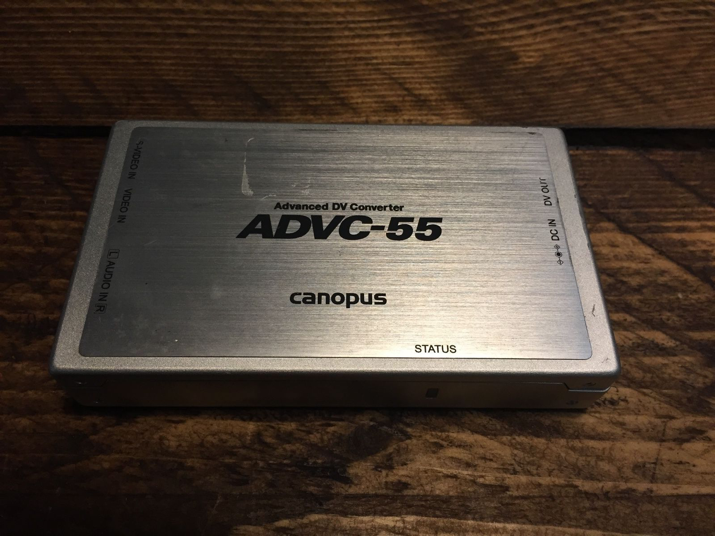
A second hand Canopus ADVC 55 bought on eBay arrived today. Initial tests digitising from a START 94 Programme 3 VHS tape were encouraging. Continue reading “Canopus digitiser”


phd journal
A second hand Canopus ADVC 55 bought on eBay arrived today. Initial tests digitising from a START 94 Programme 3 VHS tape were encouraging. Continue reading “Canopus digitiser”

Babette Mangolte – 3 Landscape films, ICA London, presented as part of the Birkbeck Essay Film Festival 2017. Introduced by Laura Mulvey (seen dimly in photo top right) and Lucy Reynolds.
26 Mar 2017
There? Where?, dir. Babette Mangolte, USA 1979, 16mm, 8 mins
The filmmaker describes the first film, There? Where?, as “a naive look at Southern California by an outsider, and/or an essay on displacement through the disjunction of Californian images and off screen voices. Where is the location of these voices, here or there? Are the images near or far in relation to the voices? Are the images commenting on the images or vice versa?”
Documenting seasonal changes across the American West, from Wyoming to Oregon, the second film, The Sky on Location, is an affecting meditation on untamed nature and the atmospheric effects of climate on the landscape. Weather and ambiance, the wilderness and the Sublime, Mangolte articulates the shifting ways of looking at Nature from the nineteenth to twentieth centuries, and her keen cinematographer’s eye captures an awe and reverence for the American wilderness. The Sky on Location confronts us with a vision of the natural world, translated into a palette of ambient colour and visceral mood.
Visible Cities, dir. Babette Mangolte, USA 1991, 16mm, 31 mins
Finally, in Visible Cities, two women looking for a home in Southern California realise, in Mangolte’s words, that “the single-family home [is] the locus of the exclusion of the other. It is also unaffordable. They both feel as if they are invisible citizens. They witness how the architectural landscape imposed on the California desert appears as a reversal of nature, where exclusive living, gated communities and segregation go hand in hand. They dream of escape.”
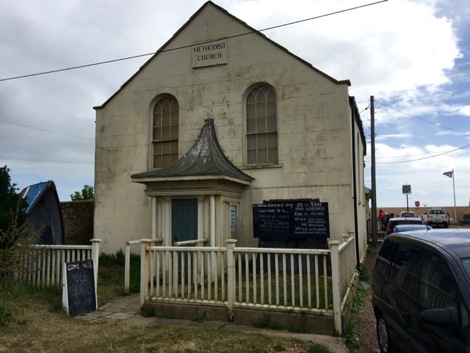
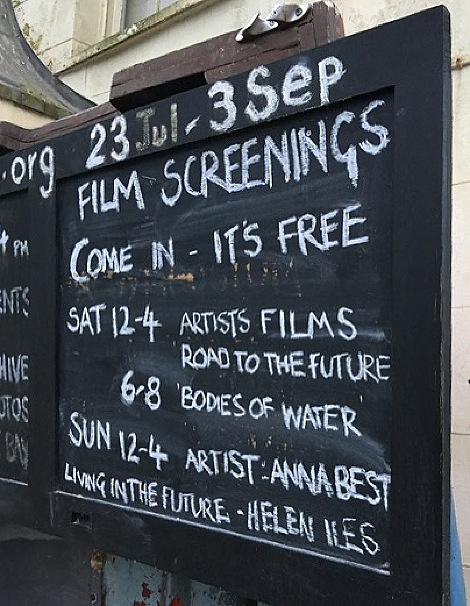
Sea Front and Teign Spirit were screened at Force 8’s Methodist Church residency in West Bay, Dorset tonight. The programme Bodies of Water was curated by Kayla Parker, originally for RWA Bristol’s Power of the Sea exhibition.
Sea Front was filmed on Kodachrome 40 in 2006 and made into the film in 2011 using digital audio recorded around the same time and location, but not simultaneously with the film footage.
Teign Spirit used HD video material recorded in 2009 layered with 8mm black and white footage filmed over several years until the final summer of 1939 by the Jones family on holiday at Teignmouth in the interwar years. Just as war loomed ahead for the Jones family contemporary Teignmouth is threatened by the vagaries of a changing climate, particularly to the low-lying Back Beach area whose houses open onto the strand.
Jaimie Baron describes as ‘problematic’ the seamless compositing of ‘found footage’ into new works, or the insertion of new elements into archive footage. Teign Spirit leaves the ‘seams’ visible so the audience is aware of the overlaying of archive material – recognisable both by its being monochrome and the clothing, vehicles etc clearly belonging to the past – on to bright, crisp HD digital material. The two types of footage combined generates the archive effect by the temporal disparity. The beautiful cine footage grabs the attention one moment, then the underlying colour video material catches the eye.
There’s a paradox in that the HD digital footage is identifiable as ‘non-archive’ but the creation of the film hinged on the realisation that we were recreating similar shots as the Jones’ camera operator/filmmaker. We are separated from the film footage by 70 years of calendar time but also by developments in camera technology. In another 70 years who knows how archaic the HD AVCHD files will seem?
I had produced a new iteration of the 10 minute version of the “20 Seconds a Day” film which played as a backdrop to my presentation on Wednesday 4 May at Frenchay. The updated film has been selected for the BEEF Cephalopod screening at Supernormal 5-7 August 2016.
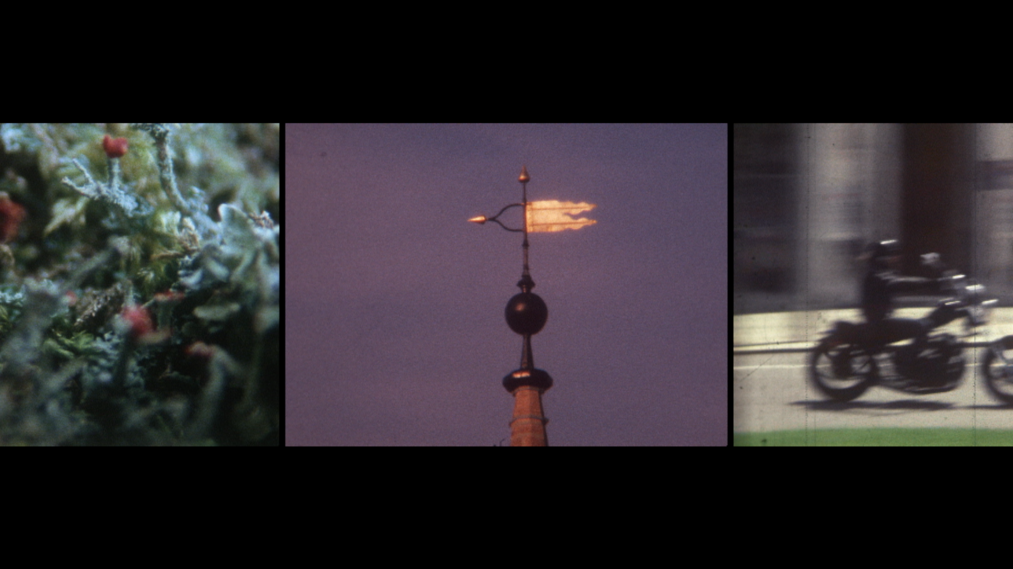
The original film comprised 31 one-second clips making a 31 second film. The presentation had a duration of ten minutes so I extended each one second clip to 20 seconds and removed one of the 31clips (30 clips x 20 seconds = 600 seconds or 10 minutes).
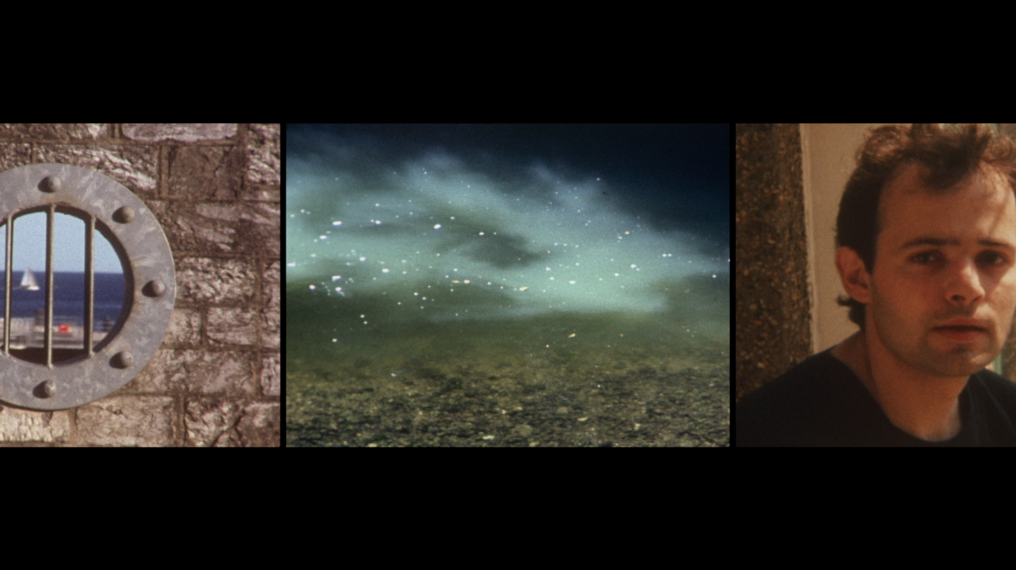
The reinstated clip brings the running time to 10 min 20 sec and is truer to the original methodology of choosing a clip a day throughout the 31 days of March 2016.
Super 8 cameras often have automatic exposure so filming can be somewhat freewheeling in execution: frame, focus and press the trigger. The cost of the film and processing has the opposite effect, encouraging frugality so shots tend to be fairly short. The editing technique of extending each shot by 19 seconds often revealed in-camera edits so the longer compilation film has many more than 31 shots. As the film progresses the intentionally arbitrary sequence of clips – initiated by the chosen one second a day shots – is further randomised by the inclusion of whatever is on the Super 8 strip/reel immediately afterwards. Following the initial one-second shot could be another similar shot filmed immediately after the first (or indeed a continuation of the first shot) or sequences from another time and location, whether edited in-camera or later with a splicer.
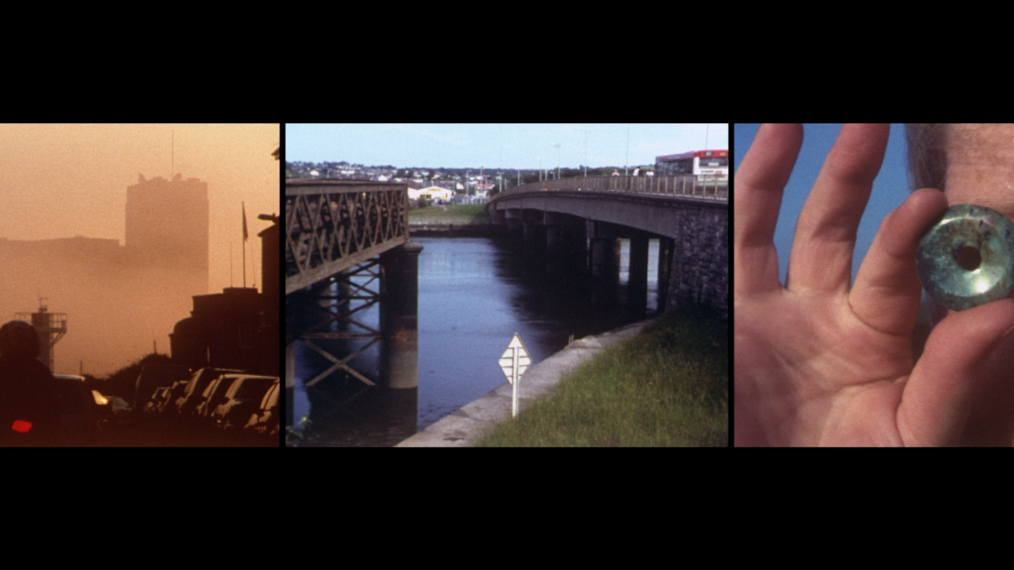
These temporal and geographical/locational shifts in the film feel somewhat like remembering, where a memory of one event sparks others. The matter of in-camera editing came up at the Parallel Art and Cinema Sunday morning discussion in March in as much as digital cameras tend to be file-based so as soon as the recording camera is stopped the shot becomes a discrete clip in the device’s memory. The discussion was framed by two lecturers bemoaning the loss of a simple exercise for neophyte student filmmakers to take a video camera out and shoot a camera edited sequence which could be instantly played back in a seminar session.
Is this clip-centred paradigm a result of easy access to editing on computers where the need to cut up lengthy in-camera compilations would just add an extra step in ordering and rejecting footage, or possibly the opposite where the essentially cost free nature of the recording means that the documentation of an event would be more likely filmed in a long continuous shot? Walter Murch in The Blink of an Eye discussed explaining film editing at its most basic:
“Because, in a certain sense, editing is cutting out the bad bits, the tough question is, What makes a bad bit? When you are shooting a home movie and the camera wanders, that’s obviously a bad bit, and it’s clear that you want to cut it out. The goal of a home movie is usually pretty simple: an unrestructured record of events in continuous time. The goal of narrative films is much more complicated because of the fragmented time structure and the need to indicate internal states of being, and so it becomes proportionately more complicated to identify what is a “bad bit.”” {Murch, 2001, #50064}
In 2001 second edition of his book had been extensively updated to take account of the rapid move from physically editing film material to digitisation and computer editing. He remarked:
“In 1995, no digitally edited film had yet won an Oscar for best editing. Since 1996, every winner has been edited digitally-with the notable exception of Saving Private Ryan in 1998. 1995 was also the year that In the Blink of an Eye was first published in the United States. That edition included a section on digital editing as things stood at the time. It was clear to me then that the complete digitization of the moving image was inevitable, but the time frame for that transformation was not obvious and I looked at the situation with mixed feelings. At that time I also lacked digital editing experience.” {Murch, 2001, #50064}
The films sat in boxes for years. They were on a variety of reels, some on the original 50 ft Super 8 spools that were return from processing, others pieced together into bigger spools of several hundred feet. The splicing was with a strange zigzag cement splicer which gave visually appealing joints, both when looking at the film strips and when viewed on screen. The splices were very noticeable and served as a clear indication that one 50 ft roll had ended and another begun, quite the opposite of the invisibility normally required when splicing two shots together.
A lot of the material has been edited in camera in as much as a scene might be filmed in one or more shots which would then be inscribed on the film in sequence. The camera might then be unused for some time before the next shot is appended to the film producing a fractured chronology of image sequences perfectly edited together and not requiring tape or other clumsy interventions.
Super 8 cameras typically start and stop almost instantaneously so don’t ‘suffer’ from changes in exposure that can appear on 16mm and 35mm when starting and stopping the movement. The slightly acceleration of the mechanism can give overexposed frames each time the camera starts up. Some cine cameras – such as the Bolex EBM – have shutters which can remain open if its power is removed and the mechanism comes to rest with the gate exposed. This gives a flash frame caused by gross overexposure of the emulsion. Paradoxically these defects in the technology produce results which can be prized by some filmmakers as part of the ‘film look’, seen as an alternative or antidote to clean digital video footage. Super 8 cameras have an easier job pulling the narrow gauge film through the gate, and also have shutters which close after filming, partly as a result of often having stop motion ability as part of the feature set which could be advertised to potential consumers for the home movie system.
Contemporary digital (non-tape-based) cameras – whether stand-alone or built in to mobile phones, tablets etc. – are clip-based. Once the camera is recording and subsequently stopped the footage is stored as a standalone clip in a folder or collection/gallery. The possibility of the camera edit has been made redundant by the availability of nonlinear editing in the recording device itself or the expectation that the user has, and indead needs, digital storage and editing equipment.
Thoughts:
DN Rodowick’s the virtual life of film:
Daily, starting from the 1st March, I will select a clip from my Super 8 archive that was digitised at Deluxe Soho for the Marjon-funded research project Freeing the Archive. Each day I will skim the library in FCPX, stop on a frame and append one second of video to the timeline. I won’t look at the growing edit until it is finished. By April I will have a 31 second edit to put with the other 3D3 students’ One Second a Day video diaries.