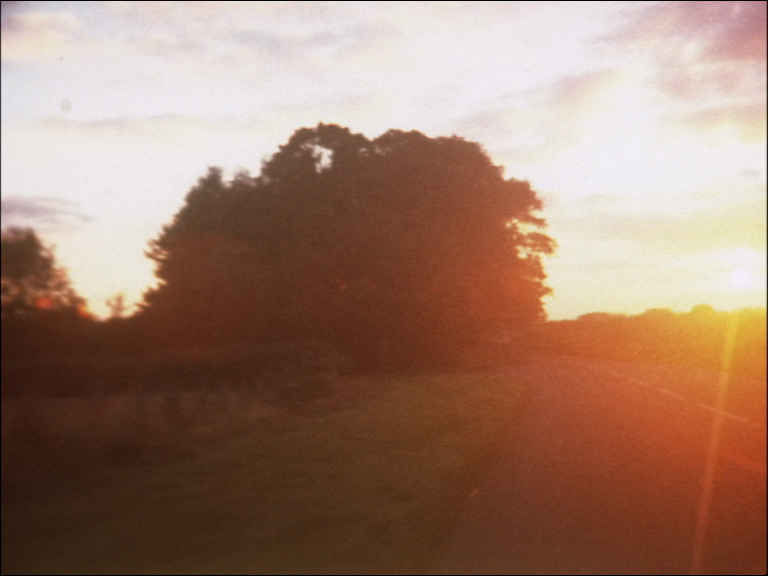
Travelling shot from the rear of a car travelling back from Brighton.

phd journal
Travelling shot from the rear of a car travelling back from Brighton.
Daily, starting from the 1st March, I will select a clip from my Super 8 archive that was digitised at Deluxe Soho for the Marjon-funded research project Freeing the Archive. Each day I will skim the library in FCPX, stop on a frame and append one second of video to the timeline. I won’t look at the growing edit until it is finished. By April I will have a 31 second edit to put with the other 3D3 students’ One Second a Day video diaries.
This seminar by Professor Henk Borgdorff (Royal Conservatoire / University of the Arts, The Hague) starts by asking whether research by artists, so-called artistic research, is equivalent to other forms of academic research.
Artists in their research often make use of insights, methods and techniques, which stem from social science, humanities or technological research, but it is not clear what artistic research itself has to offer to academia. Professor Borgdorff will develop a positive understanding of research in and through the arts, touching upon its epistemology and methodology, and addressing the form and relevance of its outcomes. He will point to four related issues that are pertinent to research in and through art: an advanced understanding of discursivity and reasoning; the methodological relevance of material practices and things; innovative ways of publishing art in academia; and advanced forms of peer review. For Prof Borgdorff, it is key to the advancement of the artistic research field that we not only advertise and export our epistemological and methodological distinctiveness, but that we also join forces with others in our attempt to re-think academia.
Henk Borgdorff is a philosopher and music theorist who is a Professor (‘lector’) of Research in the Arts at the Royal Conservatoire / University of the Arts, The Hague (The Netherlands). He was a Professor in Art Theory and Research at the Amsterdam School of the Arts (until 2010), visiting Professor in Aesthetics at the Faculty of Fine, Applied and Performing Arts at the University of Gothenburg (until 2013), and editor of the Journal for Artistic Research (until 2015). A selection was published in May 2012 as The Conflict of the Faculties: Perspectives on Artistic Research and Academia (Leiden University Press). Professor Borgdorff is President of the Society for Artistic Research. See his profile page on the Research Catalogue: www.researchcatalogue.net
This seminar is available to any Plymouth University researcher (including those who currently, or intend to, collaborate with arts and humanities researchers in the production of outputs).
Start time: 17:00.
Please confirm your attendance by emailing theartsinstitute@plymouth.ac.uk.
I saw Carol at Plymouth Art Centre cinema sat in the centre of the front row. The auditorium in Looe Street is quite small, and the 2pm matinee screening was almost completely sold out with the venue’s fairly senior regular clientele. I wouldn’t normally sit in the front seats as the screen is quite close (maybe 4m?) but today it worked out perfectly. The visual experience was intense at such close range, the image grain was almost tangible.
Richard Brody compares the sensory affects of viewing Carol (Haynes, 2015), directed by Todd Haynes – which was shot on grainy Super 16mm film – once from the rear of the auditorium then a second time close enough to the screen in the cinema to visually experience the grain structure of the image: “They’re not effects of the actors’ skin but of its appearance on the second skin of the film stock (the French word for “film” is “pellicule,” meaning little skin) which lends the actors’ theatricalized immobility an illusion of shivers” (2015). These medium specific qualia (the experience of the projected grain images) are an example of ‘haptic visuality’ – a method of sensory analysis which is located in the viewer’s body, although it does not depend on the presence of literal touch, smell, taste or hearing. It is a concept of embodied spectatorship that situates the phenomenology of cinematic experience as synaesthetic and interactive: an exchange between two bodies.
Although the film was shot on Super 16 it went through the DI (digital intermediate) process in postproduction and was projected from a DCP. Adding grain in postproduction is common both for a ‘film look’ and also to reduce banding when using 8-bit for delivery – the latter not relevant for cinema workflows. I wonder whether shooting on a Super 16 crop of a digital sensor and using the same lenses to match the Arri 416 film camera, then adding grain in postproduction would produce a discernible difference?
http://www.newyorker.com/culture/richard-brody/carol-up-close [Accessed 9 December 2015].
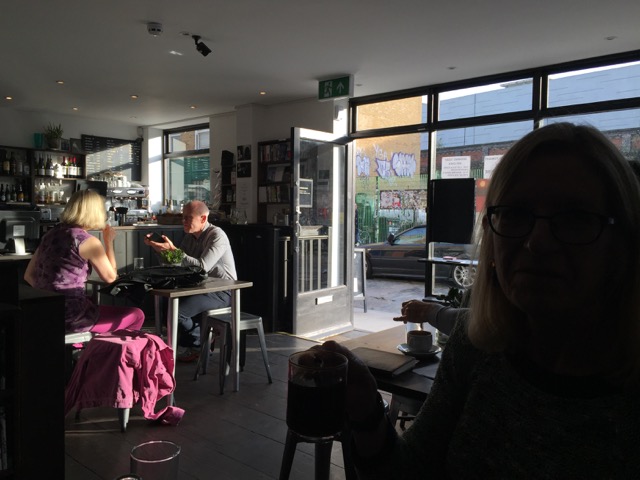
Close Up Film Centre, Hoxton, London
https://www.closeupfilmcentre.com/film_programmes/2015/jem-cohen-a-day-in-the-lives/
1. That it tells me something I don’t know and questions as much as it answers.
2. That it holds a mirror to the broken world.
3. That it takes a new shape, somehow unlike that of the movies before it, especially those within its own genre.
4. That it not dehumanise or take cheap shots.
5. That it comes as a shock, even if the shock is that of discomfort or joy.
6. That it not look like a music video, or smell like an advertisement.
7. That it is somehow mysterious, ambiguous, strange.
8. That it is somehow funny.
9. That it inspires me to rage.
10. That it inspires me towards peace.
11. That it not be guided by the Hollywood Commandments (Film as a Business, Movies as Commodities, Worship of Celebrity and Spectacle, Life in three Predictable Acts).
12. That it is more than propaganda.
13. That it avoids sentimentality.
14. That it speaks truth to power.
15. That it speaks truth to the powerless.
16. That it picks at the scabs of history.
17. That it makes me want to get to work.
18. That it strives for honesty.
19. That it blows my mind.
Jem Cohen is a filmmaker. This text is taken from the programme for his festival Fusebox, at Ghent in 2005.Vertigo Volume 3 | Issue 3 | Autumn 2006
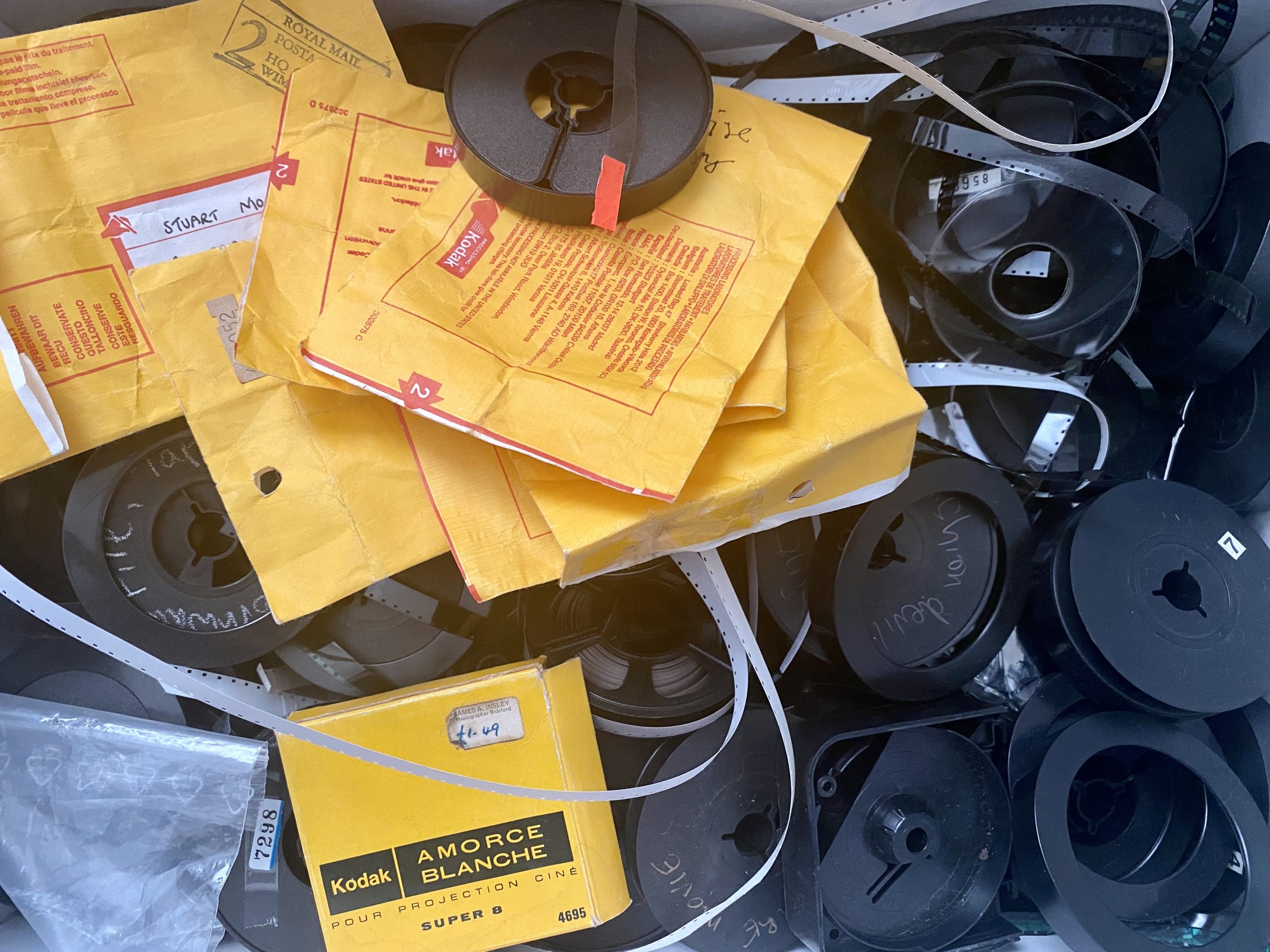
Today is the first day of my AHRC-funded PhD centred on my collection of Super 8 films.
Television Centre, Wood Lane, London
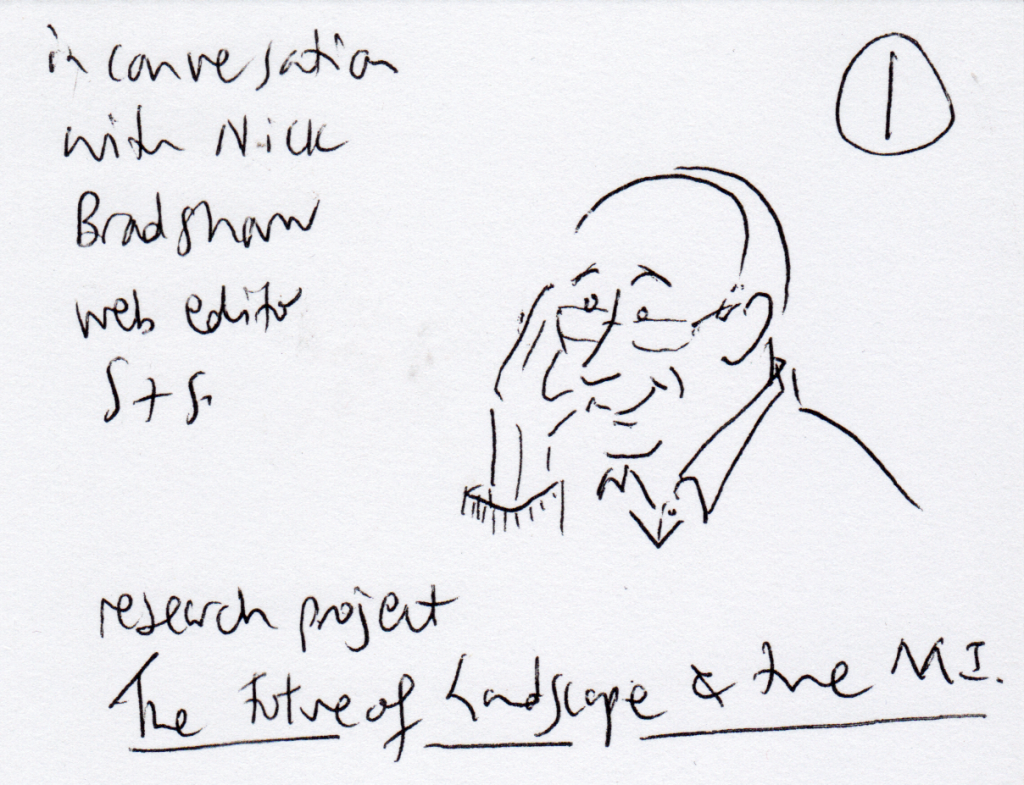
We took a trip to Bristol to hear Patrick Keiller’s talk “The Future of Landscape and the Moving Image” at Watershed in Bristol.
Keiller’s approach to documentary is highly influential – the locked-off framing of London and his thoughts on the filmmaker as contemporary flâneur resonate with my films Cinematic City and the earlier Sea Front. Keiller addresses Martin Heidegger’s concept of ‘dwelling’ and people’s almost instinctive (or is it habitual?) preference for the homely, the cozy. Plymouth’s city centre was flattened and redeveloped after World War Two and generates a strong reaction – the urban planning and architecture is on a scale beyond the domestic and maybe feels inhospitable to some people, or perhaps the clearance caused a rupture in the human history of the place.
Meanwhile to the east of Plymouth farmland is being bulldozed to create a new Poundbury-style neo-Georgian toy-town. Prince Charles wants to “build again the types of places we all know strike a chord in our, by now, rather bewildered hearts, however ‘modern’ we are – places that convey an everlasting human story of meaning and belonging”.
Watershed’s notes:
Trained architect-turned filmmaker Patrick Keiller is one of the most distinctive voices in cinema and in this talk he talks to Nick Bradshaw (web editor Sight & Sound) about his film Robinson in Ruins which forms… Narrated by Vanessa Redgrave the film is one of the outcomes of a three-year research project entitled The Future of Landscape and the Moving Image In this talk Patrick Keiller discusses the… origins of the film his research notions of landscape economy and ownership and his wider body of work as a filmmaker and researcher Patrick Keiller studied architecture at University College London and fine art in the…
Trained architect-turned filmmaker Patrick Keiller is one of the most distinctive voices in cinema, and in this talk he talks to Nick Bradshaw (web editor, Sight & Sound) about his film Robinson in Ruins, which forms part of a collection of feature-length cine-essays setting out to examine a particular ‘problem’.
Following the journey of Robinson, an enigmatic, and esoteric intellectual who travels through Tory Britain, Robinson in Ruins examines the problem dwelling itself, focusing on the discrepancy between mobility and displacement in developed economies, and a widespread tendency to privilege and romanticise modes of dwelling that derive from a more settled, agricultural past.
Narrated by Vanessa Redgrave, the film is one of the outcomes of a three-year research project entitled The Future of Landscape and the Moving Image.
In this talk, Patrick Keiller discusses the origins of the film, his research, notions of landscape, economy, and ownership, and his wider body of work as a filmmaker and researcher.
Patrick Keiller studied architecture at University College London and fine art in the Department of Environmental Media at the RCA. His films include London(1994) and Robinson in Space (1997), the latter extended as a book in 1999. He is a Research Fellow at the Royal College of Art in the Department of Communication Art & Design.
Nick Bradshaw is a film critic and web editor at Sight & Sound, who has previously worked as Deputy Film Editor for Time Out. He has also written for the Telegraph, Guardian Online, Times, Independent on Sunday, Village Voice, and LA Weekly.
Related Links:
The Future of Landscape and the Moving Image
Patrick Keiller BFI
Robinson in Ruins Guardian Review
Cinematic City is a film commissioned by Plymouth Arts Centre. It had its premiere with two outdoor screenings next to the sea at Plymouth’s Hoe Lido on 15 & 16 July 2011
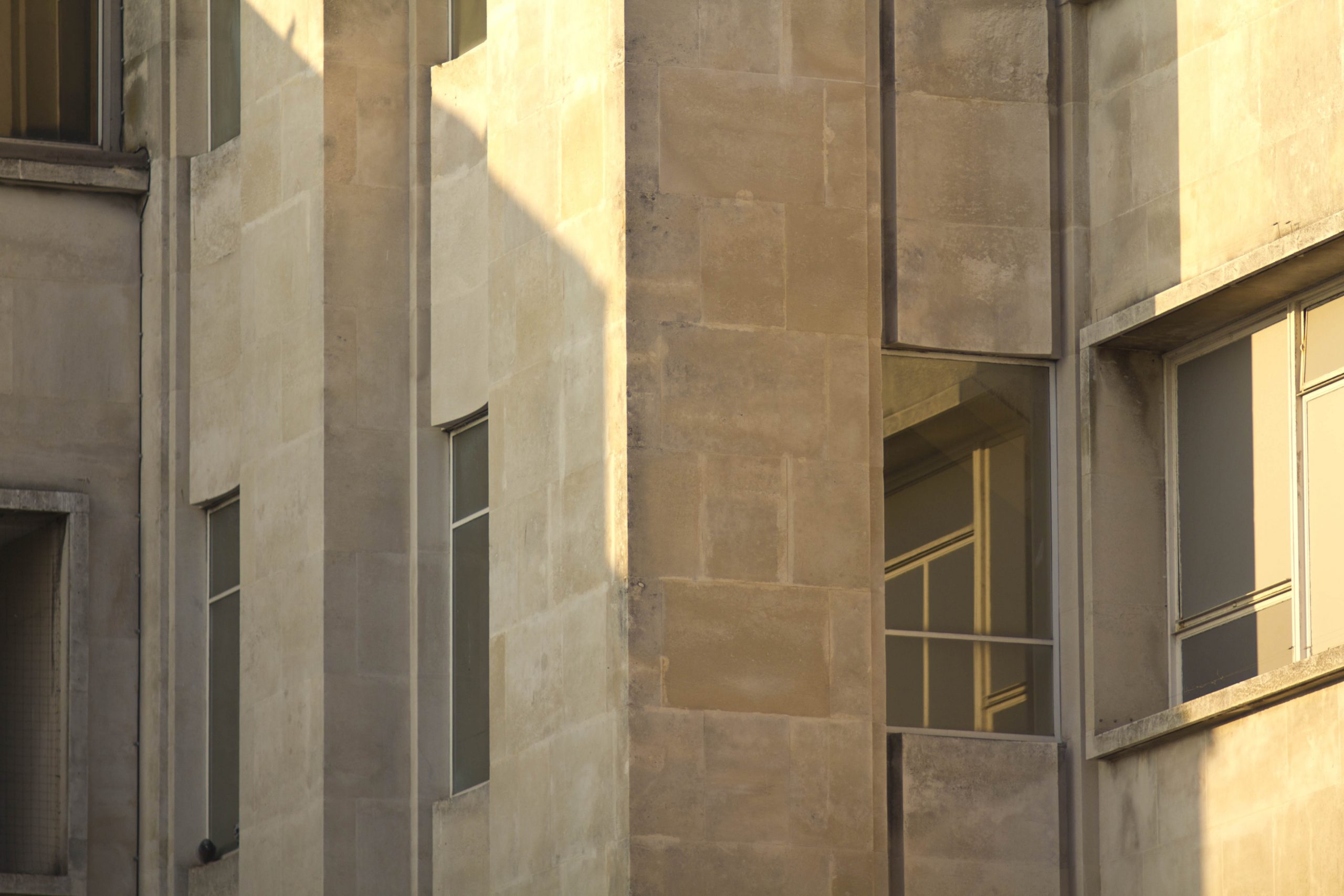
The following proposal was chosen by the commissioning panel at Plymouth Arts Centre
strategy
Using audio material from SWFTA films, such as the Westward Diary local news programme, I will create a montage of sound to capture echoes of the past. The archive has, for example, episodes of Westward Diary featuring the narration of Kenneth MacLeod, which ran on the ITV channel in the South West from the late 1960s. I intend the sound elements to act as a springboard for exploration, filming the urban built environment in Plymouth using digital SLR technology – a Canon 5D MkII camera that produces an exquisite visual aesthetic, a hybrid of ultra-high quality still and moving images that enable the work to be viewed on a small screen and as a large-scale projection onto the exterior of buildings.
I will make a moving image artwork of 3 to 5 minutes duration which will be delivered to audiences on urban screens, including the Plymouth Big Screen, and online via Vimeo, YouTube or iTunes, and using portable devices. The film will work effectively as an installation piece, or projection where the image is foregrounded, but will also have a richly textured soundtrack to be enjoyed on headphones or during cinema projection.
context
I have recently been developing a personal film–making practice by focusing on the remediation of archive material through the process of digitisation, which allows for new meanings and contexts to be created. In 2009 for my postgraduate studies I made the film Sea Front from my personal archive of Super 8mm source material of Plymouth. The silent filming was mixed with contemporary, but not contiguous, sound recorded on location. Sea Front received the Trick of the Light Award from the London Short Film Festival and a Media Innovation Award in the Independent Film category. In the same year I worked with artist film-maker Kayla Parker to produce the short moving image artwork Teign Spirit which used archive material collaged with new audio and high definition digital imagery.
The Cinema City Artists’ Moving Image commission will enable me to develop my area of practice further, and to explore my connection with the city through the long–forgotten sounds of local television from the 20th Century. The audio is evocative, partly because it is very much ‘of its time’ both technically and sociologically, but also because it was produced to be heard in a domestic environment accompanying the images on the small screens of the day. The TV station was truly local to Plymouth, with its purpose–built Derry’s Cross studios situated right in the city centre – its transmissions permeating the urban landscape, but also reflecting the city back to itself.