Archive Origins

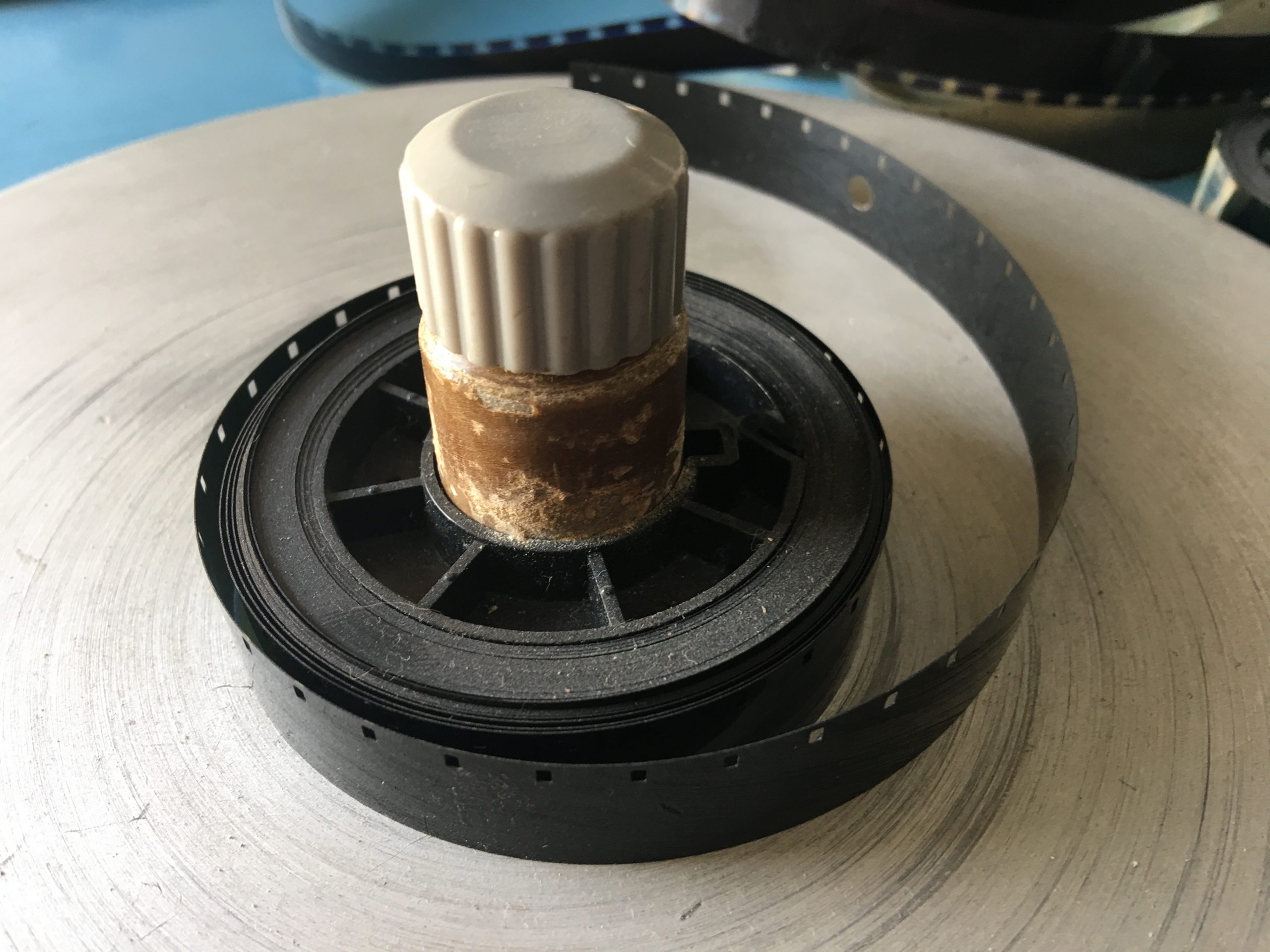
A box of films, sat under a desk, gathering dust. Most are single rolls of Super 8, some still in their mailer envelopes – yellow for Kodak, white for Agfa. Where were they shot? Who is in there?
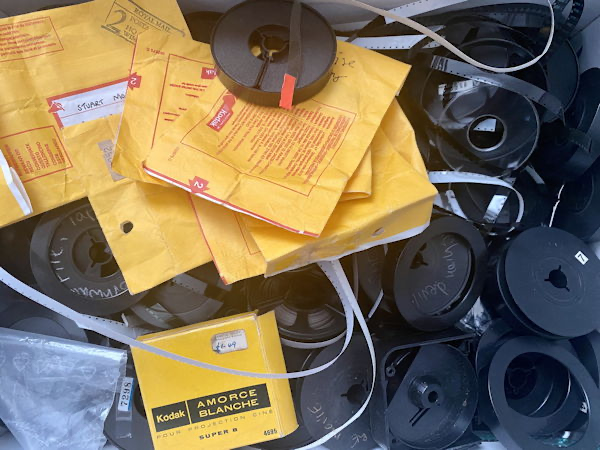
My box of Super 8 films.

My introduction to Super 8 filmmaking began when I borrowed a silent Sankyo camera in 1987, from Plymouth Film and Video Workshop (PFVW), a Government-funded community video project where I worked. The camera had been gifted to the workshop by the widow of a cine hobbyist. Its portability appealed to me – in contrast to the heavy U-matic and VHS portapaks with separate video cameras of the time. The resulting reel of film in 1987 was exposed in Plymouth and Chelsea and transferred to U-Matic at the video workshop by filming a Bolex back projector.

The project had portable video gear – the camera and portable recorders of the time were both bulky and expensive – which were not suitable for my purposes a trip to stay with friends in west London, travelling the 240 miles each way on a motorbike. I had never used a ciné camera, but the Sankyo seemed quite manageable: on/off switch, shutter release, zoom lever and a lens that could be focussed. A cartridge of Super 8 film was purchased in a local Jessops photographic store and slotted into the camera’s film chamber. Details of the camera’s journey along the A38, M5 and M4 from Plymouth to Chelsea are lost in the mists of time; maybe it was in fact along the A303 past Stonehenge, but the camera and motorcyclist both arrived intact. Decades later, the memory of those days spent in London with friends are similarly hazy, except for the moments committed to film.

This roll of film was sent off to Agfa in its mailer envelope and some weeks later was returned in the post, the boxy cartridge transformed to a small reel of film with a white leader. PFVW’s benefactor had also donated a Bolex projector, which resembled a small television set, a black box with a back-projection screen. The whirring projector swallowed the white film leader and momentarily spat it out into the take-up spool, then Finborough Road, Chelsea SW10, appeared on screen, filmed from a friend’s flat several floors above in what had once been servants’ attic quarters of the grand house. The initial viewing of the footage was a revelation – vibrant colour, the surprise of seeing what had been filmed for the first time and a little relief that everything had worked. American film essayist Jenni Olson describes how she preserves her memories “in the amber of celluloid” in her filmic memoir The Royal Road (2015). In the same way, the activities in Chelsea all those years ago are retained in the 8mm-wide strip of analogue film which can be viewed, touched and experienced. The film was present in Finborough Road at the time of filming and is still with me – a physical memento, like the miniature Eiffel Tower I brought back from Paris on my first motorcycle trip abroad with those same friends.

My interest in photochemical film had been sparked by black and white 35mm still photography and darkroom work, which was taught as part of an undergraduate science course to facilitate the documentation of practical experiments. I became more interested in photography than biology and began to teach myself the former’s craft discipline. I carried on using Super 8 as a strand separate from the rest of my filmmaking and television career, which spanned documentary camera assisting on 16mm film and broadcast video, underwater camerawork, sound recording, 360 filmmaking and video editing. As my skills increased, I began running evening classes in photography and darkroom skills at Plymouth Art Centre, joining the community video project mentioned above, then lecturing at art colleges and universities. Alongside these varied professional ‘gigs’ the rolls of Super 8 film accumulated.

In October 2008 I enrolled on Plymouth University’s MA in Contemporary Film Practice for a full-time year of study. One module – Aesthetics and Technology – required the creation of a short film. I made a home-telecine of some Super 8 material that I had filmed in 2006 and presented the unedited footage to my peers and tutors in a presentation that was a requirement at the project’s planning stage. This was the first time I had considered any of my archive in an academic context. The resulting film Sea Front was submitted for the module and went on to success in various film festivals.

The success of Sea Front encouraged me to reappraise my collection of Super 8 and in 2011, a successful research grant application to Plymouth Marjon University, where I worked as a senior lecturer, funded ‘Freeing the Archive’. The project included the transfer to video of my entire Super 8 collection at a commercial facility in Soho, London. The title came from the idea that digitisation would allow me to work much more easily with the film material. Narrow gauge film is prone to damage, difficult to work with and risky to view since projectors vary greatly in quality and even the best are now decades old. Although even today it is possible work in a physical way with film, to cut and splice Super 8, have prints made and even have a sound stripe added, many practitioners use their exposed and processed film as raw material for digital postproduction.

My digitised film collection was now easily accessible to view and edit on a computer, the ‘archive’ had been freed in a sense. In the following months and years, the material was used as the source for digitally edited short films and viewed with an ease which was in stark contrast to the rigmarole of projecting the physical material. The physical archive remained in place, unaffected by its digital doppelgänger.

Tunnelling to the past

black badge saying "Service Tunnel Breakthrough"
Commemorative Breakthrough badge

The construction of the Channel Tunnel began in 1988. I was present with cameraman Chris Setchell when a 50 mm (2.0 in) diameter pilot hole allowed the service tunnel to break through without ceremony on 30 October 1990. There was a ceremonial ‘breakthrough’ with news media present on 1 December 1990, but we’d been relegated to the surface for this event.

Amazingly the French and UK service tunnels almost perfectly aligned mid-Channel.

10 years and counting

On 22/5/12 my sister Sandra took her own life, three years later I started this PhD. I had no idea that focussing on my personal film archive would, at times, be so hard.

Place/placeness

Found footage

I had chosen to visit a place, to put myself in its physical setting, the filming activities placed the location into the archive, and ‘revisiting’ the place in the archive allows it to be to be experienced. The ‘scale’ of Super 8: human, intimate, close, held, grounded. The opposite of the detached, weaponised gaze of the drone.

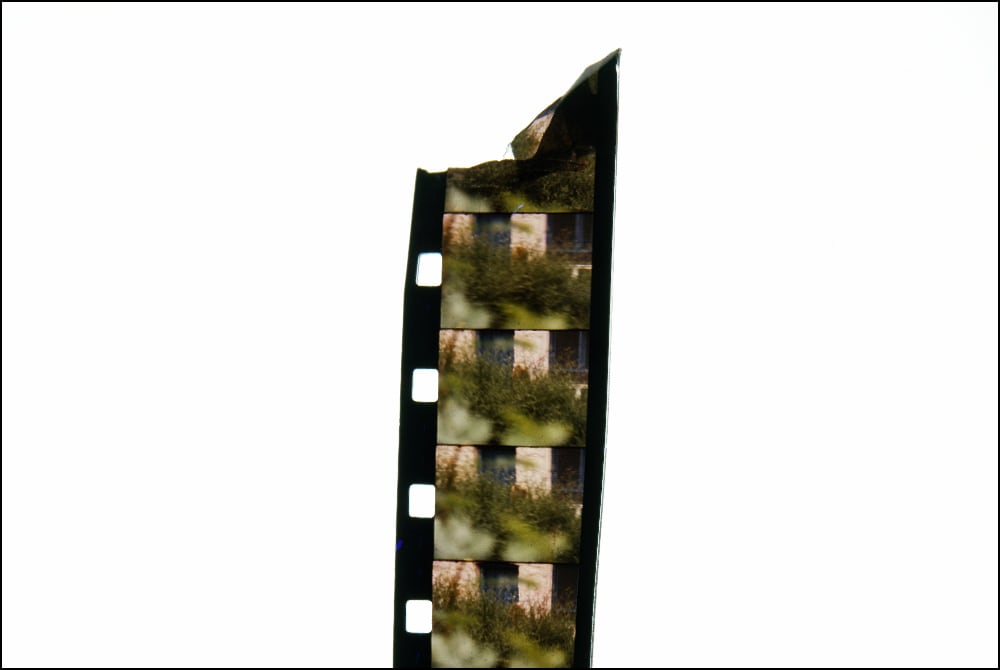
The scrap of film in the image above has the marks of its physical existence – dust, creases and a brutal rip – but still faithfully carries its image sequence.

Early on in this PhD, I coined the phrase the ‘dead eye of digital’ where a stationary digital video camera shot of a still scene is no different to a single digital still played back for the same amount of time. The tiny frame size of small gauge film like Super 8 emphasises the grain dancing on screen and any imperfections from its manufacture, processing and projection. The format revels in its poor frame registration in front of the camera gate giving rise to weave and instability.

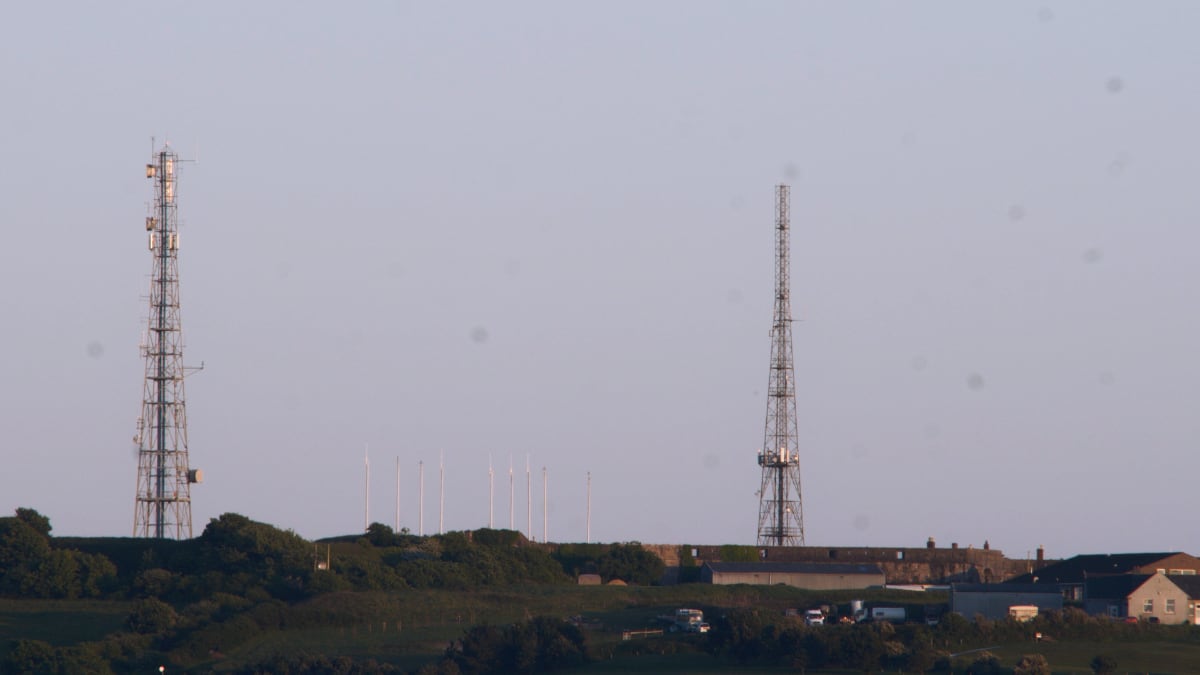
Dust on a digital sensor

A digital sensor, being a palimpsest, can contribute nothing more interesting than a dead or hot pixel on every frame, and unmoving specks of dust that have landed on its surface. The forlorn piece of Super 8 has kept its image for decades. When I was looking for the sensor dust image above the computer warned that the new 8TB drive was unreadable and I should try to recover its data before reformatting it. Thankfully it seems to be OK.

Lost Book Found

In Lost Book Found (1996), Jem Cohen’s documentary style of filming – like the street photography exemplified by Garry Winogrand and Joel Meyerowitz – features snatches of people and the street-life of New York. Filmed on Super 8 and 16mm over a five year period, these unmediated, chance encounters and random incidents in public spaces convey a realistic view of the city.

The narration, voiced by Cohen’s brother in a reflexive tone, devoid of emotion, recounts his experience as a sidewalk ‘pushcart’ peanut vendor and his attempts to decipher a mysterious book that unlocks the ‘secrets of the city’.

I have been at several screening with Cohen in attendance. At Aurora in Norwich I had a conversation with him, and mentioned how he’d been filming a lot with the camera held at waist level, allowing more ‘candid’ filming than might have happened with the camera raised to his eye. His face was a picture, fleetingly looking like he’d tasted sick in his mouth. In more formal Q&As he wouldn’t reveal whether the ‘lost book’ really existed. The film, like the man, needs its mythology.

Derek Jarman at 80

I spent most of today digitally editing Super 8 footage filmed at Dungeness in 2009, adding audio recorded in 2020 at Slapton Sands. This evening I noticed from IG posts that it would have been Derek Jarman’s 80th birthday.

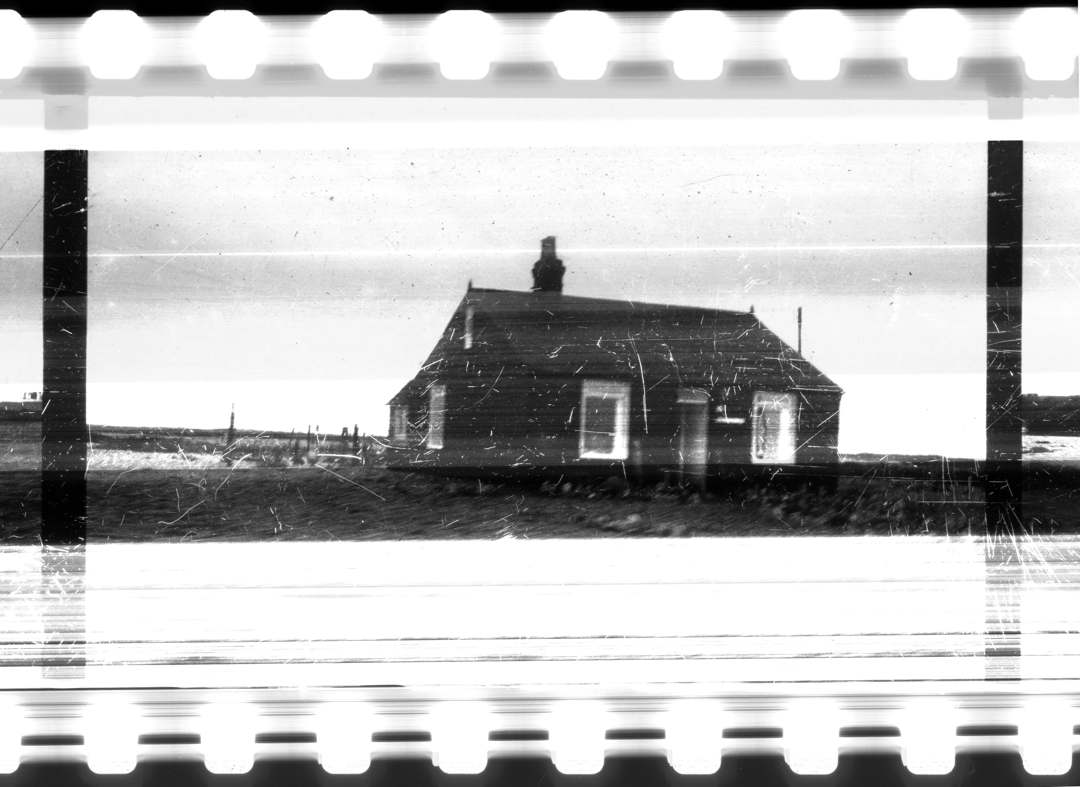
The image above was snapped from the window of a crew bus as we passed Prospect Cottage heading home at the end of a corporate job filming the Dungeness power station in 1989. Jarman filmed The Garden that year and you can just see the actual garden to the left of the cottage.

The picture was taken on Polaroid instant B&W reversal 35mm.

Sarah Turner’s Perestroika (2009)

Turner made an essay film travelling across Russia – Moscow to Irkutsk, Siberia – filming every day on the train journey, reenacting the same journey she took 20 years earlier. The use of memory is subjected to a formal methodological constraint where she is not allowed – by collaborator Matthew X – to review or make comments on her filmed material until the next day. This separation of the time of capture from the time of reflection of the filmed material feels similar to shooting then reviewing Super 8 film later.

Sarah Turner
Sarah Turner, Perestroika (2009). Image courtesy of the artist

Gerald’s Film

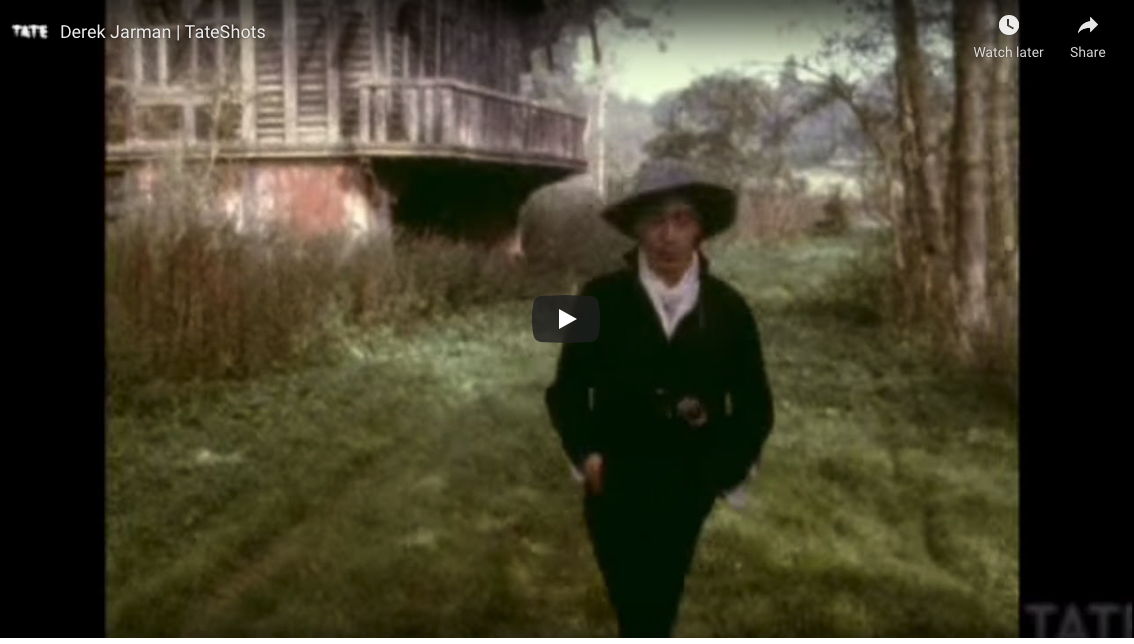
Jarman at the ruined boathouse filmed by Gerald Incandela

Jarman was given a Super 8 camera in the late 1960s, and began to experiment. Jarman’s first Super 8 film in his studio on Bankside. Shot partly in colour – this documents the inside of his studio and people visiting – and the black and white shots document mainly the exteriors, along with portraits of his friends.

Gerald’s Film (1976) is a portrait of the actor and cinematographer, Gerald Incandela, who is credited as the film’s co-photographer, filmed in the ruins of a Victorian boathouse in Essex.

I remember that in the film, Jarman filmed Gerald Incandela in the wreck of a barn, through the windows or through a gap in the wall.

Hand-held camera looking though the bones of an old boathouse. I think I saw the film projected, the thing I really noticed was that the film was really slowed down, so it was almost frame by frame. This wasn’t something I expected to see in the cinemas it was really remarkable. The camera focused on this beautiful man’s face, inside the boathouse. The golden light and the faltering, yet very intimate, gaze. Its dreamlike quality shimmered in a space between still and moving image, the unstoppable present of cinema subverted by the readability of individual successive frames.

Filmed at 6 frames a second and projected at 3 frames a second, it was a blurry kind of stop-motion photography. Focused on this handsome man’s face, stood inside the boathouse.

The beautiful golden light and the faltering, yet very intimate, gaze.