
Archive Space
Tate St Ives was built between 1988 and 1993 in St Ives, a small town in west Cornwall. Over these years there was considerable interest in the development from national and local TV. I worked on several different programmes for C4 and the BBC and a couple of series for our local ITV company, Westcountry TV.
This was really enjoyable work as it was pretty much all positive stories, and meant many visits to St Ives interviewing artists who had made Penwith their base over the 20th century. These famous painters and sculptors were a large part of the reason for Tate building the gallery in St Ives.
Television was in the late stages of analogue tape acquisition, and we shot on Sony’s BetaSP (Betacam SP) format. The camcorders took the smaller 20 or 30 minute tape cassettes that were the same size as the domestic Betamax tapes, so a little smaller than the ubiquitous VHS video cassettes. Consequently, a day’s filming would produce a sizeable box of tapes. We freelancers would label the tapes and hand them over at the end of each shoot to the producer. Back at the TV station the tapes would be digitised for editing and archived.
Westcountry TV had won the regional franchise from TSW. The latter had a large headquarters in central Plymouth and appealed the loss of their franchise. Westcountry had promised to build a new studio complex at a waterside location in the heart of the city but the legal challenge led to them hastily building a small HQ on a nondescript industrial estate in Plympton. These small premises meant space was at a premium.
The lack of storage space led to the company only keeping edited programmes and erasing the original camera tapes. It’s heartbreaking thinking of the material we shot that went through bulk erasers. Interviews with people like Patrick Heron at his home Eagle’s Nest near Zennor and the writer who explained abstract painting saying how can you paint the warmth of the sun on a stone. I’ve forgotten his name. When we interviewed Heron, the director Peter Francis Brown asked me if I’d seen anything strange – I hadn’t. As the interview with the soft-spoken painter went on, Peter saw a bright aura develop around our host. Is it on tape? Not any more, if it ever was.
Ghost Vessels
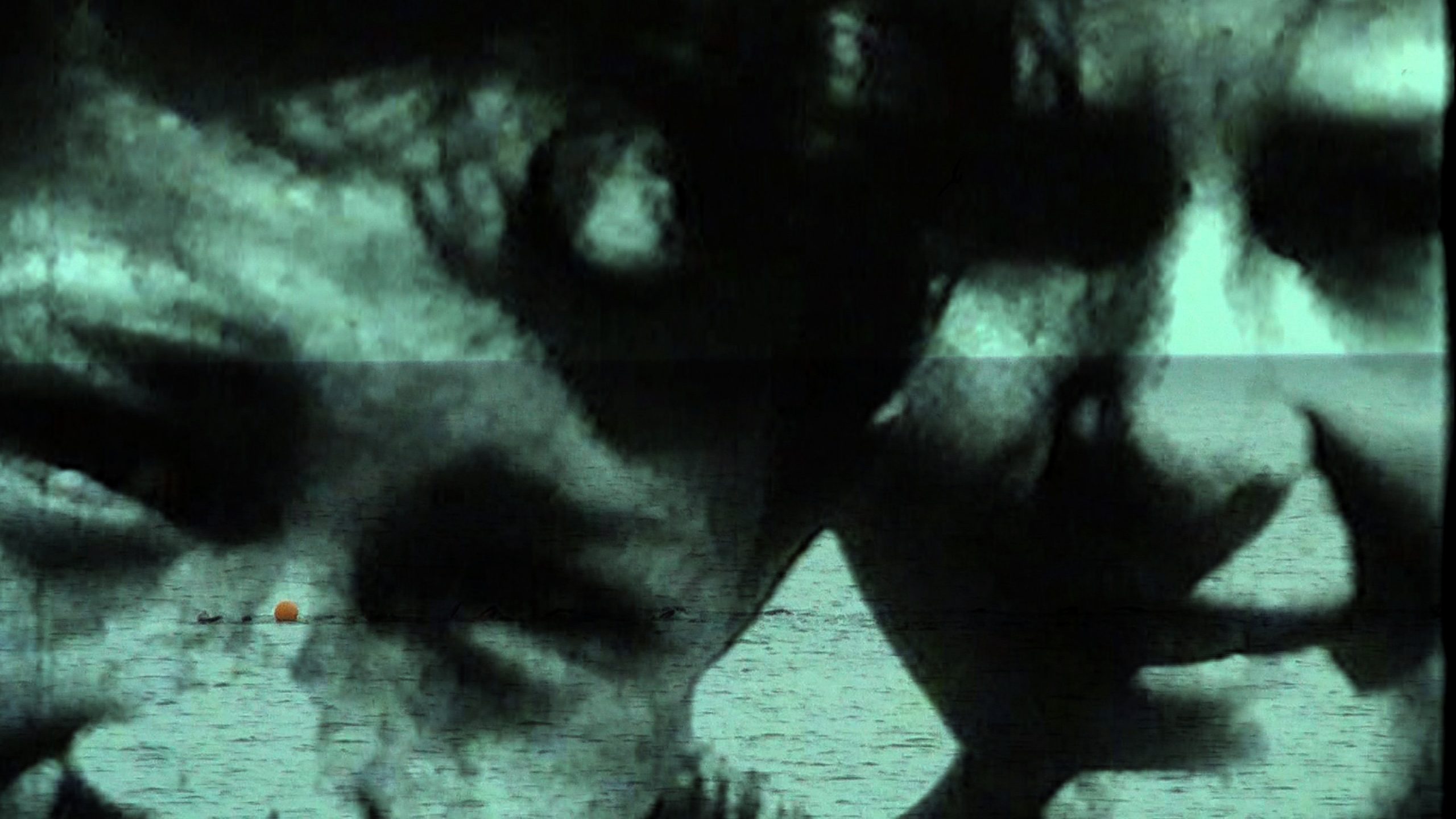
At the moment the sea off Torbay and Teignmouth is filled with cruise ships parked up waiting for Covid to pass. These ghost ships are manned by skeleton crews, behemoths at anchor on the horizon.
https://www.devonlive.com/news/devon-news/cruise-ships-stay-torbay-over-5071384
This reminded me of filming for a project in Teignmouth in 2008. At that time, tankers could be seen anchored out at sea for long periods in the sheltered waters of Babbacombe Bay, waiting for the price of oil and petrol to rise before discharging their cargo at refineries and storage depots.
I had filmed around the town but the project came alive when some home movie footage came to light, beautifully shot by a family member, of successive summer holidays in the town in the years running up to WW2. I imagined the last holiday as tensions were rising in Europe prior to Hitler’s invasion of Poland on 1 September 1939.
The outcome of the filming, Teign Spirit, is an archive film – in Jaimie Baron’s terminology/taxonomy – a found footage film. I made no attempt to reveal the context of the cine film, leaving it to audiences to decipher the interleaved footage that alluded to the gathering clouds of climate change that threaten Teignmouth.
The film demonstrates Baron’s ‘archive effect’ in both ways: intentional and temporal disparity. Intentional disparity as the Brown family’s home movies weren’t intended to be seen in Tate Modern in 3/12/2009 Starr Auditorium introduced by Stuart Comer – Tate’s Modern film curator. Teign Spirit also has had screenings all over the world and can be viewed online. Temporal disparity as the old black and white footage appeared on screen mixed-in with modern-day colour digital video.
Teign Spirit – pronounced teen spirit, yes like in the Nirvana song. It was a the name of a racing pilot gig we filmed on the water.
River Teign – river teen
Teignmouth – tin muth
Kingsteignton – kings tane tun
Slapton recording, December 2020
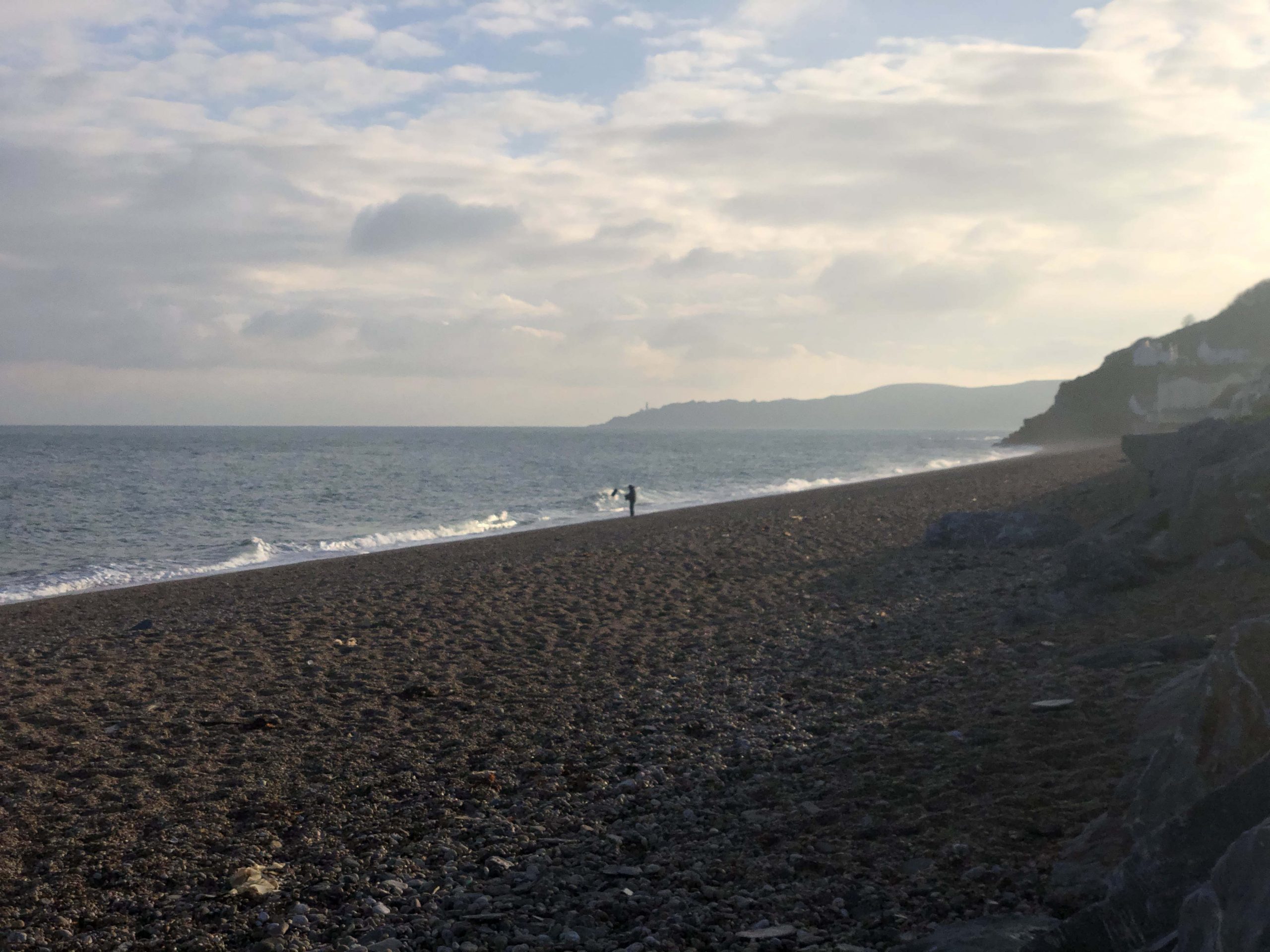
Slapton Sands standing in for Dungeness to record voiceover. A bitterly cold day for sound recording in south Devon in December 2020, using a Sennheiser MS stereo pair in a Rycote windshield recording on a Zoom F4.
Spending time at Slapton took me back to a music festival on the beach many years ago with my dear friend Robert Surgey (RIP) travelling there in his mum’s tiny Mini pickup.
It also reminded me of filming underwater along that coast with Laurie Emberson for the BBC. Let’s just say it was a different era in terms of health and safety! I remember being in our small rib off Start Point (which is visible distantly in the first picture) with Laurie trying to restart the outboard for what seemed an age after we had been filming on a small wreck in the afternoon. We drifted out to sea despite my efforts to row towards shore in a thick 6mm drysuit while Laurie pulled on the starter cord. Thankfully the engine eventually fired up.
This audio recording session was an early adventure after the Covid lockdowns in the UK where travel was prohibited beyond some hazy notion of ‘local’.
Robinson in Ruins
Kayla Parker introduced the screening of Patrick Keiller’s third film featuring the itinerant scholar Robinson, for Peninsula Arts, at Jill Craigie Cinema, Plymouth University in 2011:
“In conversation at Watershed in Bristol earlier this year, Patrick Keiller described how he set out with a camera to find answers to some questions about moving image and the history of settlement in the British landscape. That expedition became the film you’re about to see: an investigation into notions of dwelling, of belonging to the landscape, and an exploration of land ownership in Britain.”
Keiller says he wanted to find out why people are so interested in looking at landscape, and asks: Why do people love looking at a beautiful view? And, to whom does the land belong? The film starts with the conceit that Robinson’s exposed rolls of film were found in an ancient caravan in the countryside. Keiller was thinking of shooting on digital but someone told him he’d become be responsible for the digital data in perpetuity as part of his contractual obligations.
Paolo Cherchi Usai said cinema is self-destructive as projection eventually wears out film prints. He hadn’t tried to resurrect films on old video tape or audio on DAT!
Traces of Experience

In 2009 I attended the Aurora Festival in Norwich, Norfolk, UK. There were two programmes of Super 8 films by Berlin-based artist Milena Gierke.
Gierke introduced her film selection – she chose reels of Super 8 from her collection to share with the Aurora audience – and spoke about their filming context. She was sitting behind me with festival director Adam Pugh whilst Hogge (@photosonics) projected her films from the rear of the auditorium, watching her films over my shoulder.
2009 was the last Aurora festival and in the years since the website disappeared and now the domain is up for sale. A few fragments remain on the Wayback machine:
https://web.archive.org/web/20100409102556/http://www.aurora.org.uk/?lid=3306
My recollection of those films is hazy, some images remain (helped by the titles on the linked page above) although the experiential memories are at least as strong. The well-known Scottish filmmaker pissing around with someone from the ICO in the row in front, Gierke sat behind, the old seats of Norwich Arts Centre, the sound of the projector at the rear of the large auditorium.
Chatting to Milena next to Hogge and the projector after the screening, she handed over the homemade business card seen above.
Sounds distant
A number of films in my collection have accompanying audio on formats which changed over the years: audio cassette, a few reels of 1/4″ tape, DAT and solid state recording devices.
When searching for the original audio for the Sea City project recorded on DAT (Digital Audio Tape) I discovered my DAT recorder had expired – it turned on but would not play the tape. I contacted various friends and local organisations to borrow a player but all the machines had problems of one sort or another, seven machines in total!

A Panasonic SV-3800 DAT machine bought on eBay chewed up a tape

so was returned for a refund. It played a few tapes OK and these were captured via S/PDIF to the laptop.
Eventually I found a repairer in Ireland who fixed my Tascam DA-P1 – expensive!
Super 8 HD scan

A few rolls of Super 8 were scanned at Geneva Stop in Bristol. The MWA HD scanner can be set up to overscan ie to include the edges of the film which were excluded from the Deluxe scan in Soho years earlier. It’s amazing to remember that in just a few years video has transitioned from broadcast interlaced 4:3 standard definition to 16:9 HD progressive and beyond.
Father-land at NiMAC in October 18
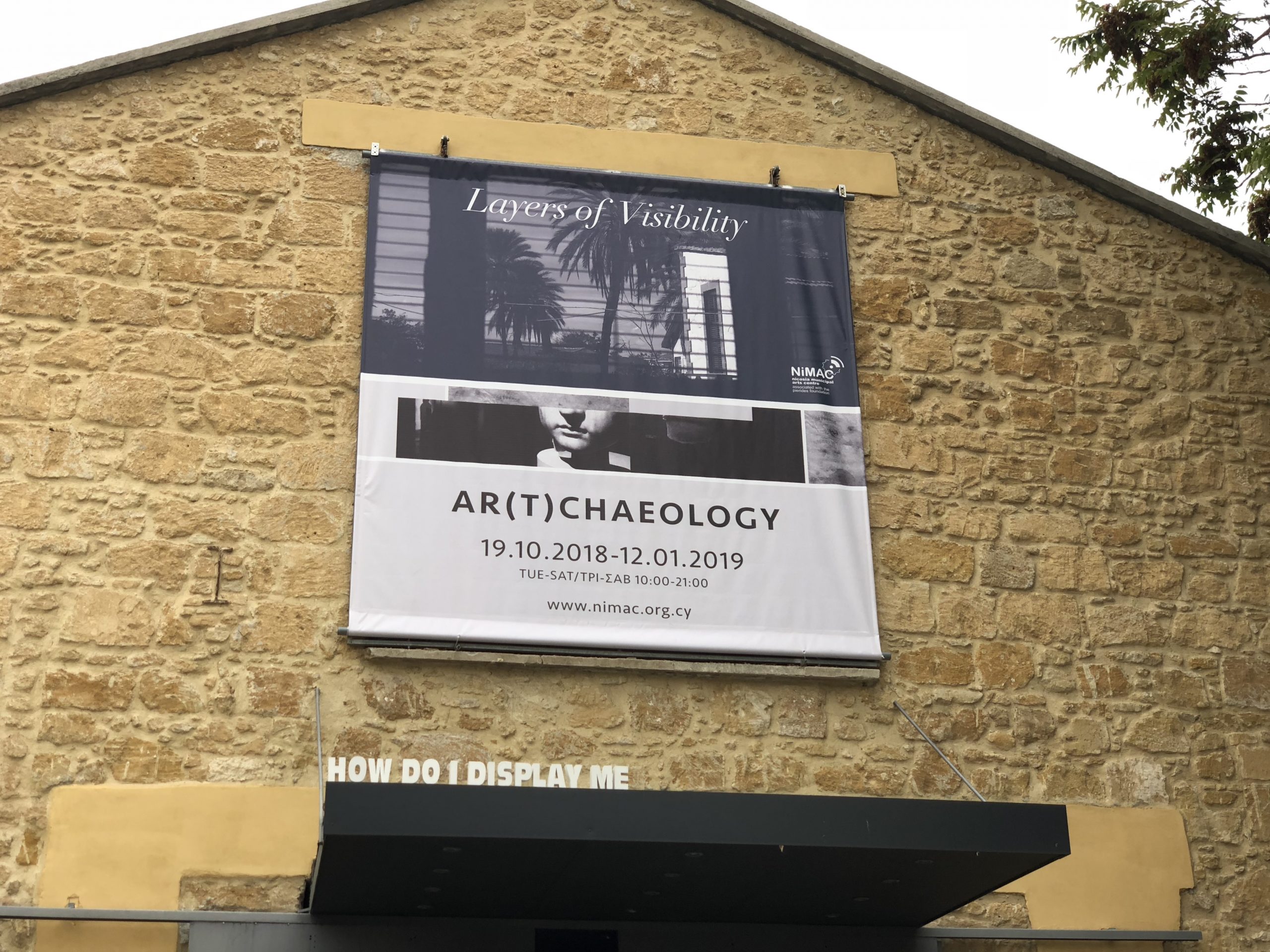
Our film will be part of the Layers of Visibility exhibition alongside Ar(t)chaeology in NiMAC from 19/10/18 to 12/01/2019. The ICPT photography conference takes place during the exhibition where we’ll present a paper on Father-land.
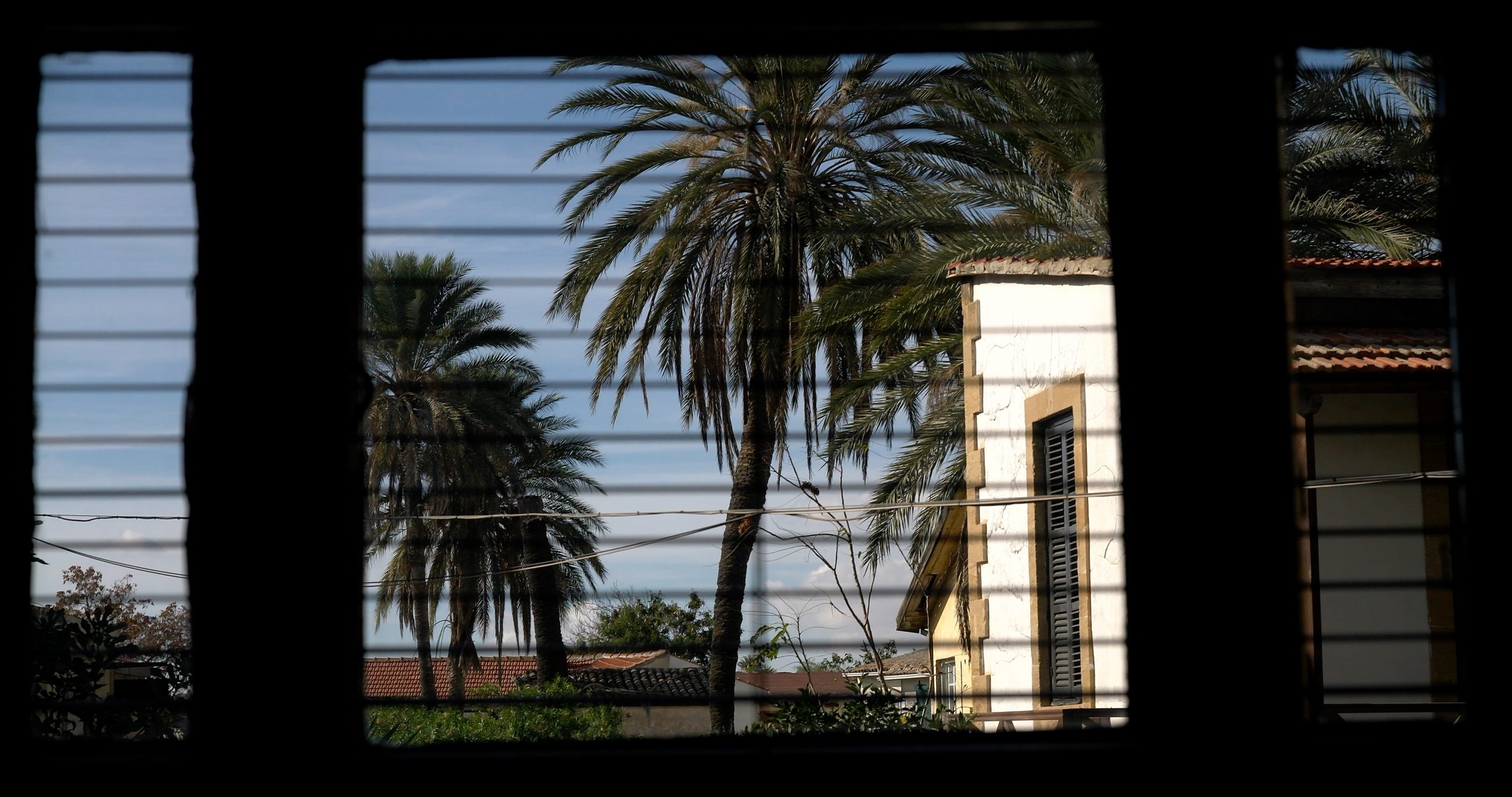
The exhibition catalogue and poster has my image looking out from the residency apartment. Professor Liz Wells selected it in part for the connection between the venetian blinds and the Venetian history of the old city.
The Colour of Dreams
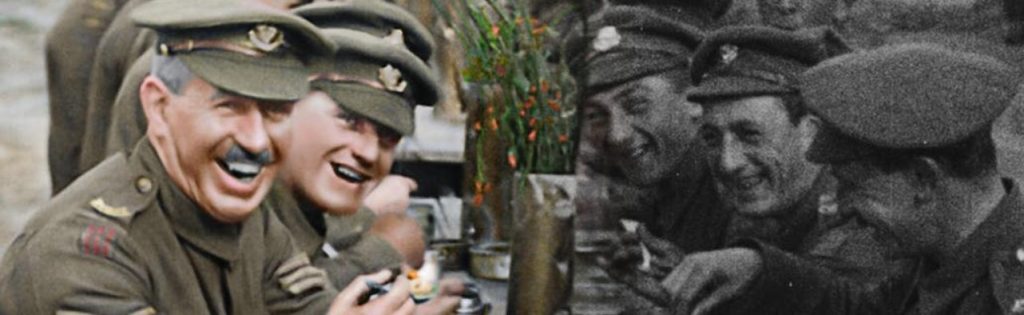
There is a fierce debate raging on CML’s [cml-film] under the thread title “Don’t call it a documentary”. It concerns the colourisation of WW1 archive footage by Peter Jackson in They Shall Not Grow Old. For some the colourised footage brings the soldiers and action to life, often suggesting that younger people can relate more strongly to the coloured lifelike representation. Others disagree and also point out that the original black and white footage is often viewed as extremely poor quality digitised copies.
Adam Forslund wrote: What is interesting to me is when I was a kid my grandmother (Born in 1921) and I were talking about dreams and she said “Sometimes I dream in Technicolor.” To which we had a long discussion about how she normally would dream in B&W. With science and history pointing out that humans have not always viewed colors the same way or at all. With all those that did see the war first hand gone then the war lives on in B&W.
Colorizing film for me is not needed.
Adam Forslund
Former DP turned Lawyer
5/12/18