Missing Derek in The Scott Building

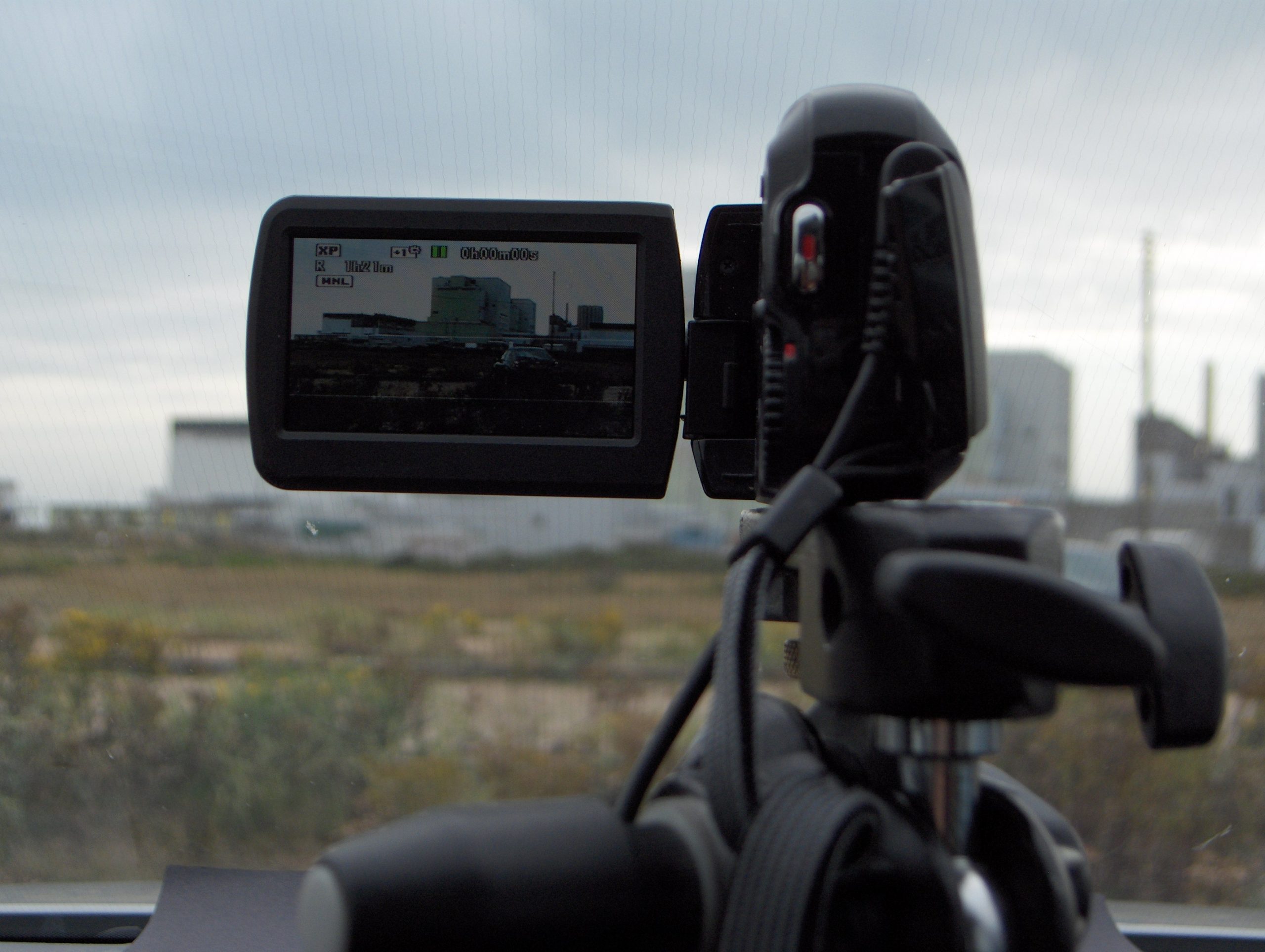
The final frame looking towards the power stations

I screened Missing Derek in the Scott 102 at Plymouth University. The 5-hour film played on a loop. When working in Kent in the 80s and 90s I was transported along A-roads and motorways across the width of England. After the quiet frenzy of getting ready to leave – both personal gear and the filming kit – you would settle into a ‘zone’ as the miles and hours rolled by in the crew bus. As we were physically transported over 300 miles one was also mentally transported by the ever-changing vista through the windscreen of the VW Transporter van.

The experience of motorway driving is similar to cinema, in that you have a fixed frame within which there is action – or the lack of it – but the sensorial experience is largely visual, as you are separated from the ‘outside’ within the vehicle, and the environment is perceived through the pane as images – like watching a film.

Derek Jarman: Brutal Beauty

Brutal_Beauty

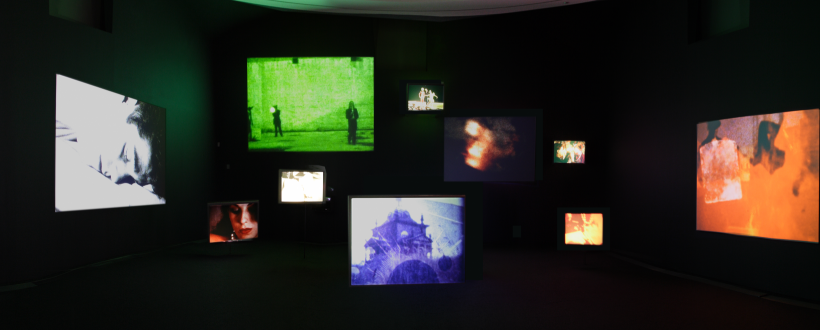
It’s ten years since we made a special trip to London to see the Serpentine exhibition which was curated by artist filmmaker Isaac Julien. There were several spaces in use: Blue was running in one room, Jarman’s paintings along some walls, some photos of Dungeness and a room with multiple projections of Super 8 loops. We sat on bean bags and saw some familiar work like the mirror plays from the Thameside flat, others were new to me. I had seen some of the material in the compilation work Glitterbug which was broadcast as an episode of Arena on BBC2 one evening. A gallery attendant stopped us filming the installation after a few minutes. It was lovely to see the work with Jarman’s sonorous voice filtering through from Blue.

The looped Super 8 in the gallery was a particular experience, perhaps not wholly satisfying. The screens were at different heights and sizes and for me the overall experience was engaging rather than anything more profound. I wouldn’t go as far as to say it trivialised the work but there wasn’t the engagement or immersion I would have appreciated.

I think I first encountered Jarman’s work (that is his personal cinema’ rather than his features) in a touring programme by the Arts Council which came to Plymouth Arts Centre cinema. I remember being struck by Gerald’s Film which was slowed down, with the frame-rate maybe 3fps on screen, although presumably projected via a 16mm blow-up.

Jarman described the origins of his Super 8 practice as being the home movies his father shot, then being an early adopter of Super 8 when he was loaned a camera. This was a personal practice that ran alongside his professional work as a designer for Ken Russell’s The Devils and for the ballet. Also, he was a painter, writer and gardener.

Over the years I did also see his features in the cinema: Jubilee, Caravaggio, The Tempest etc. I remember going from the Arts Centre down to the Minerva for a few well-earned pints after the The Last of England.
Film of Dust – to the lab!

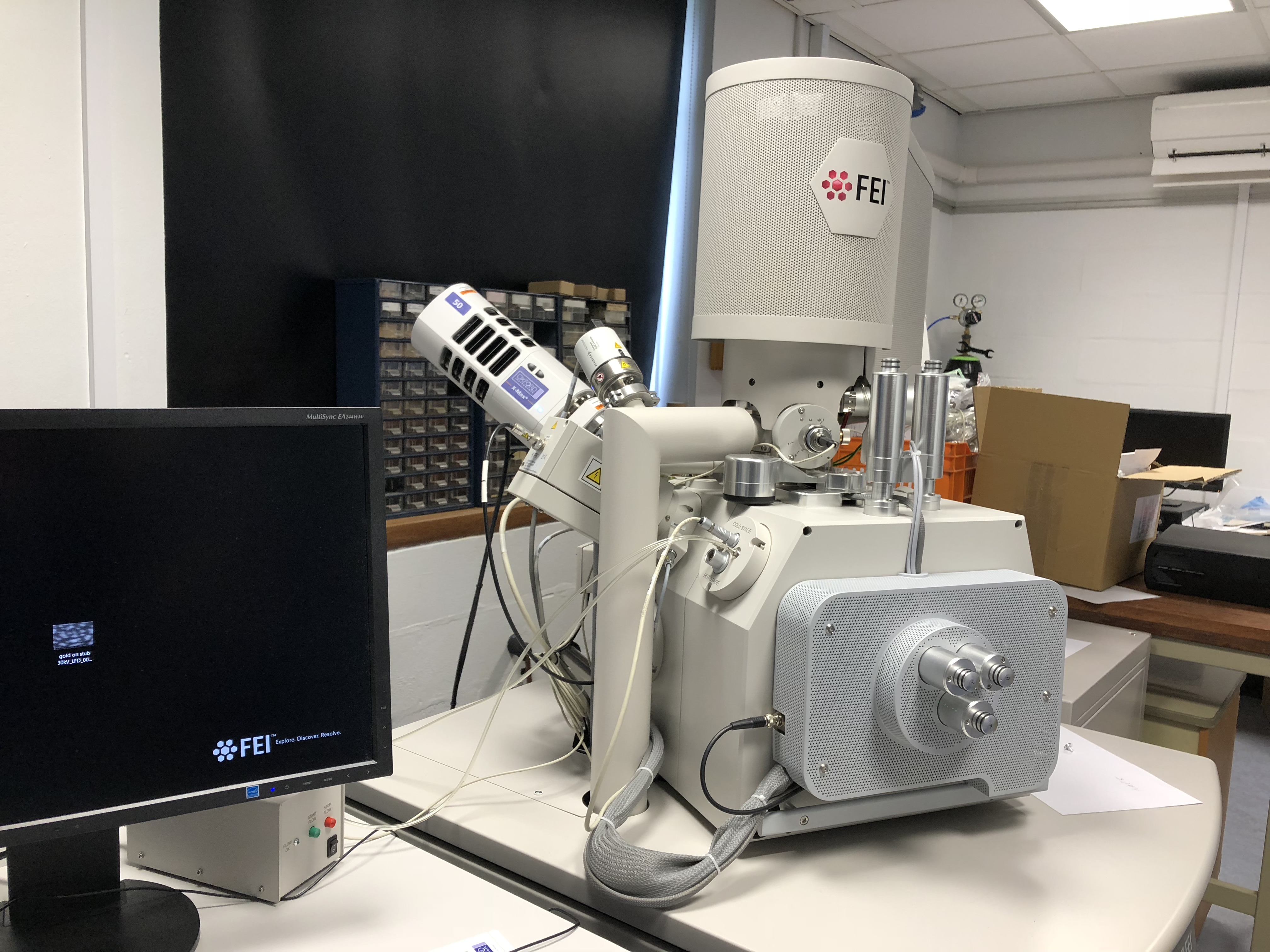
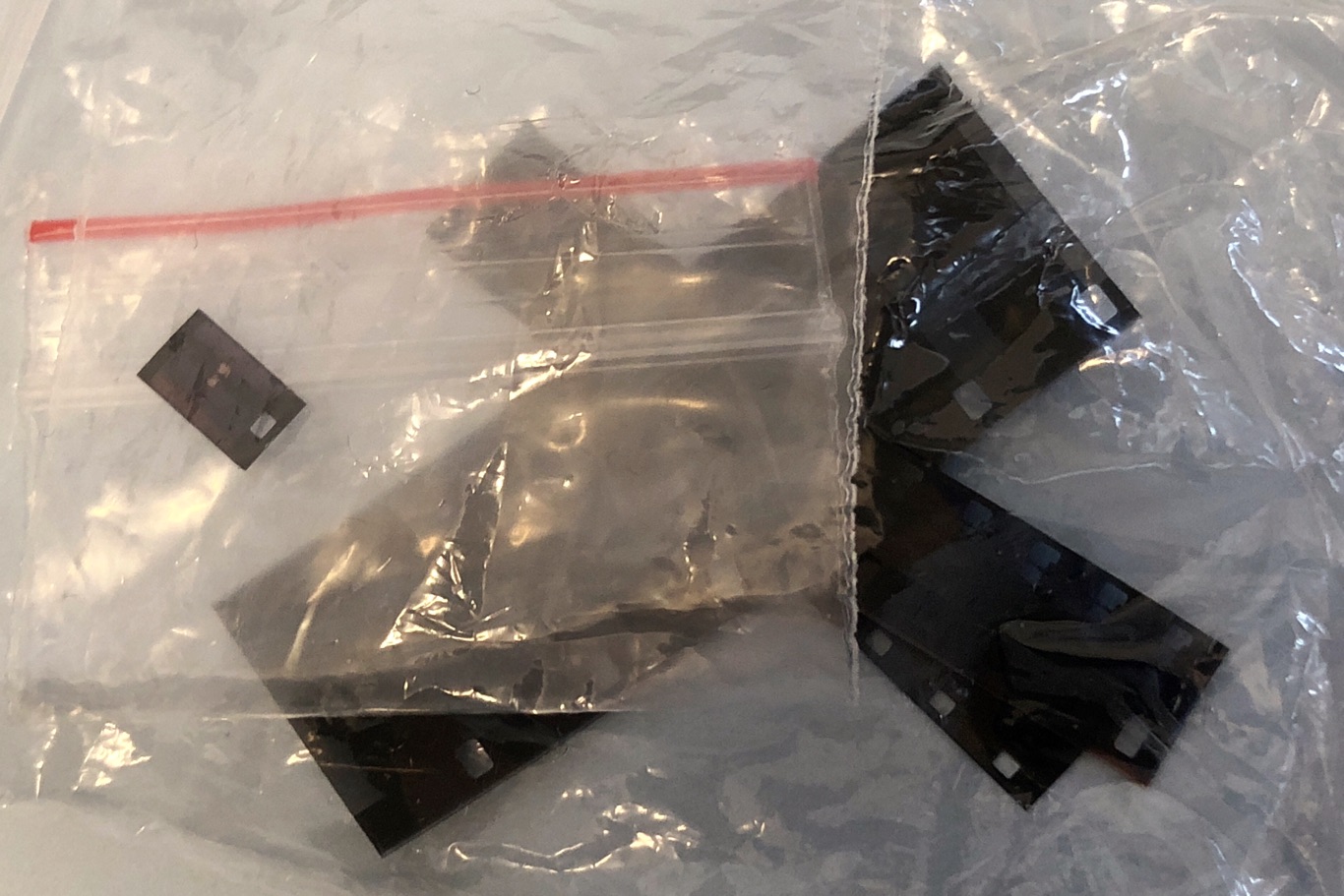
Today I took a strip of Super 8, a strip of Standard 8 and a strip of 16mm to the Plymouth University’s Electron Microscopy Centre. In a ziplock bag was also the single frame of Super 8 cut from the from the (physically) unedited Womad  film – the act of cutting is in the video below:

The footage was shot as the journey of a flâneur along the coastal path – the liminal land/sea southern boundary of the City of Plymouth. The flâneur, in the modernist sense, seemed an appropriate stance for the filmmaker as the route traversed the varied and disparate results of urban planning, from the semi-derelict industrial to accessible tourist spots. Patrick Keiller suggests:

“The present day flâneur carries a camera” and warns of “the lonely life of the street photographer, who acts the flâneur in the hope of recording glimpses of the marvellous with his camera. His is a difficult task, for poetic insights so rarely survive their capture on the emulsion.” (Keiller, 1981/2)

The Film

Continue reading “Sea Front – some thoughts”

Dust

Plymouth University Arts Institute brochure features Father-land project

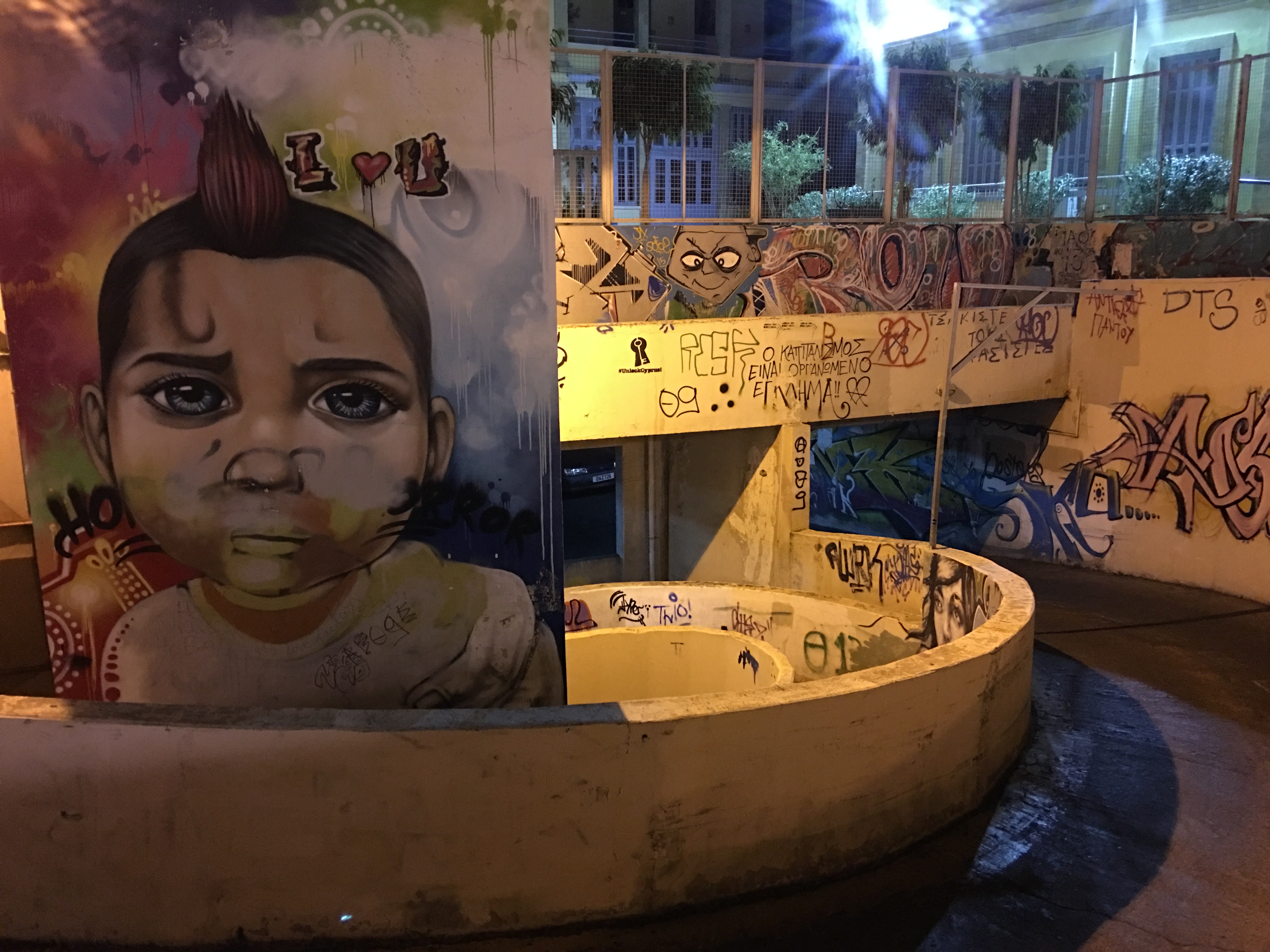
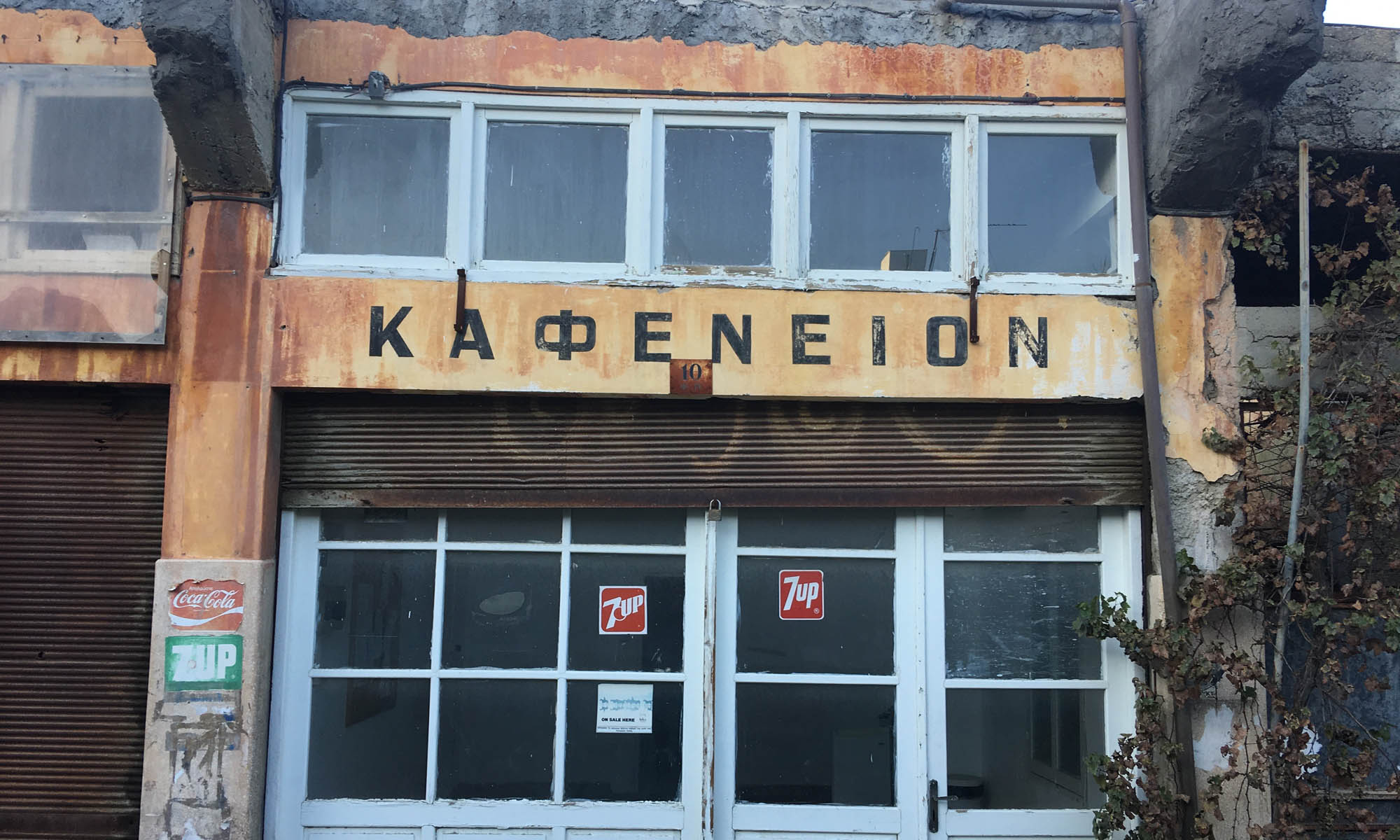
Nicosia

Plymouth University Arts Institute brochure about last year’s Cyprus residency.

Father-land: troubled dialogues in a divided island

Words and pictures: Kayla Parker and Stuart Moore

The practice research conducted by Kayla Parker and her colleague Stuart Moore at University of the West of England, Bristol, investigates notions of home and (dis)placement in the divided island of Cyprus. Through intertwining subjectivities with political and social histories, the legacies of colonialism, occupation, and the Cold War, the research outcomes will be shared as an essay film, a poetic form of documentary that blurs traditional genre boundaries, being a form of non-fiction that employs fictional techniques.

Continue reading “Plymouth University Arts Institute brochure features Father-land project”

DRHA 2017 DataAche exhibition

Skimming the Archive
Single channel HD video work comprising three panes of Super 8 footage

The work interrogates the ‘digitised materiality’ of personal Super 8 film, contrasting the tactile presence of the celluloid archive with the malleable temporality of its digital afterlife, and more particularly the accessibility afforded by skimming many gigabytes of filmed material in a non-linear editing program.

The film was developed across the 31 days of March 2016 using a process-based methodology – each day I skimmed across the hours of footage until a single image arrested my attention (cf. Barthes’ punctum) then I appended the following second of film footage to a timeline. The three panes allude to the past, present and future.
This presentation includes the original One Second a Day and its three subsequent iterations where the camera footage clips are extended to two, seven and 20 seconds. As the clip-length extends the repeated image progression across the panes become less obvious. Skimming the Archive simultaneously celebrates the boundless possibilities of digital postproduction while lamenting the feeling that with ‘digital’ a work is never fully finished.

This project is part of my 3D3 practice-led PhD based at Digital Cultures Research Centre, UWE funded through the AHRC.

U-matic

IMG_4311-2017-04-21-11-40.jpg

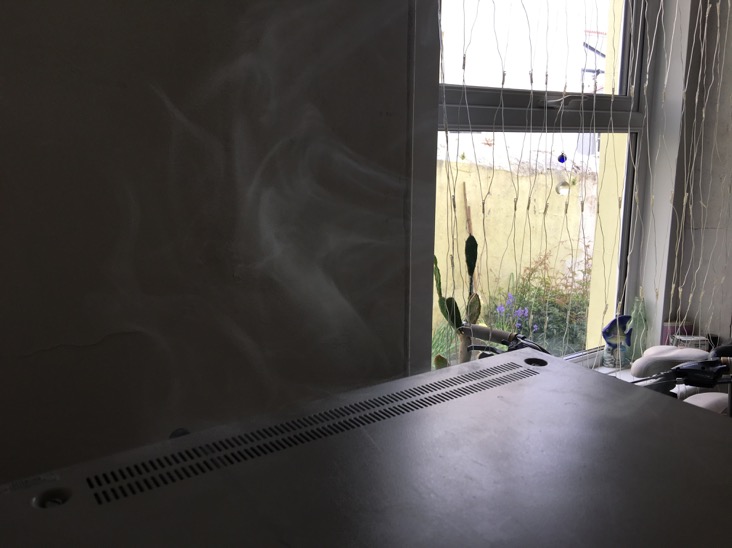
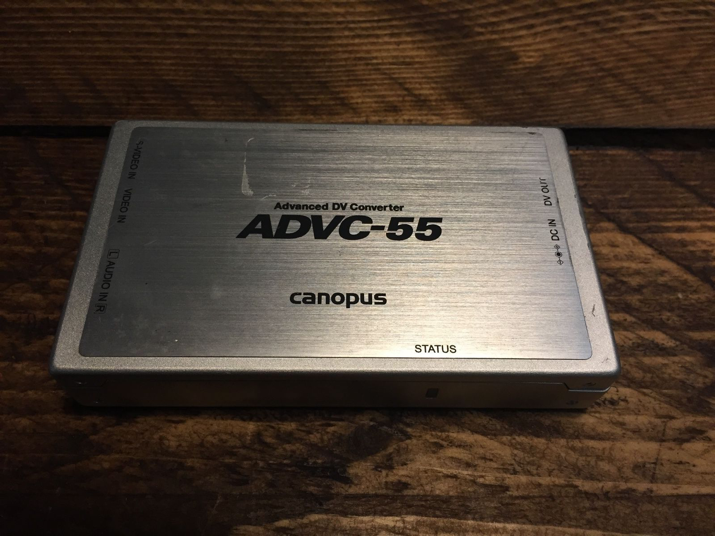
Experiments digitising from a lo-band U-matic player came to an abrupt halt when the machine expired with a loud bang and acrid smoke. The player went on its final journey to the council recycling centre.