1. That it tells me something I don’t know and questions as much as it answers.
2. That it holds a mirror to the broken world.
3. That it takes a new shape, somehow unlike that of the movies before it, especially those within its own genre.
4. That it not dehumanise or take cheap shots.
5. That it comes as a shock, even if the shock is that of discomfort or joy.
6. That it not look like a music video, or smell like an advertisement.
7. That it is somehow mysterious, ambiguous, strange.
8. That it is somehow funny.
9. That it inspires me to rage.
10. That it inspires me towards peace.
11. That it not be guided by the Hollywood Commandments (Film as a Business, Movies as Commodities, Worship of Celebrity and Spectacle, Life in three Predictable Acts).
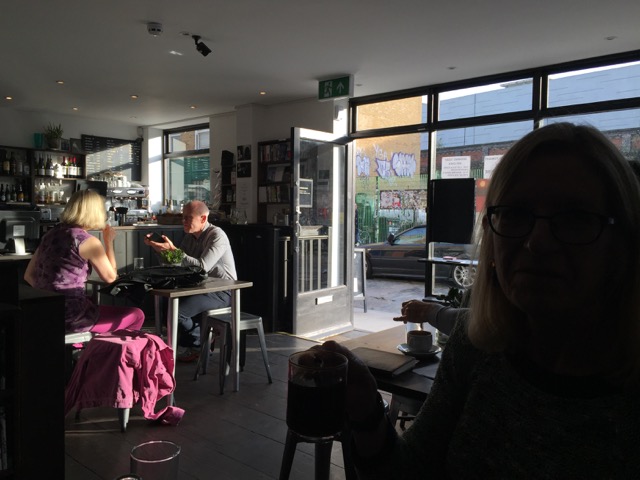
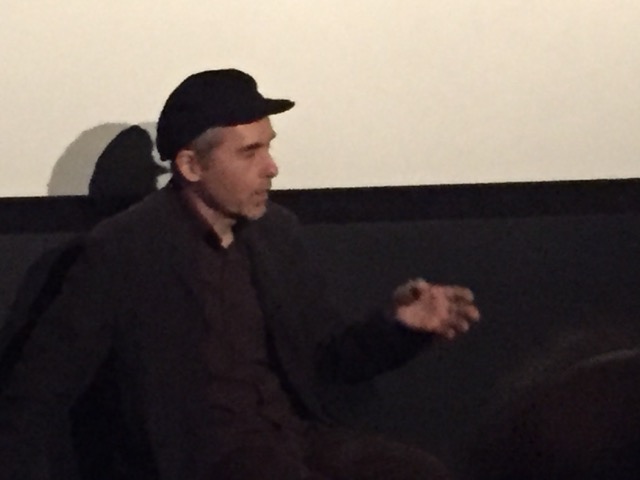
We took a trip to Bristol to hear Patrick Keiller’s talk “The Future of Landscape and the Moving Image” at Watershed in Bristol.
Keiller’s approach to documentary is highly influential – the locked-off framing of London and his thoughts on the filmmaker as contemporary flâneur resonate with my films Cinematic City and the earlier Sea Front. Keiller addresses Martin Heidegger’s concept of ‘dwelling’ and people’s almost instinctive (or is it habitual?) preference for the homely, the cozy. Plymouth’s city centre was flattened and redeveloped after World War Two and generates a strong reaction – the urban planning and architecture is on a scale beyond the domestic and maybe feels inhospitable to some people, or perhaps the clearance caused a rupture in the human history of the place.
Meanwhile to the east of Plymouth farmland is being bulldozed to create a new Poundbury-style neo-Georgian toy-town. Prince Charles wants to “build again the types of places we all know strike a chord in our, by now, rather bewildered hearts, however ‘modern’ we are – places that convey an everlasting human story of meaning and belonging”.
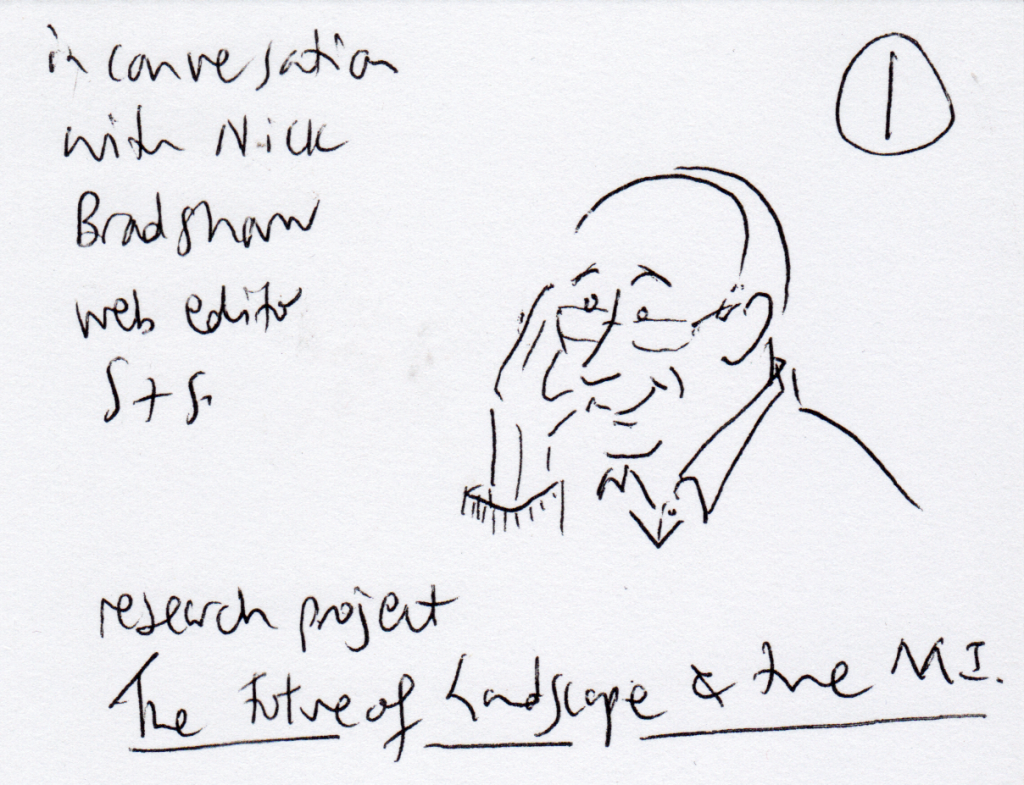
Drawing by Kayla Parker
Watershed’s notes: Trained architect-turned filmmaker Patrick Keiller is one of the most distinctive voices in cinema and in this talk he talks to Nick Bradshaw (web editor Sight & Sound) about his film Robinson in Ruins which forms… Narrated by Vanessa Redgrave the film is one of the outcomes of a three-year research project entitled The Future of Landscape and the Moving Image In this talk Patrick Keiller discusses the… origins of the film his research notions of landscape economy and ownership and his wider body of work as a filmmaker and researcher Patrick Keiller studied architecture at University College London and fine art in the…
Trained architect-turned filmmaker Patrick Keiller is one of the most distinctive voices in cinema, and in this talk he talks to Nick Bradshaw (web editor, Sight & Sound) about his film Robinson in Ruins, which forms part of a collection of feature-length cine-essays setting out to examine a particular ‘problem’.
Following the journey of Robinson, an enigmatic, and esoteric intellectual who travels through Tory Britain, Robinson in Ruins examines the problem dwelling itself, focusing on the discrepancy between mobility and displacement in developed economies, and a widespread tendency to privilege and romanticise modes of dwelling that derive from a more settled, agricultural past.
Narrated by Vanessa Redgrave, the film is one of the outcomes of a three-year research project entitled The Future of Landscape and the Moving Image.
In this talk, Patrick Keiller discusses the origins of the film, his research, notions of landscape, economy, and ownership, and his wider body of work as a filmmaker and researcher.
Patrick Keiller studied architecture at University College London and fine art in the Department of Environmental Media at the RCA. His films include London(1994) and Robinson in Space (1997), the latter extended as a book in 1999. He is a Research Fellow at the Royal College of Art in the Department of Communication Art & Design.
Nick Bradshaw is a film critic and web editor at Sight & Sound, who has previously worked as Deputy Film Editor for Time Out. He has also written for the Telegraph, Guardian Online, Times, Independent on Sunday, Village Voice, and LA Weekly.