DRHA 2017 DataAche exhibition

Skimming the Archive
Single channel HD video work comprising three panes of Super 8 footage

The work interrogates the ‘digitised materiality’ of personal Super 8 film, contrasting the tactile presence of the celluloid archive with the malleable temporality of its digital afterlife, and more particularly the accessibility afforded by skimming many gigabytes of filmed material in a non-linear editing program.

The film was developed across the 31 days of March 2016 using a process-based methodology – each day I skimmed across the hours of footage until a single image arrested my attention (cf. Barthes’ punctum) then I appended the following second of film footage to a timeline. The three panes allude to the past, present and future.
This presentation includes the original One Second a Day and its three subsequent iterations where the camera footage clips are extended to two, seven and 20 seconds. As the clip-length extends the repeated image progression across the panes become less obvious. Skimming the Archive simultaneously celebrates the boundless possibilities of digital postproduction while lamenting the feeling that with ‘digital’ a work is never fully finished.

This project is part of my 3D3 practice-led PhD based at Digital Cultures Research Centre, UWE funded through the AHRC.
Cinema is Dead Conference, University College Cork

STUART MOORE AND KAYLA PARKER (PLYMOUTH)

ABSTRACT: FRAMING THE LANDSCAPE
DEVELOPING AN ECO-SENSITIVE CINEMA

This paper explores the potential for an ethical film-making practice in the Anthropocene through critical reflection on the material specificities of moving image and the affect of landscape cinema using two recent moving image artworks, Reach and Maelstrom: The Return (2014), as case studies.
Continue reading “Cinema is Dead Conference, University College Cork”

U-matic

IMG_4311-2017-04-21-11-40.jpg

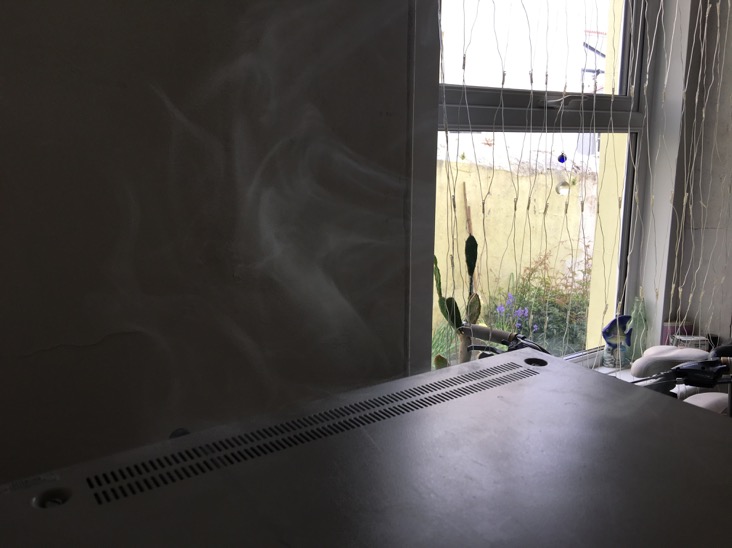
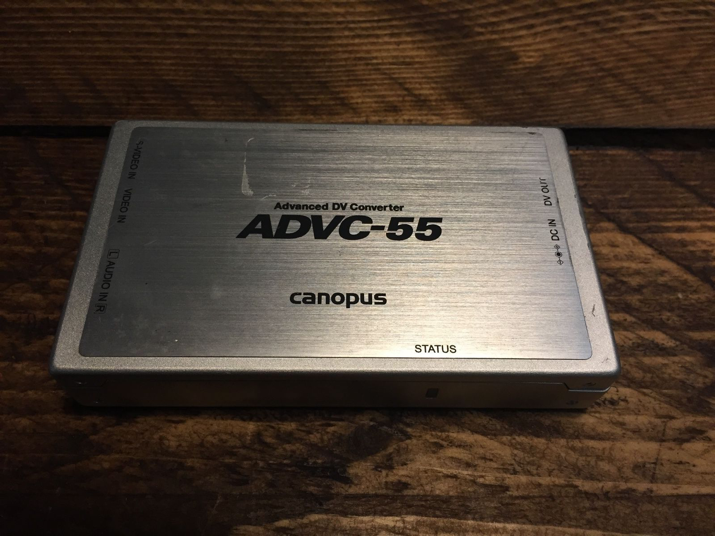
Experiments digitising from a lo-band U-matic player came to an abrupt halt when the machine expired with a loud bang and acrid smoke. The player went on its final journey to the council recycling centre.

Babette Mangolte

IMG_4274-2017-03-26-11-06.jpg

Babette Mangolte – 3 Landscape films, ICA London, presented as part of the Birkbeck Essay Film Festival 2017. Introduced by Laura Mulvey (seen dimly in photo top right) and Lucy Reynolds.

26 Mar 2017

There? Where?, dir. Babette Mangolte, USA 1979, 16mm, 8 mins

  • The filmmaker describes the first film, There? Where?, as “a naive look at Southern California by an outsider, and/or an essay on displacement through the disjunction of Californian images and off screen voices. Where is the location of these voices, here or there? Are the images near or far in relation to the voices? Are the images commenting on the images or vice versa?”

    The Sky on Location, dir. Babette Mangolte, USA 1982, 16mm, 78 mins
  • Documenting seasonal changes across the American West, from Wyoming to Oregon, the second film, The Sky on Location, is an affecting meditation on untamed nature and the atmospheric effects of climate on the landscape. Weather and ambiance, the wilderness and the Sublime, Mangolte articulates the shifting ways of looking at Nature from the nineteenth to twentieth centuries, and her keen cinematographer’s eye captures an awe and reverence for the American wilderness. The Sky on Location confronts us with a vision of the natural world, translated into a palette of ambient colour and visceral mood.

    Visible Cities, dir. Babette Mangolte, USA 1991, 16mm, 31 mins

    Finally, in Visible Cities, two women looking for a home in Southern California realise, in Mangolte’s words, that “the single-family home [is] the locus of the exclusion of the other. It is also unaffordable. They both feel as if they are invisible citizens. They witness how the architectural landscape imposed on the California desert appears as a reversal of nature, where exclusive living, gated communities and segregation go hand in hand. They dream of escape.”


http://babettemangolte.org/film1991.html

Amnesialand

Amnesialand, approx 22 min

Stefanos Tsivopoulos

Part of The Presence of Absence, or the Catastrophe Theory

https://nimac.org.cy/the-presence-of-absence-or-the-catastrophe-theory/

Mixed BW and colour archive film with contemporary footage

No diegetic sound, just high-quality voiceover interspersed with silence – three voices, one female. The shots of the landscape appear to be shot on colour Super 16 although grainless as projected there is a subtle but evident weave. Projection from Blu-ray with mpeg gop stuttering particularly on shots with sea in the upper frames.

I sat in NiMAC’s auditorium (where we hope to screen Father-land) watching the film. The clear narration filled the space. “We do not remember, we rewrite memory as much as history is rewritten.” (Chris Marker, Sans Soleil, 1982)

“Stefanos Tsivopoulos takes a photographic collection found in the public archives of the port city Cartagena as starting point for a poetic investigation on the questions of memory and forgetting, on the role that images play in the construction of history, and their relation to reality and historic truth.”

Compare with anamnesis.

anamnesis, a recalling to mind, or reminiscence. Anamnesis is often used as a narrative technique in fiction and poetry as well as in memoirs and autobiographies. A notable example is Marcel Proust’s anamnesis brought on by the taste of a madeleine in the first volume of Remembrance of Things Past (1913–27). The word is from the Greek anámnēsis, “to recall or remember.”

31 Days LSFF screening at The ICA

We drove to London to see 31 Days in the Celluloid Traces experimental film programme at LSFF.

The DCP which the festival produced was great and the widescreen format looked excellent in the ICA’s cinema, probably the best looking film in the programme.

The programme raised questions for me about the perceived nature of ‘experimental film’ as a category. The programme was described as embracing “our nostalgia for all things analogue in this varied programme of experiments, indulging us with the crackling aesthetic of Super 8 alongside found footage from the archives and the fuzziness of early VHS.”

In Celluloid Traces it seemed the benchmark/criterion was quirky or mannered, maybe just films which weren’t obviously narrative or documentary or ones that could fit into a genre like ‘music video’. Perhaps now shooting on film has become – of itself – experimental as filmmakers grapple with old equipment, processes and substandard facilities businesses.

River of Memories

Digital Memory Symposium

Arts Institute symposium
Plymouth University
16 January 2017

Title: River of memories

Kayla Parker and Stuart Moore

Abstract

This paper explores the affinity between location and registers of memory using the material specificities of two of our recent collaborative digital films whose methodology aligns to new materialism’s imperative of “understanding materials through working with them … understanding and working with the material, not dominating it” (Simms and Potts, 2012, 13). Reach is an ‘environmental’ direct animation that enables a symbiotic conversation between artist and place through ‘celluloid’ film’s agency as a sensitive and sensible recording medium. The upcycling of 16mm film by planting it in the mud banks of the Tamar allows the river to ‘make the film’ through the flow of its tidal waters and the action of biota. Maelstrom continues our theme of recycling and repurposing ‘unwanted’ material: mysterious upwellings and whirlpools flood with cinematic memories of long-forgotten arrivals and departures at the mouth of the Tamar, effected through the ‘projection’ of archival home movie footage – a ‘sea of moving image’. Whilst both films re-create memory in the present, Reach makes memories and Maelstrom retrieves them: like cinema and a moving image stream, the interplay of stasis and motion of the tidal river’s intermittent movement brings into being a confluence of histories and lived experience.

5 keywords

film, landscape cinema, materiality, new materialism