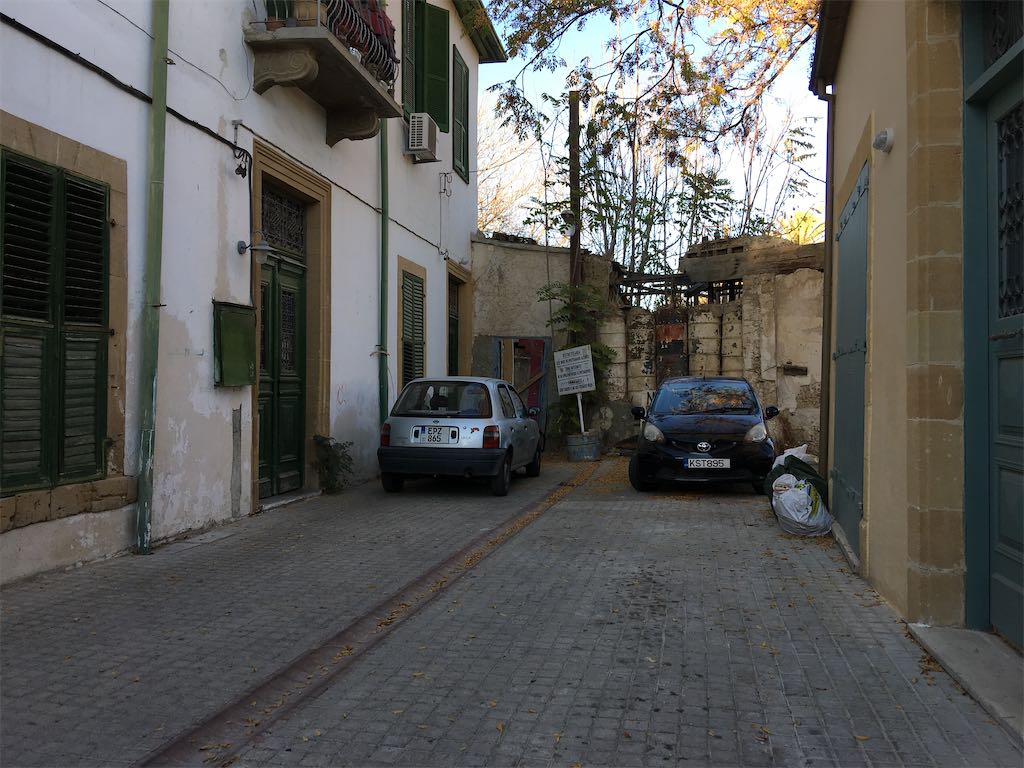
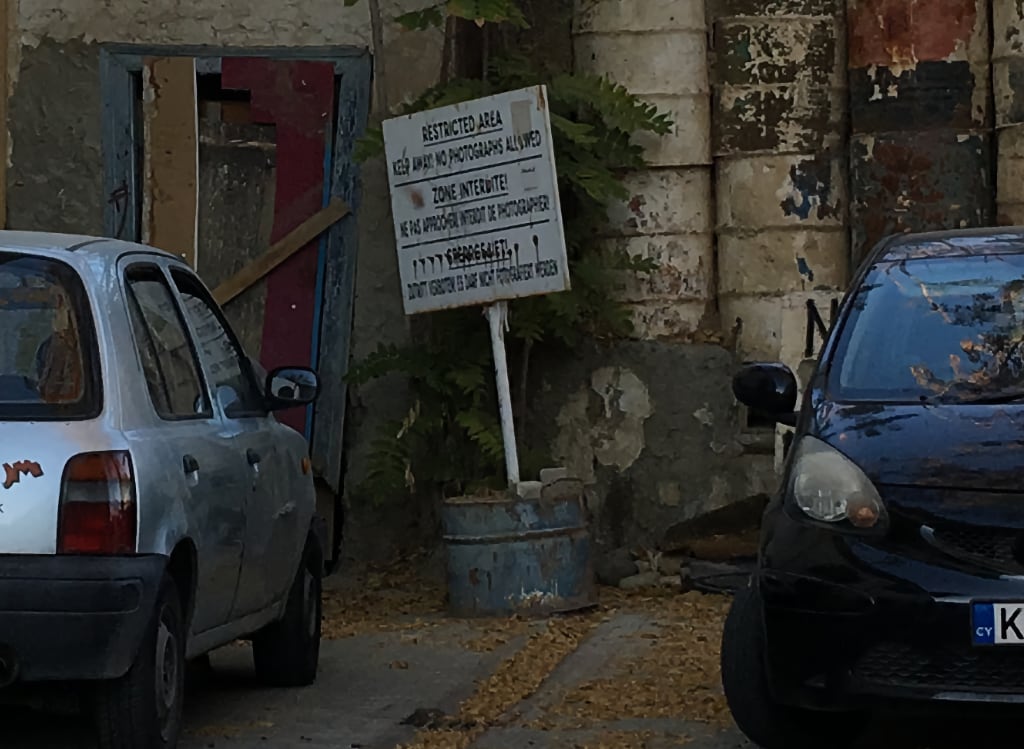
The green line on a map in the 1960s has become a reality on satellite imagery as wildlife has flourished in the Buffer Zone while the manmade structures have fallen into ruin. We had recorded birdsong and the adhan from the Selimiye Mosque with a gun mic in a suspension mount when we attracted some unwanted attention from a group of Greek Cypriot border guards as we were walking back to the flat. They might just have been curious but it’s hard to tell when they’re in army uniform and carrying automatic weapons.
A few turns down the labyrinthine streets and we’d lost them.
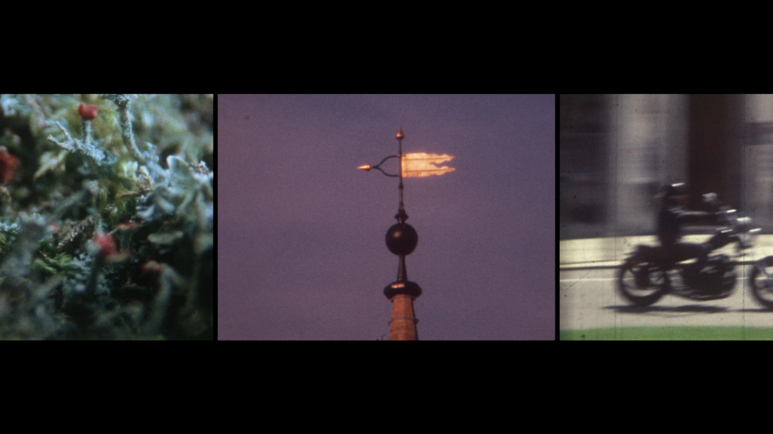
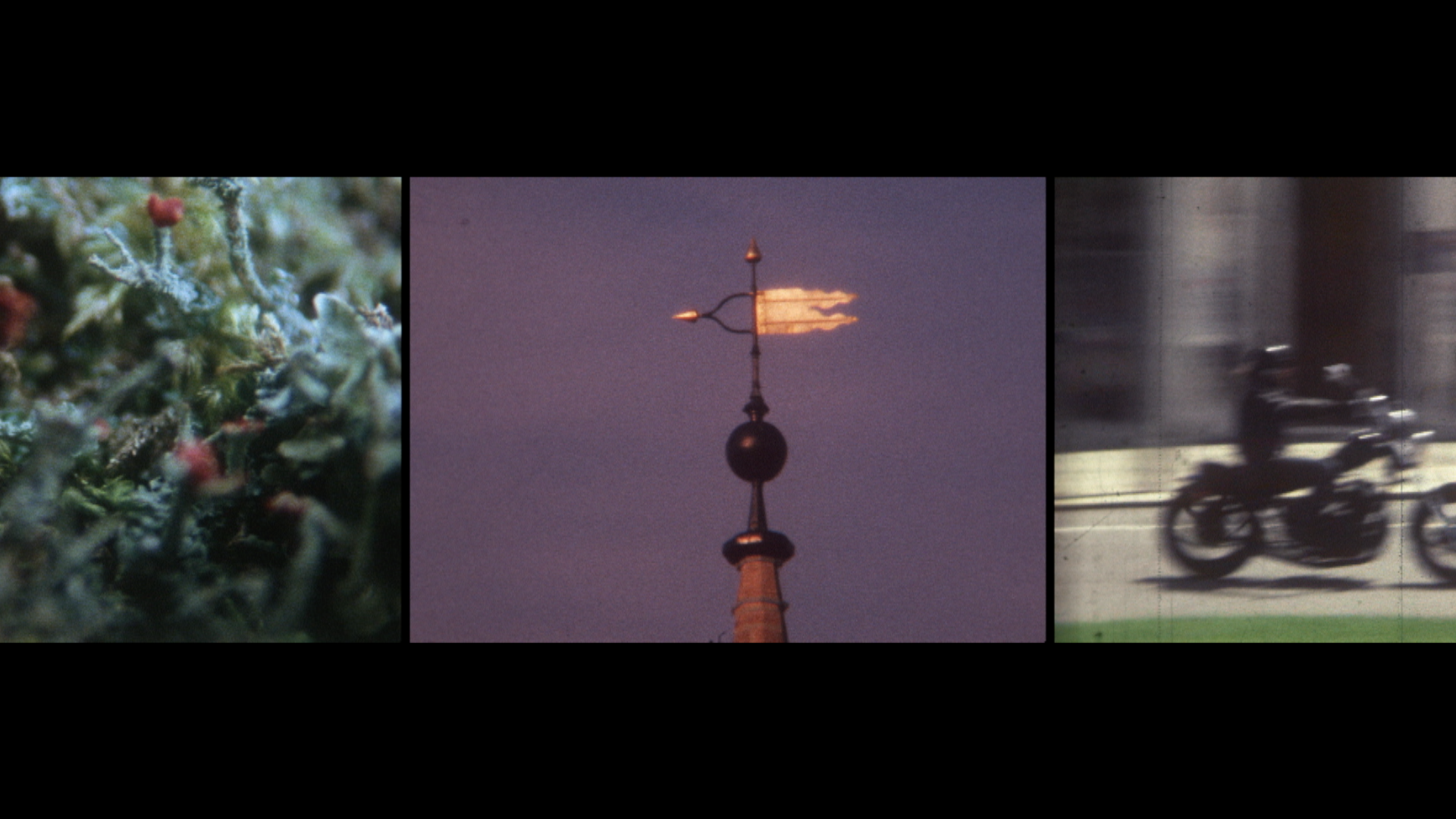
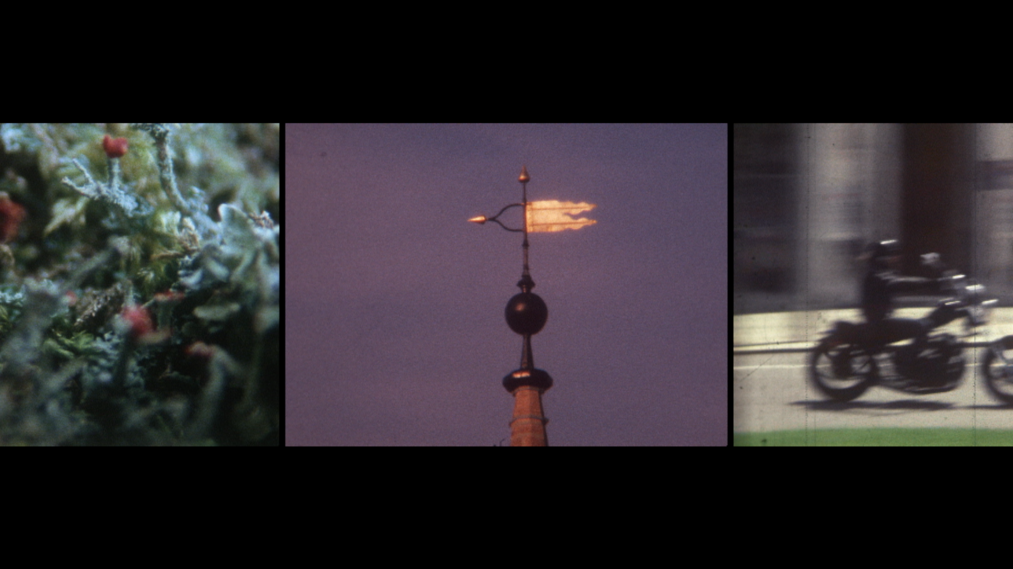
31 Days has been selected for the London Short Film Festival 2017. The still above from the film shows from left to right: lichen from Magpie Bridge in the Tavy valley north of Plymouth, the weather vane of Charles Church filmed from the top deck of a multi-storey car park before it was demolished for the new Drake Circus, and a biker at St Andrew’s Cross roundabout.
I remember each filming episode quite clearly although they were all separate in time and place despited being placed together in the editing process. The biker was (probably) the earliest and was filmed on a Canon 814 Super 8 camera which I’d bought. Any earlier filming was on borrowed cameras – there was possibly only one previous roll which included filming in Finborough Road, Chelsea.
It’s interesting to reflect whether filming and reviewing these scenes ‘fixes’ the memories. The lichen on a tree triggers memories of visiting a new place, parking and walking away from the river – activities which weren’t caught on film. Similarly I recall setting up and filming at the top of the brutalist car park very clearly – extratextual recollections.
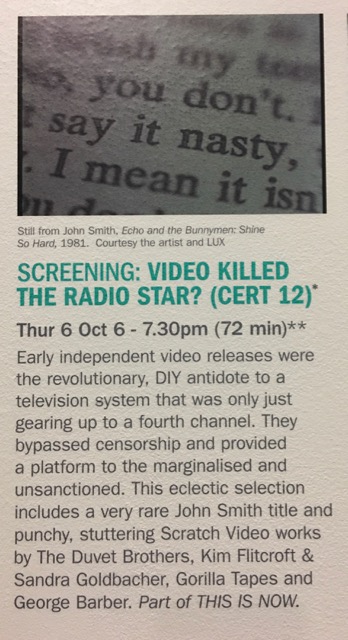
SCREENING: VIDEO KILLED THE RADIO STAR? (CERT 12)
Thur 6 Oct 6-7.30pro (72 rain)
Early independent video releases were the revolutionary, DIY antidote to a television system that was only just gearing up to a fourth channel. They bypassed censorship and provided a platform to the marginalised and unsanctioned. This eclectic selection includes a very rare John Smith title and punchy, stuttering Scratch Video works by The Duvet Brothers, Kim Flitcroft & Sandra Goldbacher, Gorilla Tapes and George Barber. Part of THIS IS NOW.
The strongest programme was The Miners’ Tapes. One oddity was a truly awful film featuring Echo and the Bunnymen by John Smith. The Duvet Brothers work held up well.
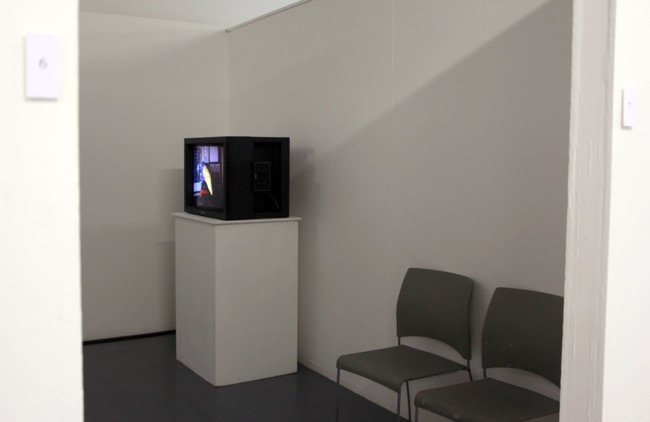
Womad (2016) was installed in the gallery space using a 27” Sony Trinitron cube monitor playing from a Raspberry Pi.
Womad looped on a Sony Cube CRT monitor at RWY.
The organisers needed some text for the catalogue and I wrote the following a few days before the opening:
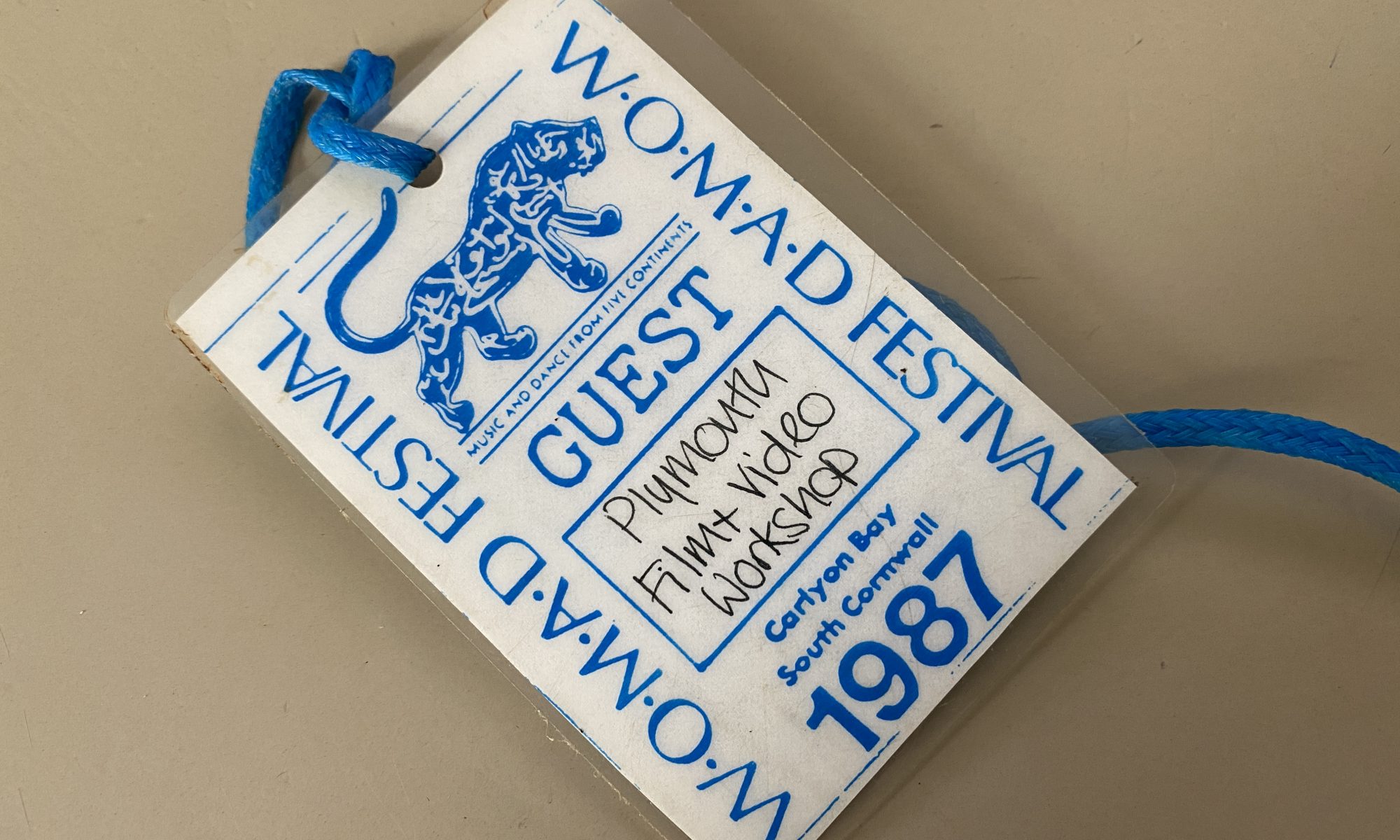
Womad Super 8 Colour, sound 9 min 30 Filmed at WOMAD 1987 festival in Carlyon Bay. The silent film was edited in camera and the contemporaneous audio was sourced from video recordings. We see the effect of time on the film material whilst the people have not aged, frozen in the sunshine of the past. Part of a PhD archival investigation; a collaborator shot one short sequence.
I thought about the text after it was dispatched and wondered whether it was a mistake to disclose the date of filming, anchoring the moving images to the calendar date which might have meaning for the audience outside of the film experience. The status of the work was perhaps changed to that of an historic document versus a ‘simple’ visual and auditory experience. One visitor had attended the event and disclosed this in the comments book.
The presentation of a new work using old footage is interesting. The context of producing work for this PhD is different to a producer looking for material to use in a documentary where the subject of the production would lead a researcher to seek out suitable material in an archive to illustrate their chosen themes. My practice is the opposite, using footage as an end in itself, whether it is visually interesting, or sparks some memory.
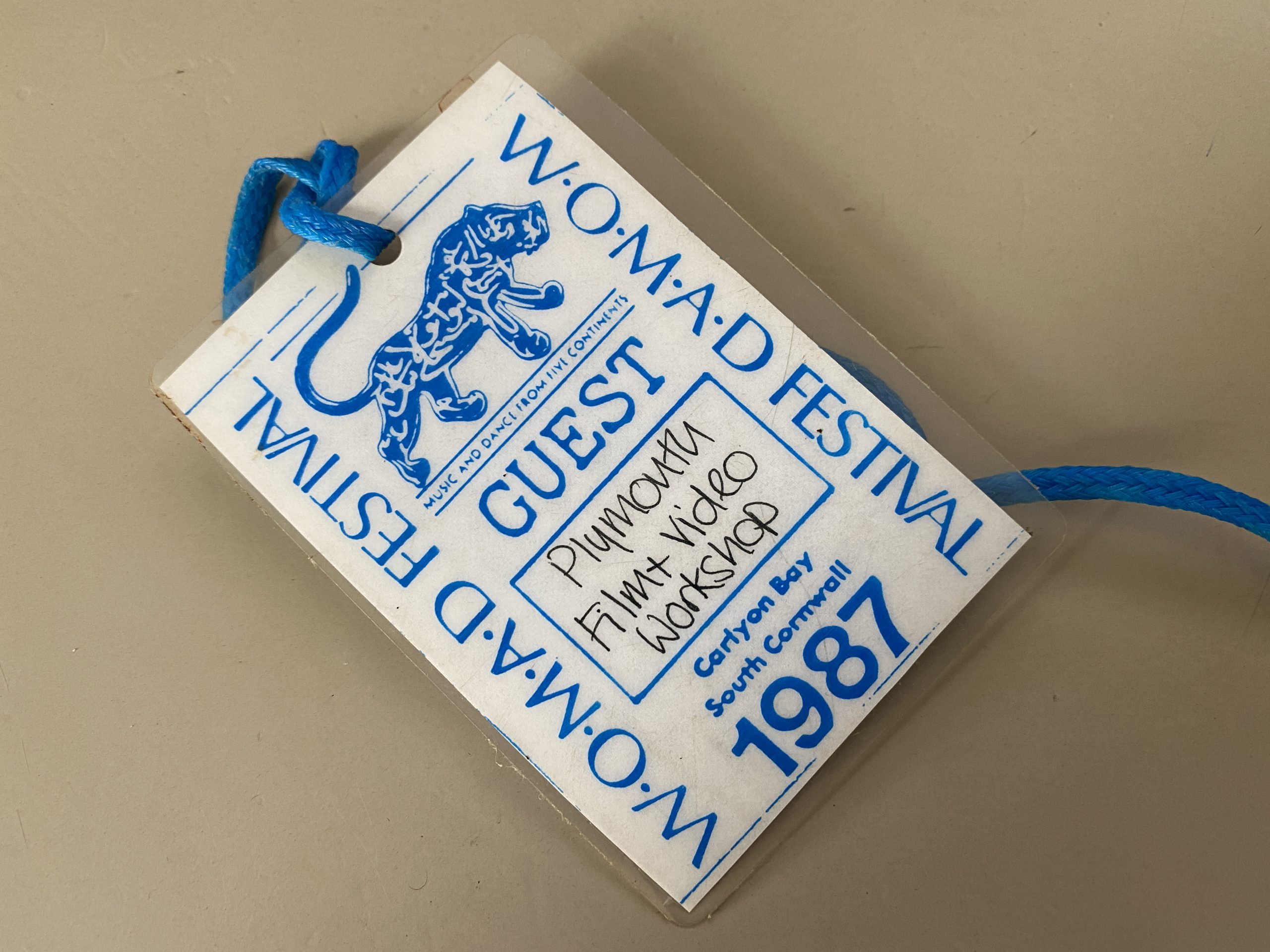
Guest pass issued for filming at the festival
The film was edited in camera and I was again reminded of Milena Gierke’s films. I have found a piece of writing(Accessed 27/09/16) from Directors Lounge, Berlin about Gierke’s practice:
“The tough decisions of choosing the right scene matching with the previously recorded images results in an incredible economy of resources, as the artists usually shoots with an 1:1 ratio of used film footage, unless some technical problems occur. At the same time, the in-camera edits often result in the classical unities of action, place and time, or even more so, the films represent the holistic perception of space and time at one location, in one situation. Each film breathes, happens at the present time, and at the moment of its showing.”
Womad has that 1:1 shooting ratio except for some very dark shots inside the auditorium which were excised. How different is the experience of viewing Womad at Being Human – digitised from Super 8, looped with a soundtrack on a video monitor with the artist not present – from Gierke’s projections? The take-it-or-leave-it approach (uncompromising) with by-appointment viewing is perhaps just one end of a continuum with unlimited online access being the other.
“At the same time the encounter stays ephemeral even in its conserved form on celluloid (since long replaced by the less romantic acetate), also because Milena Gierke is opposed to any reproduction of her films as stills, as she insists on the uniqueness of the film viewing experience during a screening.”
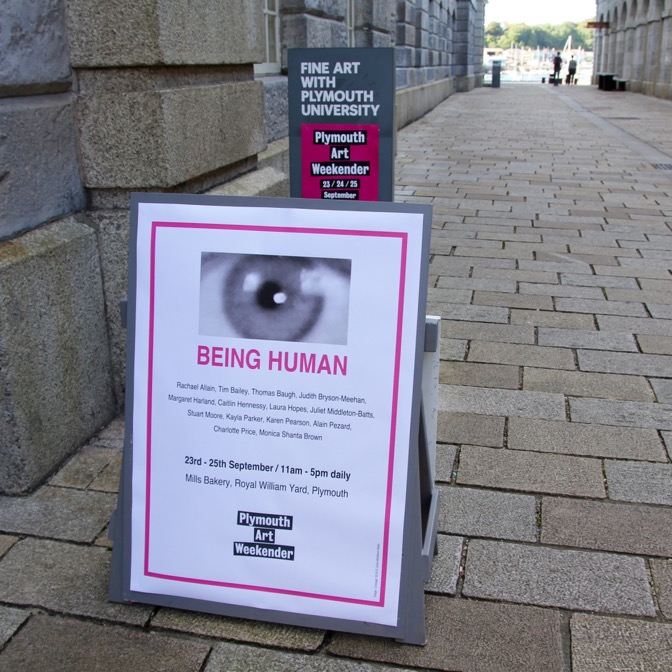
Womad (2016) has been screened for one evening at the CMIR 2 exhibition in Bush House, Bristol on Friday 1 April 2016 and now at Being Human 23—25 September 2016.
There’s also the programme note to Gierke’s presentation here regrettably only through the Wayback Machine.
31 Days has been selected for London Short Film Festival and Stuttgart Filmwinter – the seven second-a-day version iterated from the original One Second a Day.
The entries needed extra information, metadata, for the film: stills, synopsis, CV etc.
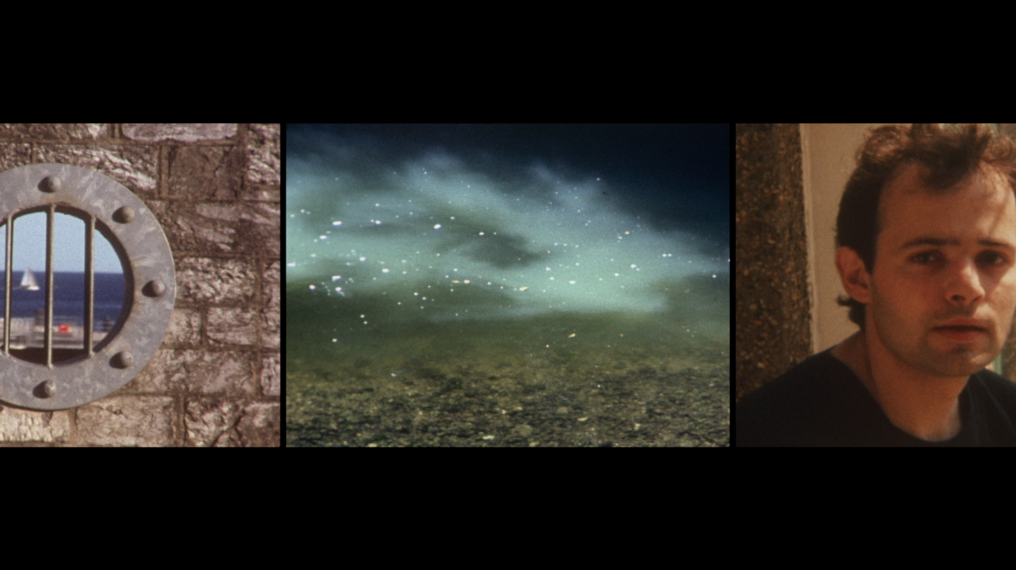
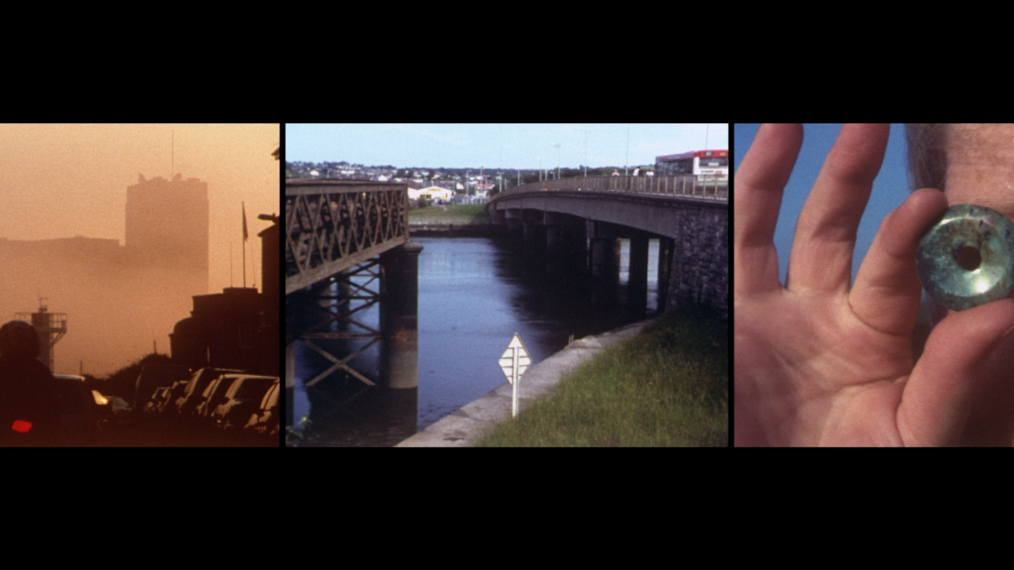
“A triptych of film moments re-creates memories from a collection of thirty one clips, one selected each day during March 2016 from the artist’s personal Super 8 archive.”
“The tension, surrounded by an aura of hauntings and spectrality, instils a threshold in the viewer: as much we attempt to commune with this immediate environment, so there is a sense in being watched by the environment.”
I wonder whether the experience of the Super 8 archives has parallels here:
“This reversible duality gathers a resonance thanks to the collision of worlds, spatial and temporal, with each diametrically opposed to the other. The reality of the traumatic event is not reinforced in this encounter, but instead trembles as an incommensurable void is given a voice between the viewer and the place.”
Visiting an architectural ruin may evoke the past traumas which took place there but the passage of time resists and distances, perhaps film can reanimate the past. The temporal bridge is perhaps stronger for the filmmaker who is both with the physical film in the present but also was present at the films’ creation/inscription. Super 8 film also bears the marks of its intervening traumatic life, a further indicator of temporality.
Seeing/finding myself at Womad in 1985 in Cornwall projected from Super 8 is a spectral experience, both in the sense of a ghostly apparition – visible but intangible – and through the spectrum of light filtered through the Agfachrome dyes. One can touch the film, mark the film, cast shadows by interrupting the projecting light, but the ghost of who and where I was 31 years ago is untouchable.
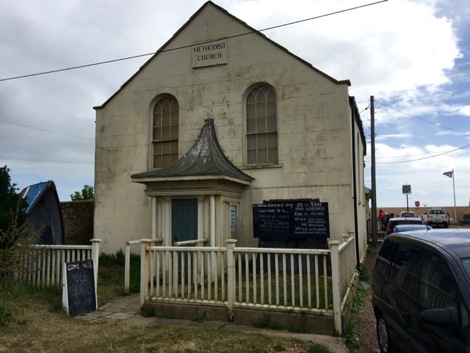
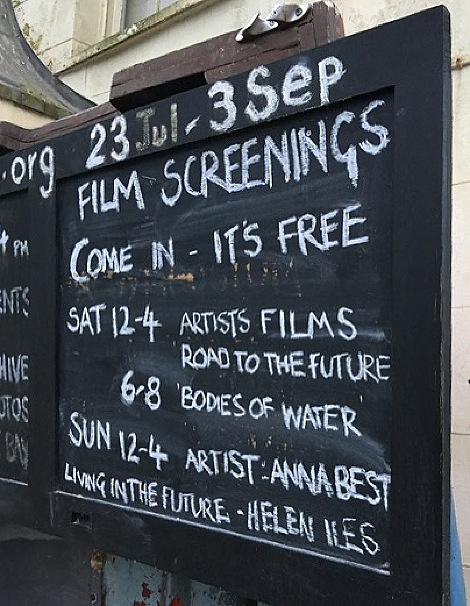
Sea Front and Teign Spirit were screened at Force 8’s Methodist Church residency in West Bay, Dorset tonight. The programme Bodies of Water was curated by Kayla Parker, originally for RWA Bristol’s Power of the Sea exhibition.
Sea Front was filmed on Kodachrome 40 in 2006 and made into the film in 2011 using digital audio recorded around the same time and location, but not simultaneously with the film footage.
Teign Spirit used HD video material recorded in 2009 layered with 8mm black and white footage filmed over several years until the final summer of 1939 by the Jones family on holiday at Teignmouth in the interwar years. Just as war loomed ahead for the Jones family contemporary Teignmouth is threatened by the vagaries of a changing climate, particularly to the low-lying Back Beach area whose houses open onto the strand.
Jaimie Baron describes as ‘problematic’ the seamless compositing of ‘found footage’ into new works, or the insertion of new elements into archive footage. Teign Spirit leaves the ‘seams’ visible so the audience is aware of the overlaying of archive material – recognisable both by its being monochrome and the clothing, vehicles etc clearly belonging to the past – on to bright, crisp HD digital material. The two types of footage combined generates the archive effect by the temporal disparity. The beautiful cine footage grabs the attention one moment, then the underlying colour video material catches the eye.
There’s a paradox in that the HD digital footage is identifiable as ‘non-archive’ but the creation of the film hinged on the realisation that we were recreating similar shots as the Jones’ camera operator/filmmaker. We are separated from the film footage by 70 years of calendar time but also by developments in camera technology. In another 70 years who knows how archaic the HD AVCHD files will seem?
I had produced a new iteration of the 10 minute version of the “20 Seconds a Day” film which played as a backdrop to my presentation on Wednesday 4 May at Frenchay. The updated film has been selected for the BEEF Cephalopod screening at Supernormal 5-7 August 2016.
The original film comprised 31 one-second clips making a 31 second film. The presentation had a duration of ten minutes so I extended each one second clip to 20 seconds and removed one of the 31clips (30 clips x 20 seconds = 600 seconds or 10 minutes).
The reinstated clip brings the running time to 10 min 20 sec and is truer to the original methodology of choosing a clip a day throughout the 31 days of March 2016.
Super 8 cameras often have automatic exposure so filming can be somewhat freewheeling in execution: frame, focus and press the trigger. The cost of the film and processing has the opposite effect, encouraging frugality so shots tend to be fairly short. The editing technique of extending each shot by 19 seconds often revealed in-camera edits so the longer compilation film has many more than 31 shots. As the film progresses the intentionally arbitrary sequence of clips – initiated by the chosen one second a day shots – is further randomised by the inclusion of whatever is on the Super 8 strip/reel immediately afterwards. Following the initial one-second shot could be another similar shot filmed immediately after the first (or indeed a continuation of the first shot) or sequences from another time and location, whether edited in-camera or later with a splicer.
These temporal and geographical/locational shifts in the film feel somewhat like remembering, where a memory of one event sparks others. The matter of in-camera editing came up at the Parallel Art and Cinema Sunday morning discussion in March in as much as digital cameras tend to be file-based so as soon as the recording camera is stopped the shot becomes a discrete clip in the device’s memory. The discussion was framed by two lecturers bemoaning the loss of a simple exercise for neophyte student filmmakers to take a video camera out and shoot a camera edited sequence which could be instantly played back in a seminar session.
Is this clip-centred paradigm a result of easy access to editing on computers where the need to cut up lengthy in-camera compilations would just add an extra step in ordering and rejecting footage, or possibly the opposite where the essentially cost free nature of the recording means that the documentation of an event would be more likely filmed in a long continuous shot? Walter Murch in The Blink of an Eye discussed explaining film editing at its most basic:
“Because, in a certain sense, editing is cutting out the bad bits, the tough question is, What makes a bad bit? When you are shooting a home movie and the camera wanders, that’s obviously a bad bit, and it’s clear that you want to cut it out. The goal of a home movie is usually pretty simple: an unrestructured record of events in continuous time. The goal of narrative films is much more complicated because of the fragmented time structure and the need to indicate internal states of being, and so it becomes proportionately more complicated to identify what is a “bad bit.”” {Murch, 2001, #50064}
In 2001 second edition of his book had been extensively updated to take account of the rapid move from physically editing film material to digitisation and computer editing. He remarked:
“In 1995, no digitally edited film had yet won an Oscar for best editing. Since 1996, every winner has been edited digitally-with the notable exception of Saving Private Ryan in 1998. 1995 was also the year that In the Blink of an Eye was first published in the United States. That edition included a section on digital editing as things stood at the time. It was clear to me then that the complete digitization of the moving image was inevitable, but the time frame for that transformation was not obvious and I looked at the situation with mixed feelings. At that time I also lacked digital editing experience.” {Murch, 2001, #50064}
Sea Front screened in Open Air Cinema, a short film programme curated by Anna Navas to launch the Sea Swim: Head Above Water touring exhibition at Peninsula Arts Gallery, a History Centre partnership project delivered by Peninsula Arts and Plymouth City Museum and Art Gallery, in conjunction with Plymouth Arts Centre; Tinside Lido, Plymouth (22 to 24 July 2016)