Place/placeness

Found footage

I had chosen to visit a place, to put myself in its physical setting, the filming activities placed the location into the archive, and ‘revisiting’ the place in the archive allows it to be to be experienced. The ‘scale’ of Super 8: human, intimate, close, held, grounded. The opposite of the detached, weaponised gaze of the drone.

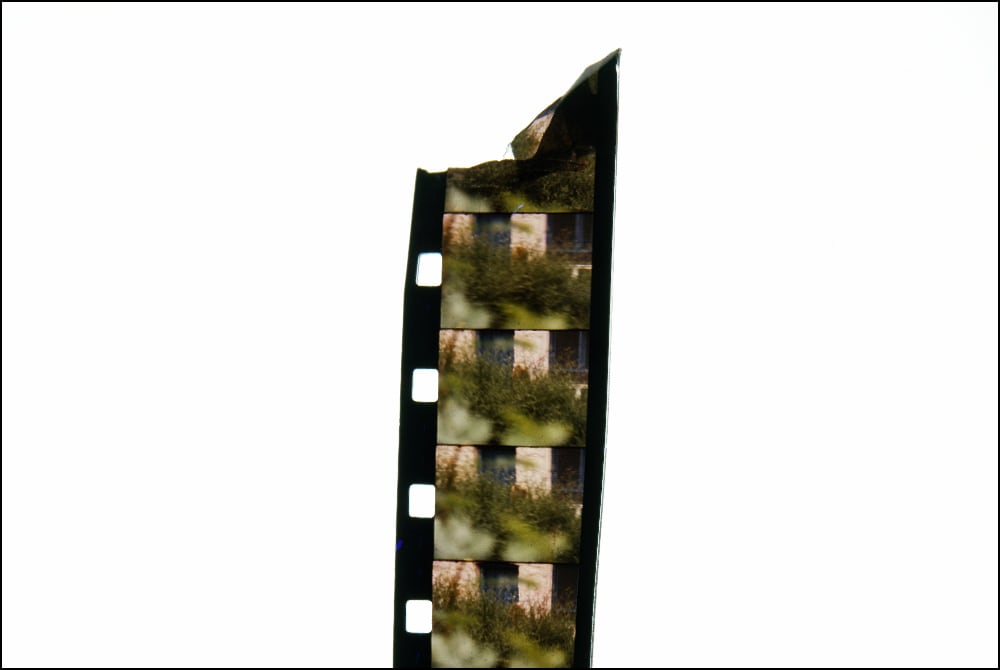
The scrap of film in the image above has the marks of its physical existence – dust, creases and a brutal rip – but still faithfully carries its image sequence.

Early on in this PhD, I coined the phrase the ‘dead eye of digital’ where a stationary digital video camera shot of a still scene is no different to a single digital still played back for the same amount of time. The tiny frame size of small gauge film like Super 8 emphasises the grain dancing on screen and any imperfections from its manufacture, processing and projection. The format revels in its poor frame registration in front of the camera gate giving rise to weave and instability.
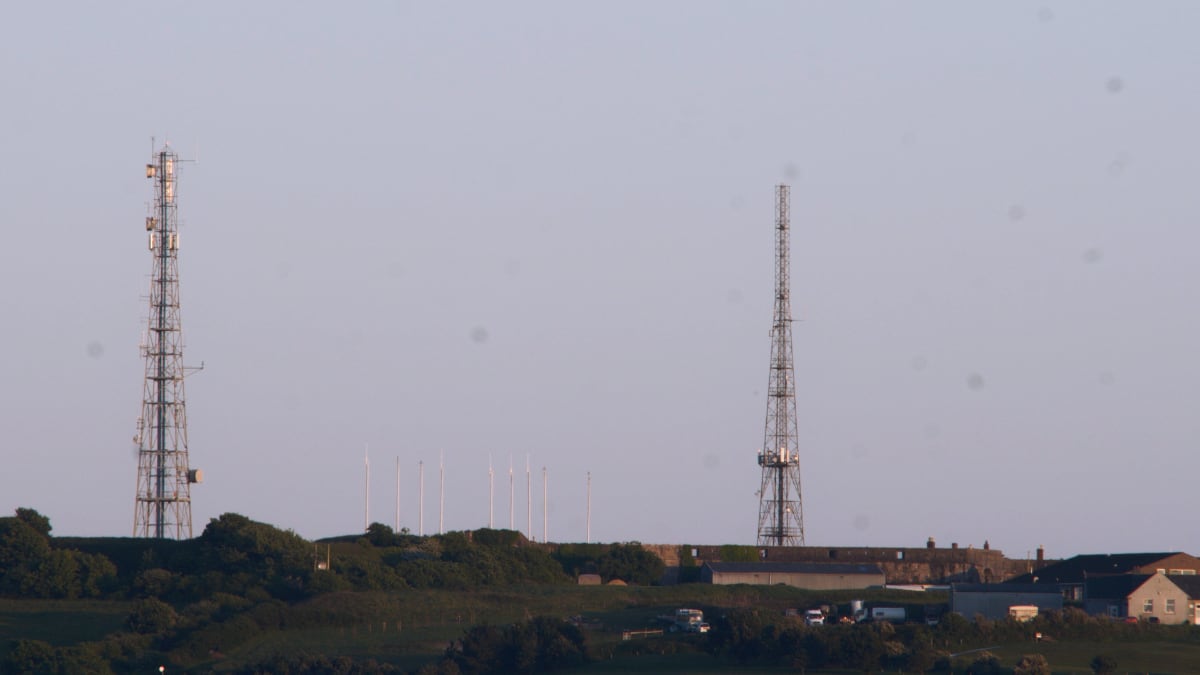
Dust on a digital sensor

A digital sensor, being a palimpsest, can contribute nothing more interesting than a dead or hot pixel on every frame, and unmoving specks of dust that have landed on its surface. The forlorn piece of Super 8 has kept its image for decades. When I was looking for the sensor dust image above the computer warned that the new 8TB drive was unreadable and I should try to recover its data before reformatting it. Thankfully it seems to be OK.
Lost Book Found

In Lost Book Found (1996), Jem Cohen’s documentary style of filming – like the street photography exemplified by Garry Winogrand and Joel Meyerowitz – features snatches of people and the street-life of New York. Filmed on Super 8 and 16mm over a five year period, these unmediated, chance encounters and random incidents in public spaces convey a realistic view of the city.

The narration, voiced by Cohen’s brother in a reflexive tone, devoid of emotion, recounts his experience as a sidewalk ‘pushcart’ peanut vendor and his attempts to decipher a mysterious book that unlocks the ‘secrets of the city’.

I have been at several screening with Cohen in attendance. At Aurora in Norwich I had a conversation with him, and mentioned how he’d been filming a lot with the camera held at waist level, allowing more ‘candid’ filming than might have happened with the camera raised to his eye. His face was a picture, fleetingly looking like he’d tasted sick in his mouth. In more formal Q&As he wouldn’t reveal whether the ‘lost book’ really existed. The film, like the man, needs its mythology.

Derek Jarman at 80

I spent most of today digitally editing Super 8 footage filmed at Dungeness in 2009, adding audio recorded in 2020 at Slapton Sands. This evening I noticed from IG posts that it would have been Derek Jarman’s 80th birthday.

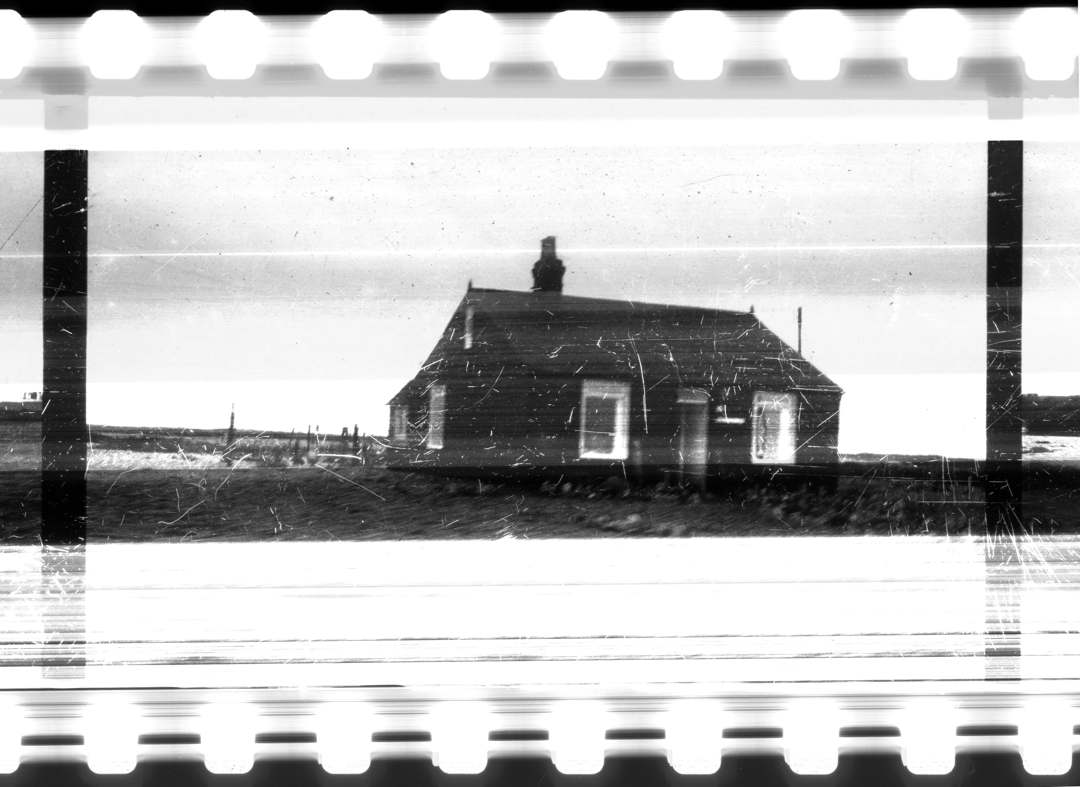
The image above was snapped from the window of a crew bus as we passed Prospect Cottage heading home at the end of a corporate job filming the Dungeness power station in 1989. Jarman filmed The Garden that year and you can just see the actual garden to the left of the cottage.

The picture was taken on Polaroid instant B&W reversal 35mm.

Sarah Turner’s Perestroika (2009)

Turner made an essay film travelling across Russia – Moscow to Irkutsk, Siberia – filming every day on the train journey, reenacting the same journey she took 20 years earlier. The use of memory is subjected to a formal methodological constraint where she is not allowed – by collaborator Matthew X – to review or make comments on her filmed material until the next day. This separation of the time of capture from the time of reflection of the filmed material feels similar to shooting then reviewing Super 8 film later.

Sarah Turner
Sarah Turner, Perestroika (2009). Image courtesy of the artist

Gerald’s Film

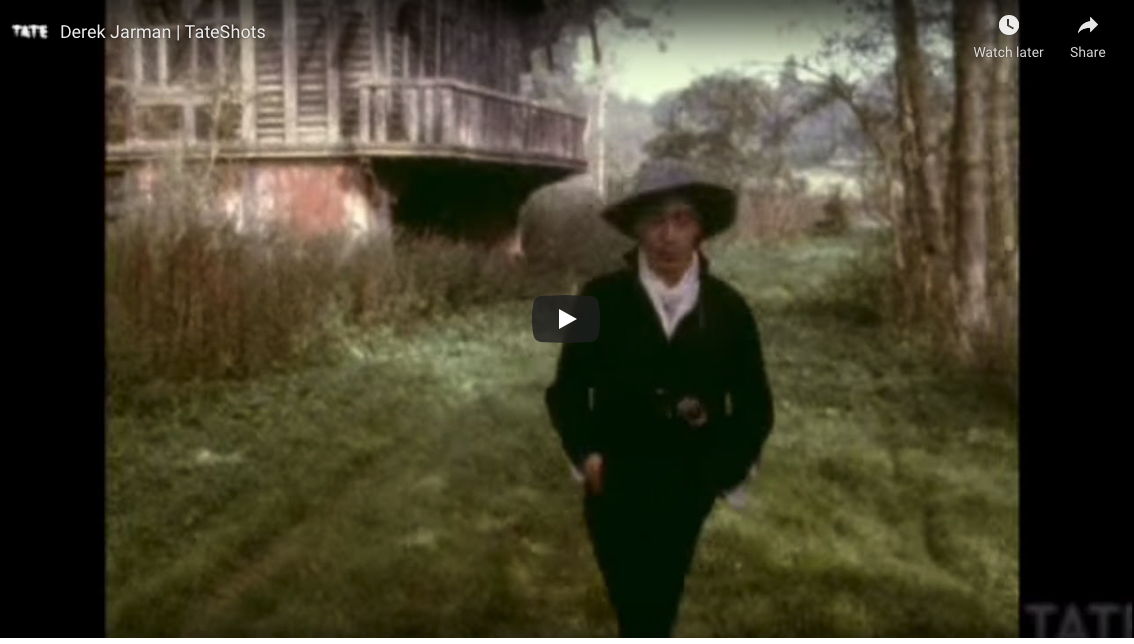
Jarman at the ruined boathouse filmed by Gerald Incandela

Jarman was given a Super 8 camera in the late 1960s, and began to experiment. Jarman’s first Super 8 film in his studio on Bankside. Shot partly in colour – this documents the inside of his studio and people visiting – and the black and white shots document mainly the exteriors, along with portraits of his friends.

Gerald’s Film (1976) is a portrait of the actor and cinematographer, Gerald Incandela, who is credited as the film’s co-photographer, filmed in the ruins of a Victorian boathouse in Essex.

I remember that in the film, Jarman filmed Gerald Incandela in the wreck of a barn, through the windows or through a gap in the wall.

Hand-held camera looking though the bones of an old boathouse. I think I saw the film projected, the thing I really noticed was that the film was really slowed down, so it was almost frame by frame. This wasn’t something I expected to see in the cinemas it was really remarkable. The camera focused on this beautiful man’s face, inside the boathouse. The golden light and the faltering, yet very intimate, gaze. Its dreamlike quality shimmered in a space between still and moving image, the unstoppable present of cinema subverted by the readability of individual successive frames.

Filmed at 6 frames a second and projected at 3 frames a second, it was a blurry kind of stop-motion photography. Focused on this handsome man’s face, stood inside the boathouse.

The beautiful golden light and the faltering, yet very intimate, gaze.

The Royal Road

Taking notes on The Royal Road

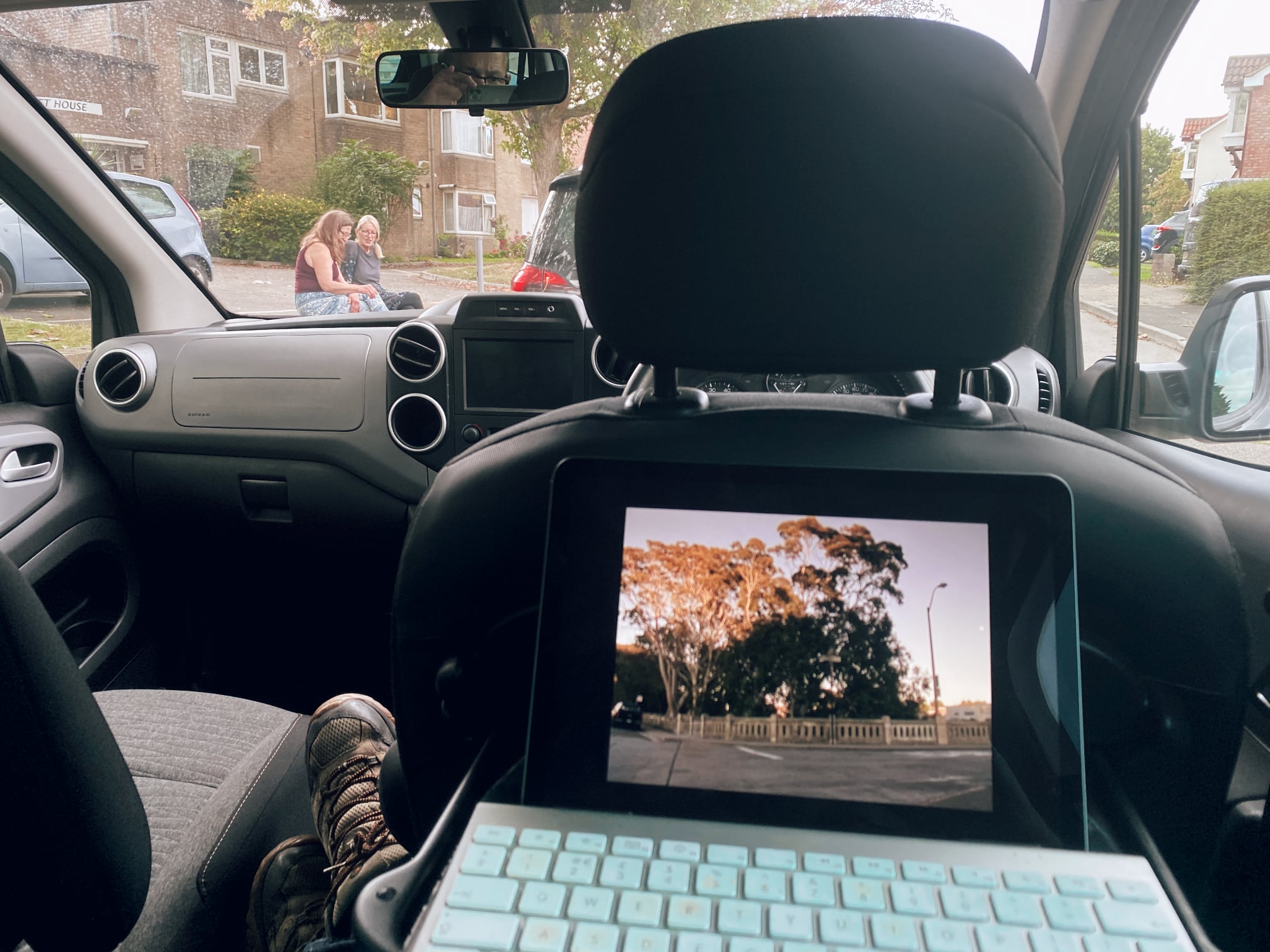
I sat in the back of our new van in Bristol watching Jenni Olson’s “cinematic essay”, The Royal Road (2015), while the two sisters chatted under the conker trees during their mother’s last days.

“I’ve been filming the landscapes of San Francisco since just a few years after I arrived here. In capturing these images on film, I’m engaged in a completely impossible, and yet partially successful effort to stop time. I now own the landscapes that I love. I preserve them in the amber of celluloid so that I might re-experience these visions of dappled sunlight, the calm of a warm afternoon, and the framing of an alley as it recedes into the distance. These images serve as a reminder of what once was and as a prompt to appreciate what now is.” (Olson, transcribed from The Royal Road, 2015).

Archive Space

Tate St Ives was built between 1988 and 1993 in St Ives, a small town in west Cornwall. Over these years there was considerable interest in the development from national and local TV. I worked on several different programmes for C4 and the BBC and a couple of series for our local ITV company, Westcountry TV.

This was really enjoyable work as it was pretty much all positive stories, and meant many visits to St Ives interviewing artists who had made Penwith their base over the 20th century. These famous painters and sculptors were a large part of the reason for Tate building the gallery in St Ives.

Television was in the late stages of analogue tape acquisition, and we shot on Sony’s BetaSP (Betacam SP) format. The camcorders took the smaller 20 or 30 minute tape cassettes that were the same size as the domestic Betamax tapes, so a little smaller than the ubiquitous VHS video cassettes. Consequently, a day’s filming would produce a sizeable box of tapes. We freelancers would label the tapes and hand them over at the end of each shoot to the producer. Back at the TV station the tapes would be digitised for editing and archived.

Westcountry TV had won the regional franchise from TSW. The latter had a large headquarters in central Plymouth and appealed the loss of their franchise. Westcountry had promised to build a new studio complex at a waterside location in the heart of the city but the legal challenge led to them hastily building a small HQ on a nondescript industrial estate in Plympton. These small premises meant space was at a premium.

The lack of storage space led to the company only keeping edited programmes and erasing the original camera tapes. It’s heartbreaking thinking of the material we shot that went through bulk erasers. Interviews with people like Patrick Heron at his home Eagle’s Nest near Zennor and the writer who explained abstract painting saying how can you paint the warmth of the sun on a stone. I’ve forgotten his name. When we interviewed Heron, the director Peter Francis Brown asked me if I’d seen anything strange – I hadn’t. As the interview with the soft-spoken painter went on, Peter saw a bright aura develop around our host. Is it on tape? Not any more, if it ever was.

Ghost Vessels

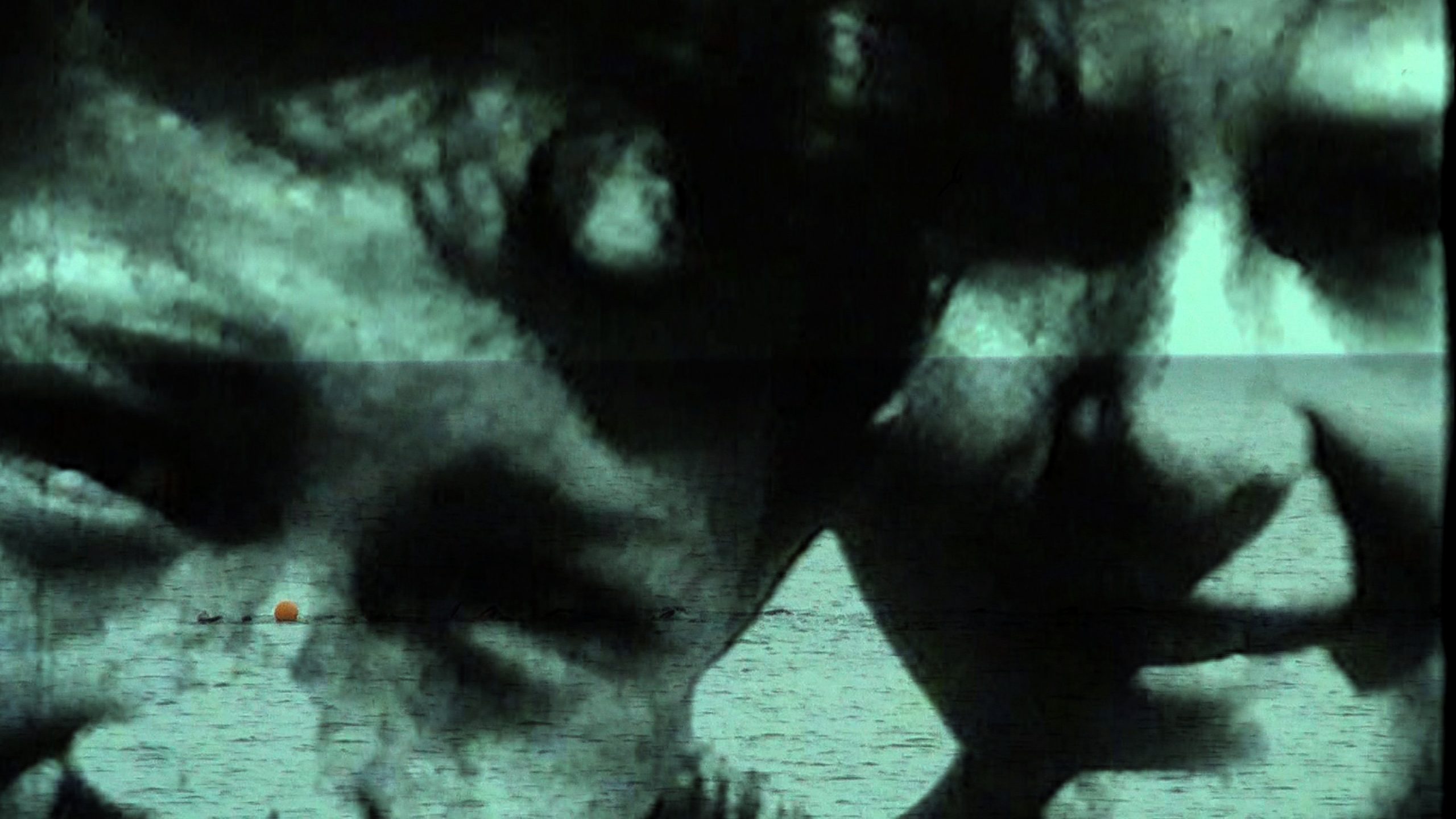
Frame from Teign Spirit

At the moment the sea off Torbay and Teignmouth is filled with cruise ships parked up waiting for Covid to pass. These ghost ships are manned by skeleton crews, behemoths at anchor on the horizon.

https://www.devonlive.com/news/devon-news/cruise-ships-stay-torbay-over-5071384

This reminded me of filming for a project in Teignmouth in 2008. At that time, tankers could be seen anchored out at sea for long periods in the sheltered waters of Babbacombe Bay, waiting for the price of oil and petrol to rise before discharging their cargo at refineries and storage depots.

I had filmed around the town but the project came alive when some home movie footage came to light, beautifully shot by a family member, of successive summer holidays in the town in the years running up to WW2. I imagined the last holiday as tensions were rising in Europe prior to Hitler’s invasion of Poland on 1  September 1939.

The outcome of the filming, Teign Spirit, is an archive film – in Jaimie Baron’s terminology/taxonomy – a found footage film. I made no attempt to reveal the context of the cine film, leaving it to audiences to decipher the interleaved footage that alluded to the gathering clouds of climate change that threaten Teignmouth.

The film demonstrates Baron’s ‘archive effect’ in both ways: intentional and temporal disparity. Intentional disparity as the Brown family’s home movies weren’t intended to be seen in Tate Modern in 3/12/2009 Starr Auditorium introduced by Stuart Comer – Tate’s Modern film curator. Teign Spirit also has had screenings all over the world and can be viewed online. Temporal disparity as the old black and white footage appeared on screen mixed-in with modern-day colour digital video.

Teign Spirit – pronounced teen spirit, yes like in the Nirvana song. It was a the name of a racing pilot gig we filmed on the water.
River Teign – river teen
Teignmouth – tin muth
Kingsteignton – kings tane tun