The Sun reflected in the surface of our garden pond, in the 90s or 2000s. The pond is formed from the foundations of a WW2 air-raid shelter to the rear of the house. The front door is a bit crooked as a large bomb exploded 5m away in the street in The Blitz. Plymouth has a ‘bomb book’ where the impacts were mapped each day by the City Council. Our house was already 50 years old at the time. It has flawed glass panes in the front windows that were probably replaced after the blast. The next road has two newer ‘infill’ houses as two adjacent homes in the terrace were destroyed by a bomb.
When we first introduced fish to the pond they were given names.
The muslin curtain blown by the breeze through the open bedroom window at Beaumont Avenue. To the left was a ‘vintage’ pink moulded plastic splash-back with chrome metal fixtures for two toothbrushes and his-n-hers water tumblers. It’s probably still there as the landlord moved back after we left, having been ousted from his role as director by a coup from Plymouth Art Centre, where he’d lived and worked.
Beautiful filming of sparklers through a photographic enlarger’s condenser lens. The tiny house on Beaumont Avenue in Plymouth was the studio space for a lot of experimentation in the 1990s. This was filmed in the upper front room which served as studio and office space.
I had been experimenting with lenses to create an aerial image in front of a projector for transferring to video without filming the projected image on a white wall or piece of paper. The filming is spectacular, what’s less obvious are the small autobiographical elements. At the time I was spending a lot of time in photographic darkrooms, developing, printing and teaching. Some of the paraphernalia made it home such as the enlargers’ condenser lenses.
A very early piece of Super 8 filming, on St Andrew’s Cross roundabout. I had walked up the hill from Plymouth Video Workshop, based in Plymouth Arts Centre circa 1987/8.
I had learned photography at college as part of my biology course, and developed video skills in the workshop, but Super 8 was a new adventure. I recall playing this film on a Bolex back-projector and hearing Annette Kemp, the workshop director, commenting on the beautiful footage to someone on the phone. At some stage the word ‘film’ was added to the name, becoming Plymouth Film and Video Workshop. This was the beginning of an understanding that there was something of a schism between filmmaking and the newer independent video production. This line was blurred for me as I’d come to video via photography which was all ‘analogue’ at the time.
[Having selected the first shot, the following second of footage appended to the editing timeline contains an in-camera edit, that I discovered at the end of the month when reviewing the whole sequence.]
The living room mantlepiece in Beaumont Avenue with daffodils and artwork from Plymouth Art Centre where I worked in the film workshop, but also as a gallery technician for Artangel’s James Lingwood and then Rosie Greenlees.
Working at the Art Centre was a wonderful education having come from a science background: contemporary visual art and artists, huge events like TWSA 3D, driving exhibitions around the country and a whole new world of film to absorb in the cinema.
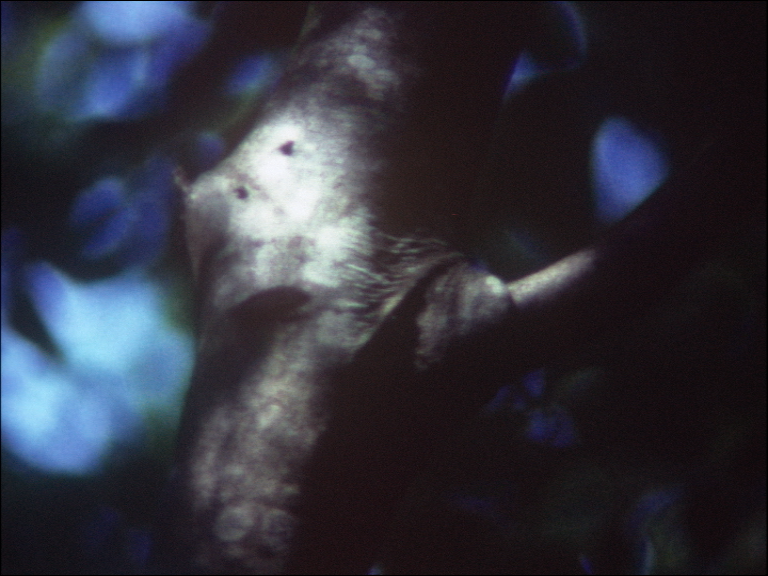
Sunlight dancing on the trunk of a tree in Plymbridge Woods, used in our film Project. I remember the filming day well, but I’m not sure whether this was shot with my Canon or the underwater Eumig Super 8 camera. There is lovely footage filmed just under the surface of the River Plym and the memory of the icy water on my bare feet is as clear as if it was yesterday.
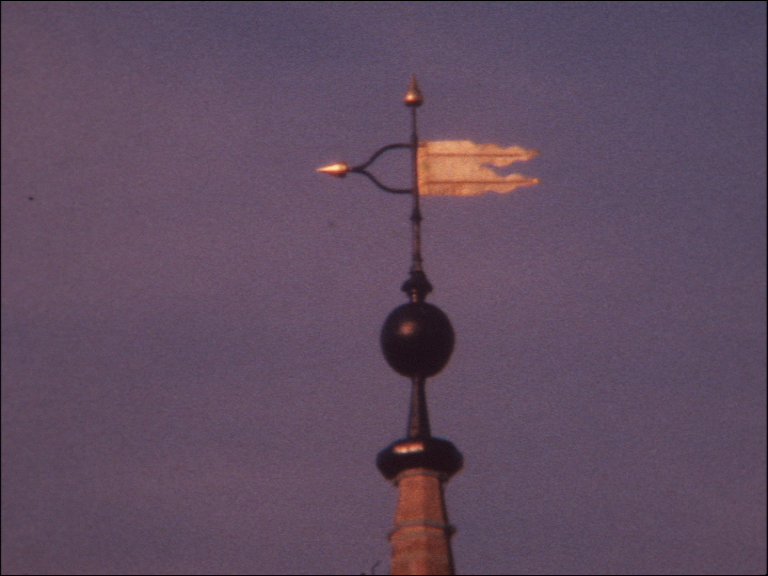
The weather vane on top of Charles Church in Plymouth, filmed from the now-demolished multi-storey carpark adjacent to the also-demolished Drake’s Circus shopping centre. There are only a few shots – a couple like this and a tilt up the spire. All these years later I can feel the smooth, solid concrete of the wall I leaned on to set up the tripod.
The filming was for my SWA-funded ‘Film About Plymouth’. I’d never noticed the vane before starting this project, the old ruin had just faded into the background through familiarity.
I drove to the top of the spiral car park and set up a tripod beside the thick concrete wall, facing the roundabout which has surrounded the church for decades. The sun caught the weathervane as it turned with the wind. The traffic circulated below, marooning the church on an island in a stream of traffic.
The church – fire-bombed in WW2 – was preserved as a ruined memorial to all those Plymothians who lost their lives in the conflict. Almost everything else in its immediate vicinity has been demolished at least once, with just some alms houses to the north-east side and part of a listed post-war garage to the south-west. When Abercrombie’s Plan for Plymouth relaid the roads, the church’s graveyard was dug up to create the roundabout. To the south-east corner the traffic passes just a few feet from the ancient walls.
It’s amazing that this shot of the weather vane gives no clue to the ruin below, nor the brutalist car park (now demolished) from which it was filmed. Dylan Trigg describes how ruins bear witness to trauma, different to the more usual oral histories. The church is in a state of ‘suspended ruination’ – windowless and with no roof excepting the spire. The interior area is grassed where the congregation sat, and closed off with a locked iron gate.
Our electrician Bill Dawe told me how he had been taken as a young child to the church by his mother a few days after it burned. The heat was so intense it had destroyed the roof. Bill and him mum collected the copper nails from rubble of the slates – with the vicar’s permission, he noted – loaded them into the pram and sold them to a scrap metal dealer.
June, our near-neighbour in Beaumont Avenue, just up the hill from the church, described how her nearby childhood neighbourhood had been flattened after the war. For her, the church was a memorial to this loss as well as the trauma of war.
The car park had an exciting helter-skelter tight spiralling exit ‘road’ at its centre.
2019 – the four ‘pineapples’ at the tower’s corners below the spire have been replaced with newly carved replicas as the originals were unsafe. Cost is £100,000.
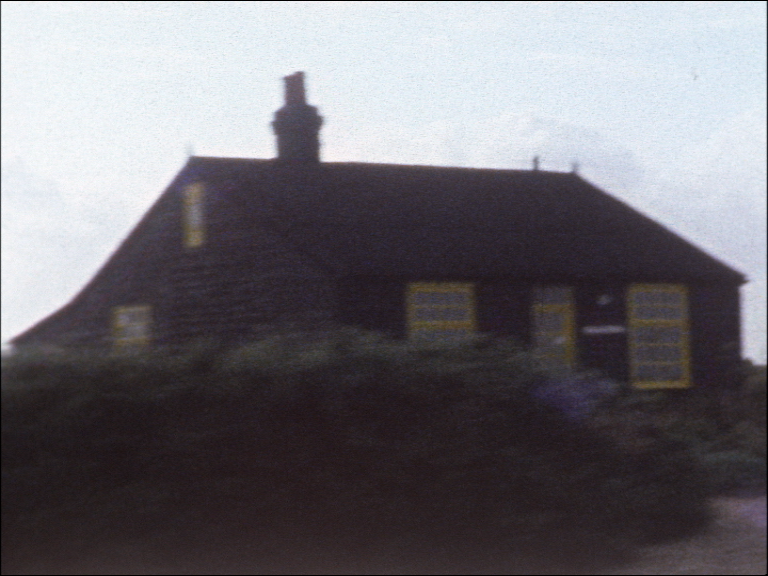
Prospect Cottage filmed by Kayla from the passenger seat as we drove away from Dungeness in 2009. We had left Plymouth early that morning to film an epic phantom-ride in a Marjon Ford Mondeo estate car. Tapeless video cameras were relatively new technology which I used to film the long drive. This pilgrimage recreated the journey I had made in 1989 with a local TV crewing company to film Dungeness B power station for a promo. Now such filming is beyond easy as dash cams record endless miles every day before automatically deleting the footage.
Jay Appleton proposed a ‘Prospect-Refuge’ theory – we look for opportunities to receive visual information, to explore, and find opportunities (prospect); we search for shelter, protection, and places to hide (refuge). Appleton also talks also about hazard as: ‘the proximity of something which threatens, menaces, or disturbs our equilibrium.’ Appleton’s book is The Experience of Landscape (1995??) So at Dungeness – views, prospect. Cottage, refuge. Power station, hazard? The trip echoes Appleton’s P-R – looking out from the car there’s a sense of prospect, with an illusory sense of refuge in the cocoon of the car with the ever-present hazards of the journey.
In Perestroika, Sarah Turner (or her alter-ego) is aghast when her sense of safety (refuge) in the train carriage – looking out into the passing landscape (prospect)– is shattered when a train pulls alongside allowing others to look in (hazard).
It’s strange how looking back some times feel like a golden age. At the time I of the Dungeness trips I could borrow a car from my university to make research trips to the other end of the country, visit film festivals in Norwich or conferences in Falmouth and not even have to pay for fuel. A few years later and things would change dramatically for the worse.
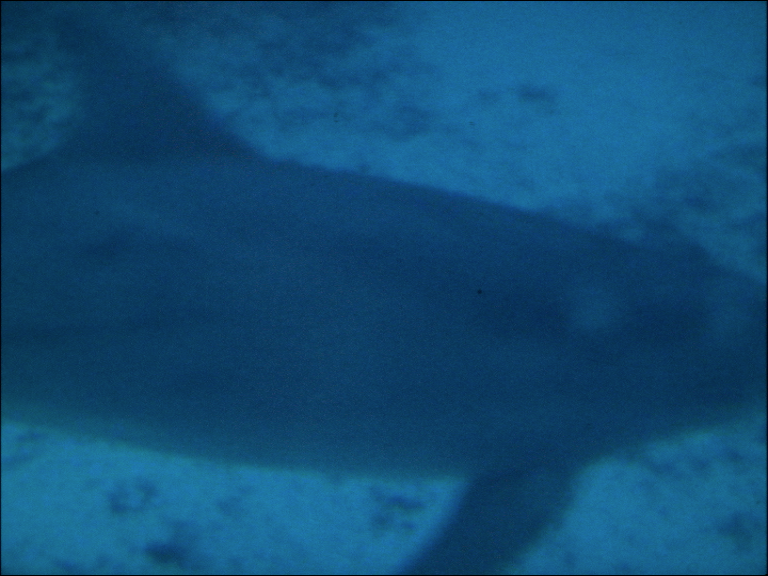
Filmed during a strange trip with Annette Kemp to Windsor Safari Park and its sea-life attraction. There were seals, dolphins and at least one orca in pretty small pools. Annette was strongly embedded in a dolphin-consciousness community in Penzance and had arranged a visit to the park which was closed, either for the winter or for good. She almost stripped-off and jumped into the orca’s pool – not sure whether I dissuaded her or she independently changed her mind. The one member of staff who took us to the dolphins explained how they balanced the cost of heating the water against the amount of food the unfortunate incarcerated mammals needed to survive – colder water, more food.
Annette Kemp was a force of nature, chosen to lead the third iteration of the film and video workshop in 1987. I was appointed senior technician using the skills I’d learned in the first year-long project. I was excluded from the second year after the leader did a dirty on all the workers and abandoned our plans to continue as a cooperative. He restarted with a new intake as it was a government job creation scheme – the Community Programme.
I attended the Birkbeck Essay Film Festival this weekend in order to gain insights into the essay film and to further my understanding of current academic perspectives of this ‘genre’ of filmmaking, which I propose to use to present my research findings.
Although the festival featured many examples of the audiovisual essay – a video lecture incorporating illustrative moving image extracts – the Festival of (In)Appropriation programme of experimental works created from appropriated archive footage resonated with my own approach and interests. This “showcase of contemporary, short audiovisual works that repurpose existing film, video, or other media in inventive ways” (Essay Film Festival, 2016) curated by Jaimie Baron proved to be something of a breakthrough. The works in the programme were exploratory and experimental in form, in contrast to the audiovisual essays, which functioned as self contained pedagogic packages for audience consumption. For me, as a filmmaker, the essential difference is that the author of the audiovisual essay occupies a position ‘outside’ their subject, whereas the essay film author speaks from a position of practice from within the work.
Held at Birkbeck Cinema, University of London, from 17 to 24 March 2016