Gallery in the Cinema at Plymouth Arts Centre:
I caught this on its last day 1 February 2018 – more to follow.


phd journal
Gallery in the Cinema at Plymouth Arts Centre:
I caught this on its last day 1 February 2018 – more to follow.
First Symposium of the BAFTSS ‘Essay Film’ Research Group
18 and 19 November 2017, University of York, UK
Organised by BAFTSS and The Interdisciplinary Centre for Narrative Studies, University of York
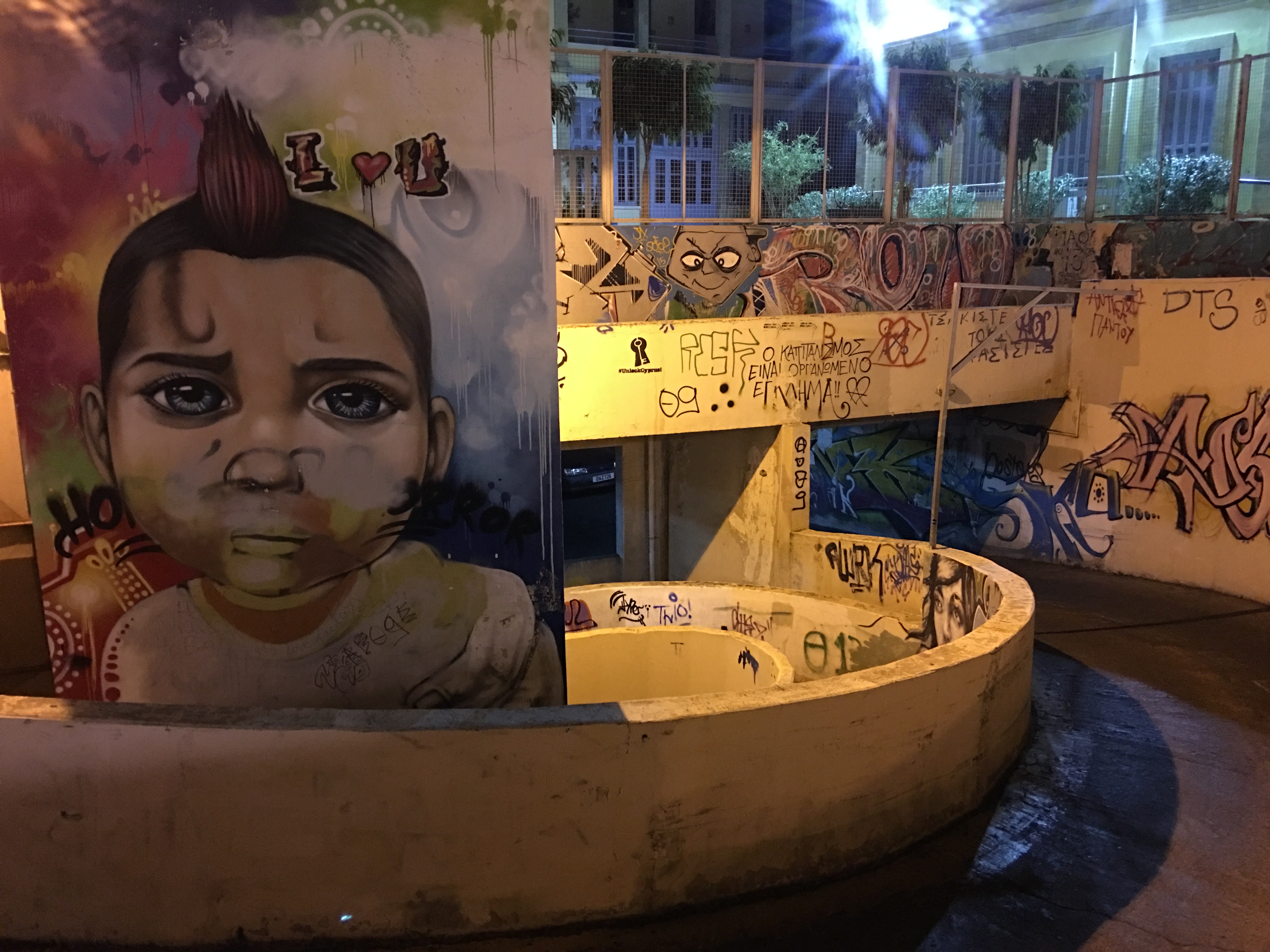
By Stuart Moore and Kayla Parker
This paper examines the screenwriting processes developed during the creation of a collaborative essay film. The strategy emerges through its authors’ shared production experience, allowing the intertwining of their subjectivities with political and social histories. Using their practice research project, Father-land as a case study, the authors critically reflect on their evolving dialogic methodology developed through collaboration.
Continue reading “Essay Film and Narrative Techniques: Screenwriting Non-fiction”
Plymouth University Arts Institute brochure about last year’s Cyprus residency.
Father-land: troubled dialogues in a divided island
Words and pictures: Kayla Parker and Stuart Moore
The practice research conducted by Kayla Parker and her colleague Stuart Moore at University of the West of England, Bristol, investigates notions of home and (dis)placement in the divided island of Cyprus. Through intertwining subjectivities with political and social histories, the legacies of colonialism, occupation, and the Cold War, the research outcomes will be shared as an essay film, a poetic form of documentary that blurs traditional genre boundaries, being a form of non-fiction that employs fictional techniques.
Continue reading “Plymouth University Arts Institute brochure features Father-land project”
A speculative paper titled ‘Film of Dust’.
Skimming the Archive
Single channel HD video work comprising three panes of Super 8 footage
The work interrogates the ‘digitised materiality’ of personal Super 8 film, contrasting the tactile presence of the celluloid archive with the malleable temporality of its digital afterlife, and more particularly the accessibility afforded by skimming many gigabytes of filmed material in a non-linear editing program.
The film was developed across the 31 days of March 2016 using a process-based methodology – each day I skimmed across the hours of footage until a single image arrested my attention (cf. Barthes’ punctum) then I appended the following second of film footage to a timeline. The three panes allude to the past, present and future.
This presentation includes the original One Second a Day and its three subsequent iterations where the camera footage clips are extended to two, seven and 20 seconds. As the clip-length extends the repeated image progression across the panes become less obvious. Skimming the Archive simultaneously celebrates the boundless possibilities of digital postproduction while lamenting the feeling that with ‘digital’ a work is never fully finished.
This project is part of my 3D3 practice-led PhD based at Digital Cultures Research Centre, UWE funded through the AHRC.
This paper explores the potential for an ethical film-making practice in the Anthropocene through critical reflection on the material specificities of moving image and the affect of landscape cinema using two recent moving image artworks, Reach and Maelstrom: The Return (2014), as case studies.
Continue reading “Cinema is Dead Conference, University College Cork”
Digital Ecologies and the Anthropocene 28/04/17
Joint paper ‘On Location: Developing an Eco-sensitive Cinema’.
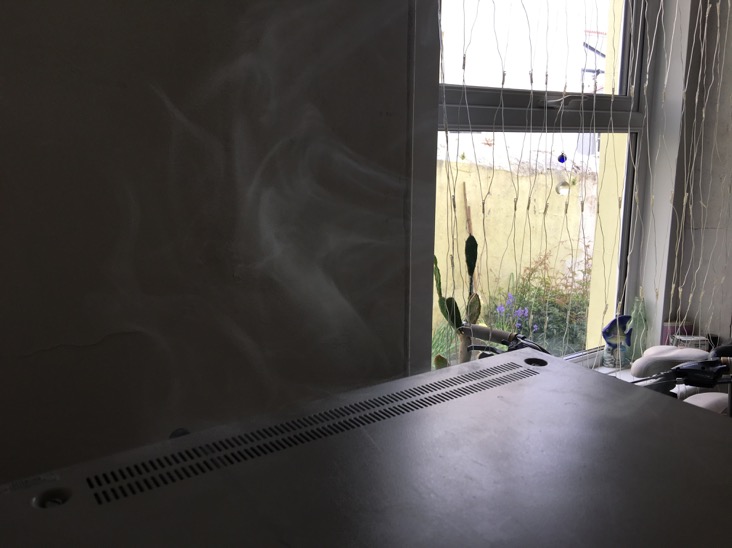
Experiments digitising from a lo-band U-matic player came to an abrupt halt when the machine expired with a loud bang and acrid smoke. The player went on its final journey to the council recycling centre.
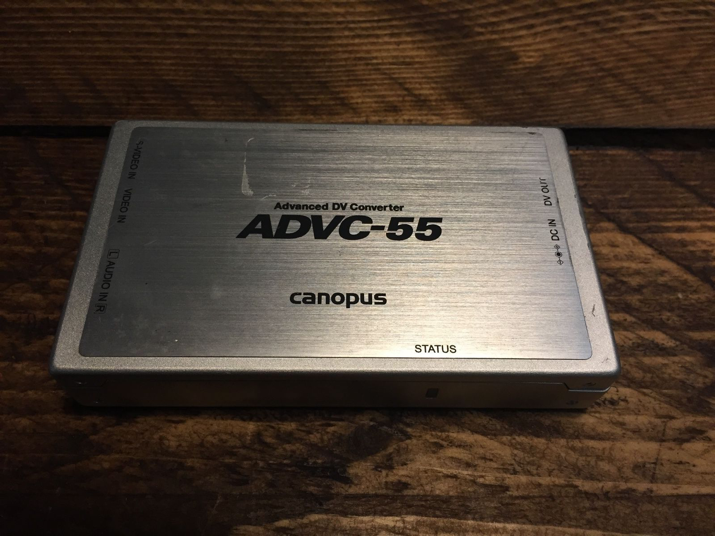
A second hand Canopus ADVC 55 bought on eBay arrived today. Initial tests digitising from a START 94 Programme 3 VHS tape were encouraging. Continue reading “Canopus digitiser”