Babette Mangolte

IMG_4274-2017-03-26-11-06.jpg

Babette Mangolte – 3 Landscape films, ICA London, presented as part of the Birkbeck Essay Film Festival 2017. Introduced by Laura Mulvey (seen dimly in photo top right) and Lucy Reynolds.

26 Mar 2017

There? Where?, dir. Babette Mangolte, USA 1979, 16mm, 8 mins

  • The filmmaker describes the first film, There? Where?, as “a naive look at Southern California by an outsider, and/or an essay on displacement through the disjunction of Californian images and off screen voices. Where is the location of these voices, here or there? Are the images near or far in relation to the voices? Are the images commenting on the images or vice versa?”

    The Sky on Location, dir. Babette Mangolte, USA 1982, 16mm, 78 mins
  • Documenting seasonal changes across the American West, from Wyoming to Oregon, the second film, The Sky on Location, is an affecting meditation on untamed nature and the atmospheric effects of climate on the landscape. Weather and ambiance, the wilderness and the Sublime, Mangolte articulates the shifting ways of looking at Nature from the nineteenth to twentieth centuries, and her keen cinematographer’s eye captures an awe and reverence for the American wilderness. The Sky on Location confronts us with a vision of the natural world, translated into a palette of ambient colour and visceral mood.

    Visible Cities, dir. Babette Mangolte, USA 1991, 16mm, 31 mins

    Finally, in Visible Cities, two women looking for a home in Southern California realise, in Mangolte’s words, that “the single-family home [is] the locus of the exclusion of the other. It is also unaffordable. They both feel as if they are invisible citizens. They witness how the architectural landscape imposed on the California desert appears as a reversal of nature, where exclusive living, gated communities and segregation go hand in hand. They dream of escape.”
 

http://babettemangolte.org/film1991.html

Amnesialand

Amnesialand, approx 22 min

Stefanos Tsivopoulos

Part of The Presence of Absence, or the Catastrophe Theory

https://nimac.org.cy/the-presence-of-absence-or-the-catastrophe-theory/

Mixed BW and colour archive film with contemporary footage

No diegetic sound, just high-quality voiceover interspersed with silence – three voices, one female. The shots of the landscape appear to be shot on colour Super 16 although grainless as projected there is a subtle but evident weave. Projection from Blu-ray with mpeg gop stuttering particularly on shots with sea in the upper frames.

I sat in NiMAC’s auditorium (where we hope to screen Father-land) watching the film. The clear narration filled the space. “We do not remember, we rewrite memory as much as history is rewritten.” (Chris Marker, Sans Soleil, 1982)

“Stefanos Tsivopoulos takes a photographic collection found in the public archives of the port city Cartagena as starting point for a poetic investigation on the questions of memory and forgetting, on the role that images play in the construction of history, and their relation to reality and historic truth.”

Compare with anamnesis.

anamnesis, a recalling to mind, or reminiscence. Anamnesis is often used as a narrative technique in fiction and poetry as well as in memoirs and autobiographies. A notable example is Marcel Proust’s anamnesis brought on by the taste of a madeleine in the first volume of Remembrance of Things Past (1913–27). The word is from the Greek anámnēsis, “to recall or remember.”

31 Days LSFF screening at The ICA

We drove to London to see 31 Days in the Celluloid Traces experimental film programme at LSFF.

The DCP which the festival produced was great and the widescreen format looked excellent in the ICA’s cinema, probably the best looking film in the programme.

The programme raised questions for me about the perceived nature of ‘experimental film’ as a category. The programme was described as embracing “our nostalgia for all things analogue in this varied programme of experiments, indulging us with the crackling aesthetic of Super 8 alongside found footage from the archives and the fuzziness of early VHS.”

In Celluloid Traces it seemed the benchmark/criterion was quirky or mannered, maybe just films which weren’t obviously narrative or documentary or ones that could fit into a genre like ‘music video’. Perhaps now shooting on film has become – of itself – experimental as filmmakers grapple with old equipment, processes and substandard facilities businesses.

River of Memories

Digital Memory Symposium

Arts Institute symposium
Plymouth University
16 January 2017

Title: River of memories

Kayla Parker and Stuart Moore

Abstract

This paper explores the affinity between location and registers of memory using the material specificities of two of our recent collaborative digital films whose methodology aligns to new materialism’s imperative of “understanding materials through working with them … understanding and working with the material, not dominating it” (Simms and Potts, 2012, 13). Reach is an ‘environmental’ direct animation that enables a symbiotic conversation between artist and place through ‘celluloid’ film’s agency as a sensitive and sensible recording medium. The upcycling of 16mm film by planting it in the mud banks of the Tamar allows the river to ‘make the film’ through the flow of its tidal waters and the action of biota. Maelstrom continues our theme of recycling and repurposing ‘unwanted’ material: mysterious upwellings and whirlpools flood with cinematic memories of long-forgotten arrivals and departures at the mouth of the Tamar, effected through the ‘projection’ of archival home movie footage – a ‘sea of moving image’. Whilst both films re-create memory in the present, Reach makes memories and Maelstrom retrieves them: like cinema and a moving image stream, the interplay of stasis and motion of the tidal river’s intermittent movement brings into being a confluence of histories and lived experience.

5 keywords

film, landscape cinema, materiality, new materialism

Watching the Listeners

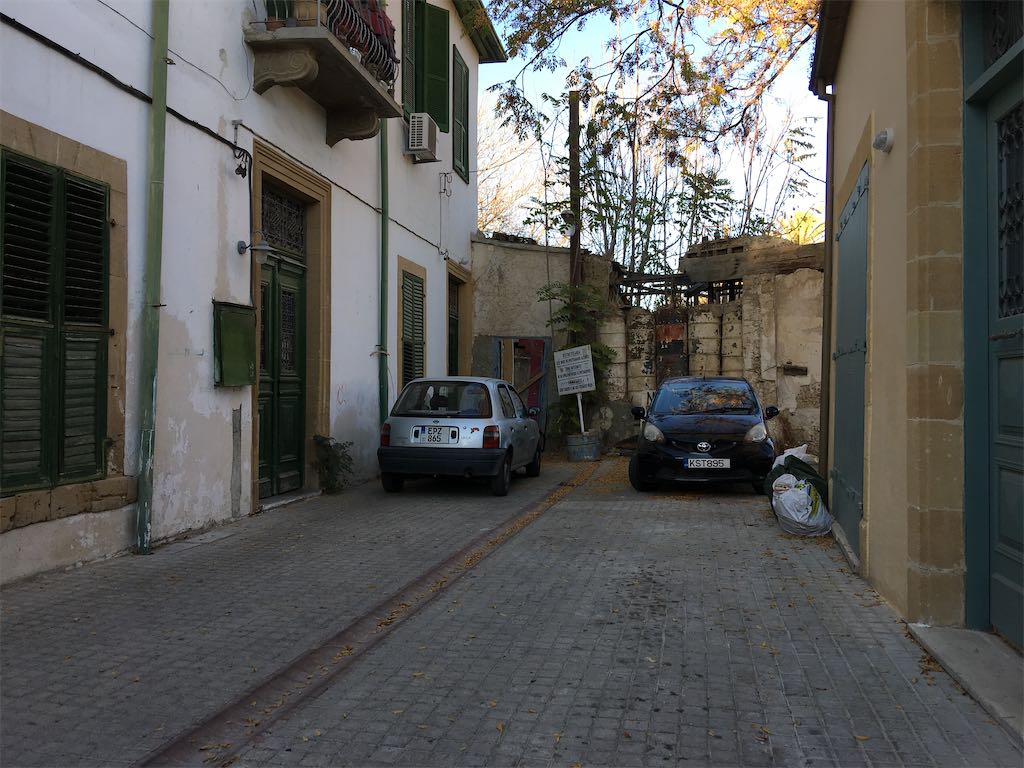
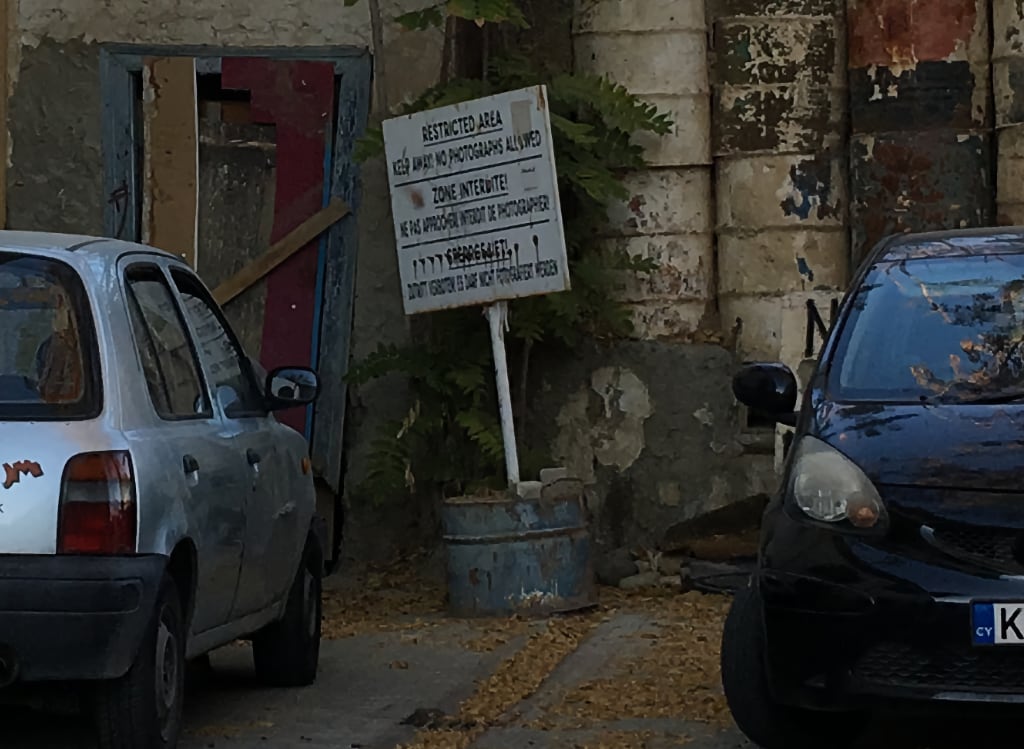
A quiet street truncated by the Buffer Zone

The green line on a map in the 1960s has become a reality on satellite imagery as wildlife has flourished in the Buffer Zone while the manmade structures have fallen into ruin. We had recorded birdsong and the adhan from the Selimiye Mosque with a gun mic in a suspension mount when we attracted some unwanted attention from a group of Greek Cypriot border guards as we were walking back to the flat. They might just have been curious but it’s hard to tell when they’re in army uniform and carrying automatic weapons.

A few turns down the labyrinthine streets and we’d lost them.

Restricted Area: keep away no photographs allowed

31 days at LSFF

31Days1-2016-10-15-09-35.png

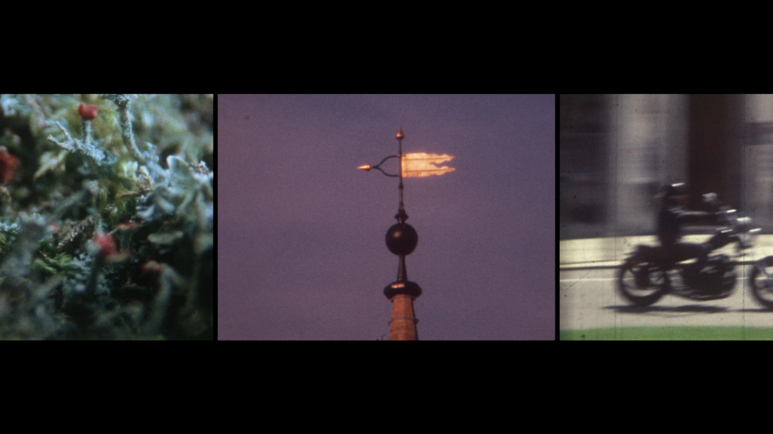
31 Days has been selected for the London Short Film Festival 2017. The still above from the film shows from left to right: lichen from Magpie Bridge in the Tavy valley north of Plymouth, the weather vane of Charles Church filmed from the top deck of a multi-storey car park before it was demolished for the new Drake Circus, and a biker at St Andrew’s Cross roundabout.

I remember each filming episode quite clearly although they were all separate in time and place despited being placed together in the editing process. The biker was (probably) the earliest and was filmed on a Canon 814 Super 8 camera which I’d bought. Any earlier filming was on borrowed cameras – there was possibly only one previous roll which included filming in Finborough Road, Chelsea.

It’s interesting to reflect whether filming and reviewing these scenes ‘fixes’ the memories. The lichen on a tree triggers memories of visiting a new place, parking and walking away from the river – activities which weren’t caught on film. Similarly I recall setting up and filming at the top of the brutalist car park very clearly – extratextual recollections.

Archive works screened at Plymouth College of Art

IMG_3800-2016-10-6-16-12.jpg

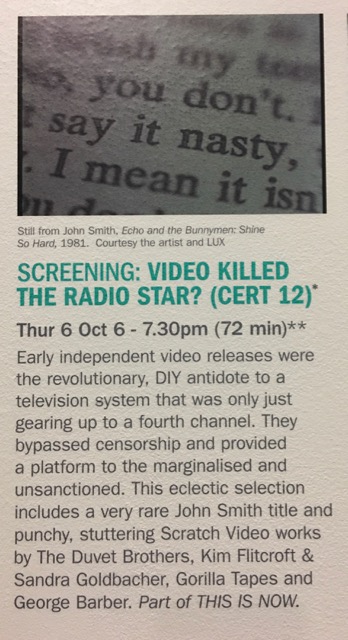
SCREENING: VIDEO KILLED THE RADIO STAR? (CERT 12)
Thur 6 Oct 6-7.30pro (72 rain)

Early independent video releases were the revolutionary, DIY antidote to a television system that was only just gearing up to a fourth channel. They bypassed censorship and provided a platform to the marginalised and unsanctioned. This eclectic selection includes a very rare John Smith title and punchy, stuttering Scratch Video works by The Duvet Brothers, Kim Flitcroft & Sandra Goldbacher, Gorilla Tapes and George Barber. Part of THIS IS NOW.

this-is-now-programme-2016-10-6-16-12.jpg

The strongest programme was The Miners’ Tapes. One oddity was a truly awful film featuring Echo and the Bunnymen by John Smith. The Duvet Brothers work held up well.

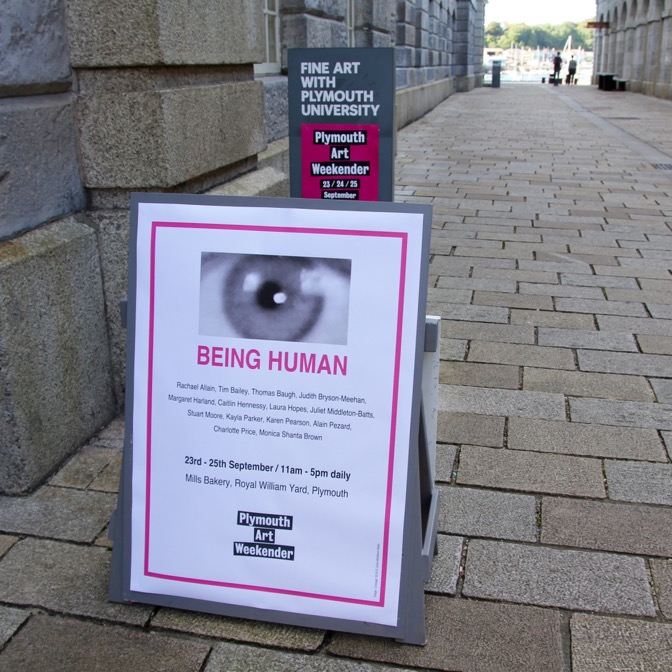
Being Human at Plymouth Art Weekender

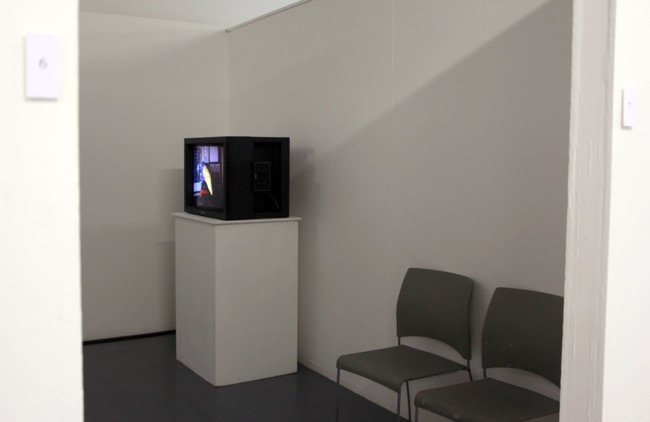
Womad (2016) was installed in the gallery space using a 27” Sony Trinitron cube monitor playing from a Raspberry Pi.

being-human-1-2016-09-23-15-05-1.jpg
Womad looped on a Sony Cube CRT monitor at RWY.

The organisers needed some text for the catalogue and I wrote the following a few days before the opening:

Womad
Super 8
Colour, sound
9 min 30
Filmed at WOMAD 1987 festival in Carlyon Bay. The silent film was edited in camera and the contemporaneous audio was sourced from video recordings. We see the effect of time on the film material whilst the people have not aged, frozen in the sunshine of the past. Part of a PhD archival investigation; a collaborator shot one short sequence.

I thought about the text after it was dispatched and wondered whether it was a mistake to disclose the date of filming, anchoring the moving images to the calendar date which might have meaning for the audience outside of the film experience. The status of the work was perhaps changed to that of an historic document versus a ‘simple’ visual and auditory experience. One visitor had attended the event and disclosed this in the comments book.

The presentation of a new work using old footage is interesting. The context of producing work for this PhD is different to a producer looking for material to use in a documentary where the subject of the production would lead a researcher to seek out suitable material in an archive to illustrate their chosen themes. My practice is the opposite, using footage as an end in itself, whether it is visually interesting, or sparks some memory.

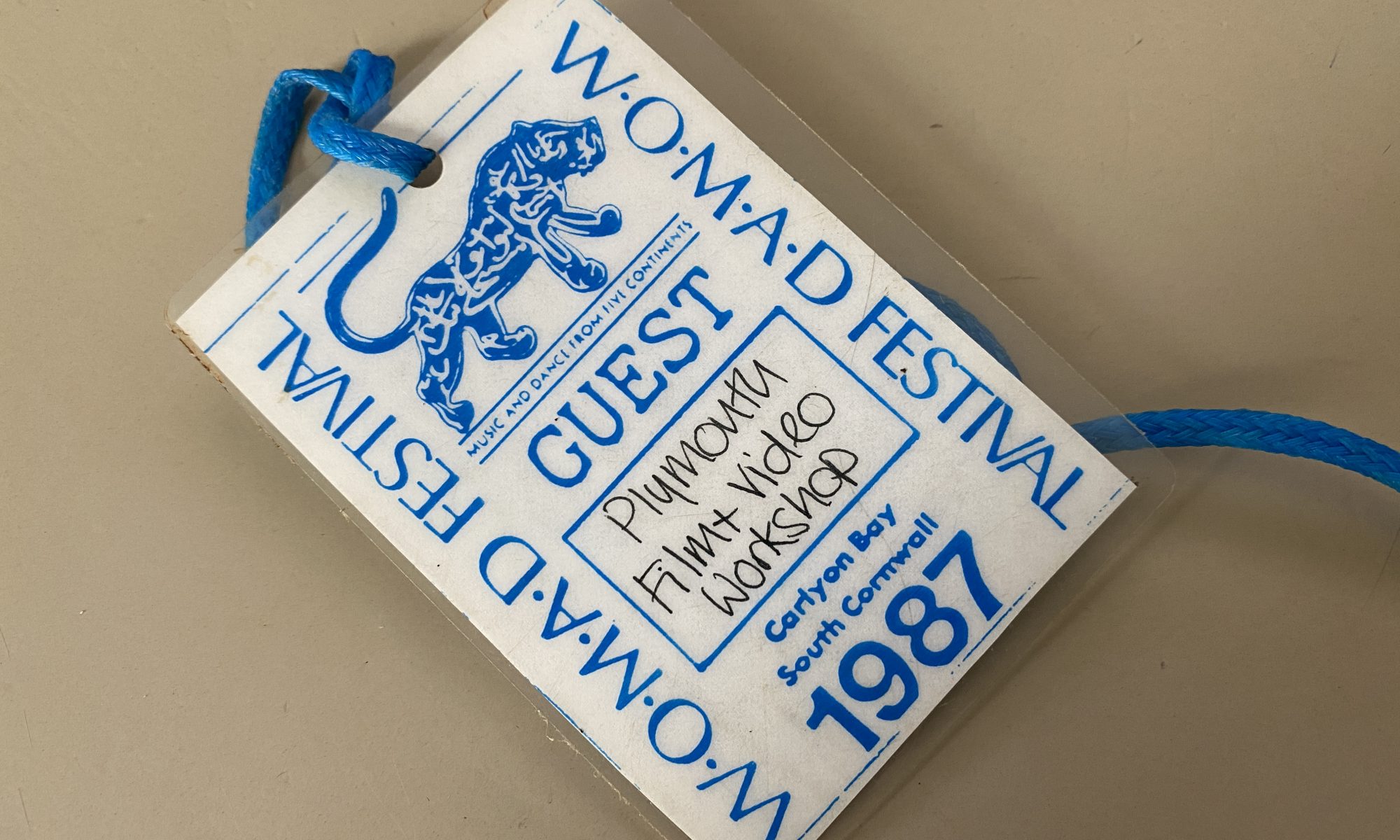
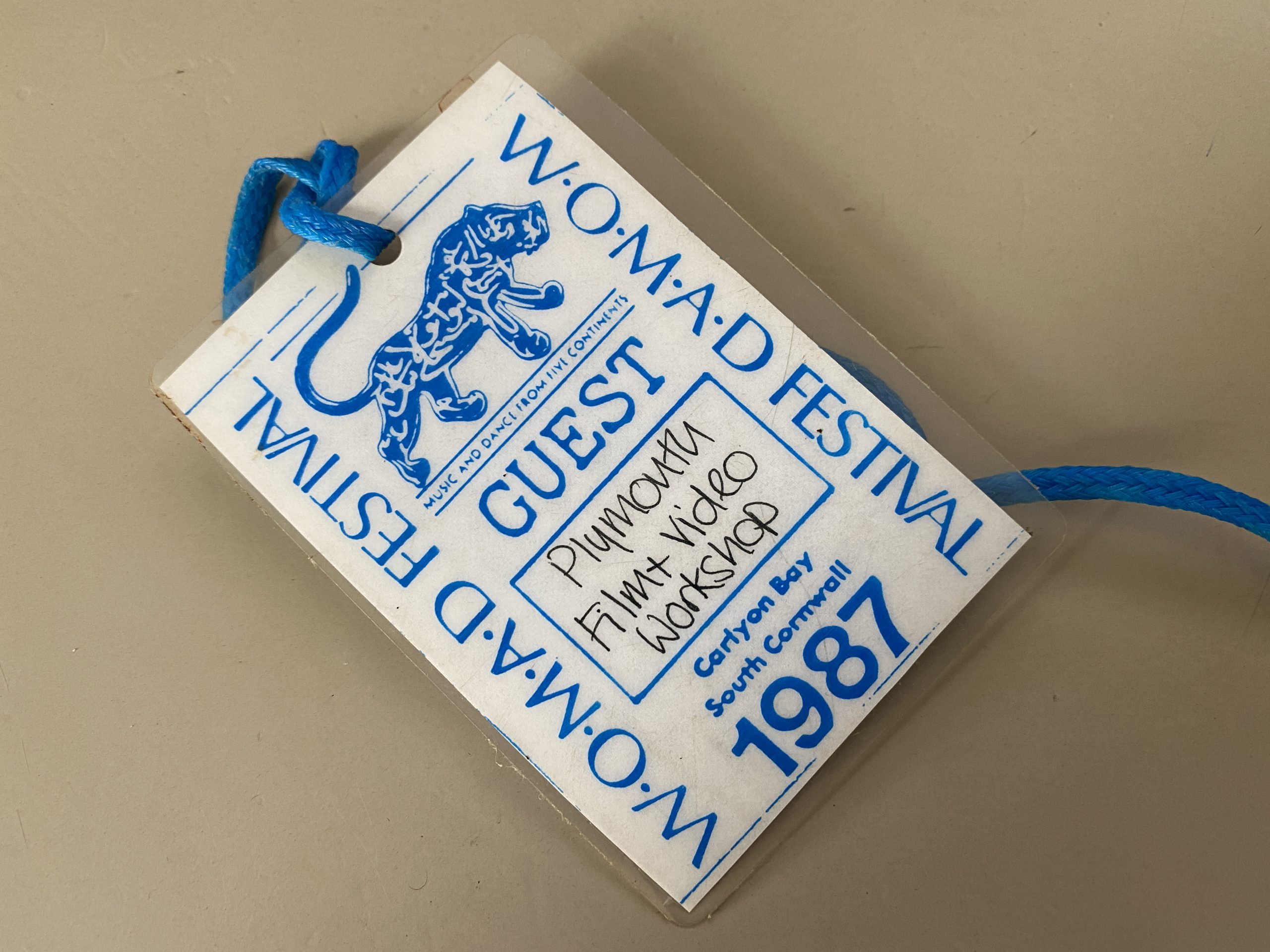
Guest pass issued for filming at the festival

The film was edited in camera and I was again reminded of Milena Gierke’s films. I have found a piece of writing (Accessed 27/09/16) from Directors Lounge, Berlin about Gierke’s practice:

The tough decisions of choosing the right scene matching with the previously recorded images results in an incredible economy of resources, as the artists usually shoots with an 1:1 ratio of used film footage, unless some technical problems occur. At the same time, the in-camera edits often result in the classical unities of action, place and time, or even more so, the films represent the holistic perception of space and time at one location, in one situation. Each film breathes, happens at the present time, and at the moment of its showing.”

Womad has that 1:1 shooting ratio except for some very dark shots inside the auditorium which were excised. How different is the experience of viewing Womad at Being Human – digitised from Super 8, looped with a soundtrack on a video monitor with the artist not present – from Gierke’s projections? The take-it-or-leave-it approach (uncompromising) with by-appointment viewing is perhaps just one end of a continuum with unlimited online access being the other.

“At the same time the encounter stays ephemeral even in its conserved form on celluloid (since long replaced by the less romantic acetate), also because Milena Gierke is opposed to any reproduction of her films as stills, as she insists on the uniqueness of the film viewing experience during a screening.”

Womad (2016) has been screened for one evening at the CMIR 2 exhibition in Bush House, Bristol on Friday 1 April 2016 and now at Being Human 23—25 September 2016.

There’s also the programme note to Gierke’s presentation here regrettably only through the Wayback Machine.

IMG_6328-2016-09-23-15-05.jpg

A Collaborative Code

A framework for collaboration developed for our film Father-land.

  1. We collaborate as equals with mutual respect for our value and expertise as individuals.
  2. We value each other’s knowledge, experience and specialisms.
  3. We support one another to deal with problems as they arise and work jointly to devise the most effective solution for the project.
  4. We listen to each other’s ideas and give them room to grow, enabling creative ideas to emerge at the interface between us.
  5. We share information, resources and activities so we can achieve more than we could as individuals.
  6. We trust one another and commit to being reliable and committed to the project and to realising its goals.
  7. We acknowledge each other’s equal contribution.
  8. We get together every evening to debrief, sharing our feedback on that day’s research and to discuss our joint strategy for the next day and beyond.